

The Sun’s Restless Cycle
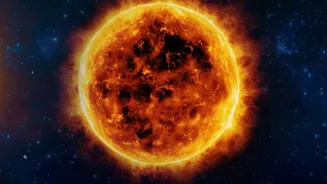
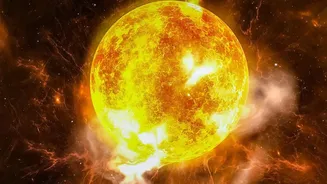
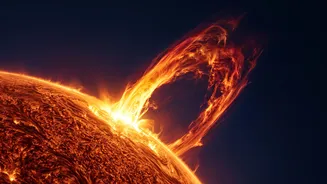
Our sun is not a constant, steady star. It operates on an approximately 11-year cycle, swinging between a quiet phase known as solar minimum and a turbulent peak called solar maximum. We are now rapidly approaching the peak of the current cycle, Solar
Cycle 25. During a solar maximum, the sun’s magnetic field becomes highly unstable, leading to a dramatic increase in sunspots, powerful solar flares, and massive eruptions of solar material called coronal mass ejections (CMEs). While initial forecasts placed this peak in mid-2025, the sun has been far more active than expected, with some scientists suggesting the period of maximum activity will span from late 2024 through early 2026. This heightened activity is not just a spectacle for astronomers; it has direct physical consequences for Earth.
How a Solar Storm Heats Our Atmosphere
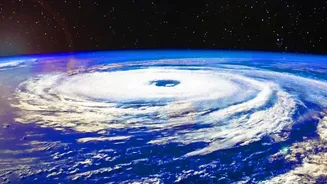
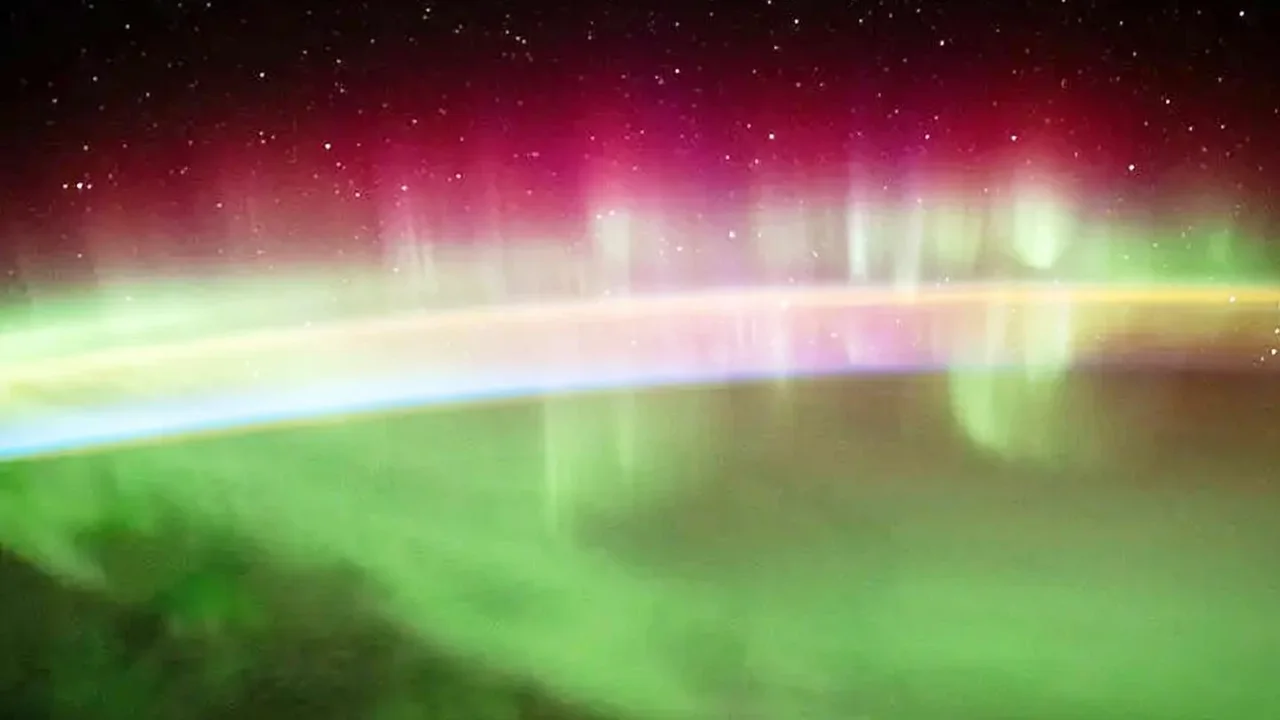
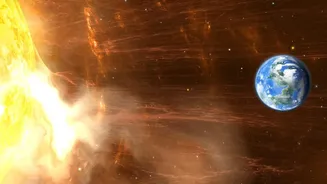
When the torrent of energy and particles from a solar flare or CME strikes Earth, our planet’s magnetic field and atmosphere shield us on the ground. However, that energy doesn't just disappear. Much of it is absorbed by the thermosphere, a layer of the upper atmosphere that begins around 80 kilometres above the surface. This sudden injection of energy causes the thermosphere to heat up significantly, and just like a hot air balloon, it expands. This expansion pushes the upper boundaries of the atmosphere further out into space, into the region where thousands of satellites in low-Earth orbit (LEO) operate.
The Invisible Brake of Atmospheric Drag
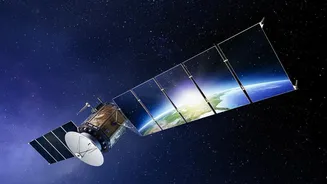
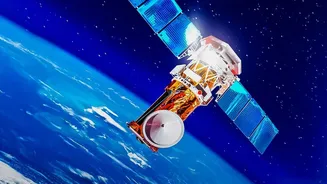
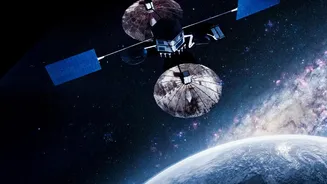
Satellites in LEO, which includes constellations like SpaceX's Starlink and many Earth observation satellites, orbit at altitudes where the atmosphere is normally so thin it is almost a vacuum. But when the thermosphere expands during a solar storm, the density of gas particles at these altitudes can increase by a factor of 10 or more. For a satellite travelling at over 28,000 kilometres per hour, suddenly flying through this thicker medium is like hitting an invisible wall of air. This resistance is known as atmospheric drag. It acts as a constant brake, slowing the satellite down and causing it to lose altitude. During periods of low solar activity, this effect is predictable, but during a solar maximum, the drag can increase dramatically and suddenly.
Falling Satellites and Crowded Skies
The consequences of increased drag are significant. As satellites slow and their orbits decay, operators must fire onboard thrusters to boost them back to their correct altitude. During a solar maximum, these manoeuvres may be needed every few weeks instead of a few times a year, consuming precious fuel and drastically shortening a satellite's operational lifespan. If a satellite cannot overcome the drag, it will fall into a lower orbit, where the drag is even stronger, leading to a fatal spiral and eventual re-entry where it burns up. This was famously demonstrated in February 2022, when a moderate geomagnetic storm caused an estimated 50% increase in atmospheric drag, leading to the loss of up to 40 newly launched Starlink satellites. Increased drag also makes it harder to predict a satellite's exact position, raising the risk of catastrophic collisions in an already crowded orbital environment.
How India Is Preparing for the Storm
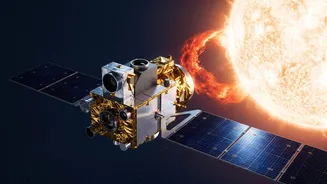
For India, with its growing fleet of communication, navigation, and observation satellites, mitigating this threat is crucial. The Indian Space Research Organisation (ISRO) is actively monitoring the sun's activity. In fact, new research from ISRO's Vikram Sarabhai Space Centre recently confirmed the direct link between solar peaks and the accelerated decay of space debris, a finding that helps in planning safer missions. This natural 'cleanup' effect is a small silver lining, but the risk to active satellites is the primary concern. With missions like Aditya-L1, India's first solar observatory, ISRO is bolstering its ability to forecast space weather, giving satellite operators the vital lead time needed to protect these critical national assets from the sun's fury. These efforts are part of a global push to better understand and prepare for the effects of our star on the technology that powers the modern world.