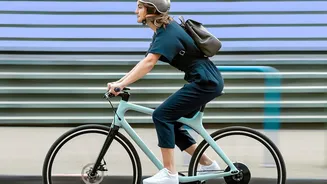






For active city residents, life moves fast. A daily cycling commute is more than just a smart way to get from A to B; it's a built-in fitness routine that strengthens your body in ways you might not expect. This is 'invisible fitness'.
The Unseen Core Workout
You might think
cycling is all about the legs, but your core is the secret hero of every ride. Your core muscles—including your abdominals, lower back, and obliques—are constantly working to keep you stable and upright on the bike. Think about it: every time you lean into a turn, navigate around a pothole, or even just maintain an upright posture, your core is firing to prevent you from toppling over. This continuous engagement provides a consistent, low-grade workout for your midsection. Unlike crunches at the gym, this is a dynamic and functional form of strength building that supports your spine and improves your overall stability for daily activities, not just on the bike.
Building Your Balancing Act
Improved balance is a direct result of a stronger core. Cycling requires your body to constantly make micro-adjustments to stay upright, which trains your body's proprioception—its ability to sense its position in space. In a bustling city environment, this skill is honed even further. You’re not just pedalling in a straight line; you are reacting to traffic, pedestrians, and uneven road surfaces. This dynamic environment enhances your reaction time and coordination. Holding a steady line while signalling a turn or looking over your shoulder to check for traffic are real-world exercises in balance that a stationary gym workout can't replicate. Over time, this translates to better balance and coordination in all aspects of life.
Endurance From Pedal to Pavement
The most obvious benefit of cycling is its power to build endurance. As a form of aerobic exercise, regular cycling strengthens your heart and lungs, allowing your body to use oxygen more efficiently. This improved cardiovascular fitness means you can ride for longer and tackle more challenging routes, but the benefits extend beyond the bike. You’ll likely feel more energetic throughout the day. The repetitive motion of pedalling specifically builds muscular endurance, which is the ability of your muscles to perform repeated contractions over time. This primarily targets the slow-twitch muscle fibres in your legs—the quads, hamstrings, glutes, and calves—making them more resistant to fatigue.
More Than Just Legs
While the legs are the primary power source, they don't work in isolation. A cycling workout is a full body affair. Your gluteus maximus is heavily engaged, especially when you stand up on the pedals to climb a small incline or accelerate from a stop light. Your arms and shoulders are also put to work, supporting your upper body weight and steering the bike. This engagement, while not as intense as the work your legs are doing, contributes to overall upper body stamina and postural strength. By keeping your upper body relaxed but engaged, you create a stable platform that allows your legs to transfer power to the pedals efficiently, making every pedal stroke more effective.
Making It Work in the City
To maximise these benefits during your urban commute, focus on your form. Sit upright with a neutral spine to engage your core properly and avoid back pain. Ensure your bike is fitted correctly; a proper fit prevents strain and allows for an efficient pedal stroke. Don't be afraid to occasionally stand on the pedals, as this action intensely recruits your core and glute muscles. Use the natural challenges of the city, like short hills or accelerating away from traffic lights, as builtin intervals to boost your heart rate and power. By riding with intent, you transform a simple commute into a comprehensive and effective daily workout that prepares your body for the demands of an active urban lifestyle.