






A Small Hop with Big Ambitions
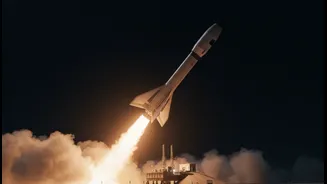
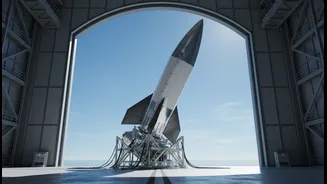
On Saturday, July 11, at its Noshiro Rocket Testing Center, the Japan Aerospace Exploration Agency (JAXA) successfully conducted the first flight test of its RV-X prototype. The small, 7.3-metre-tall experimental vehicle rose with a roar, ascended to about
11 metres, moved horizontally for roughly 16 metres, and then descended for a soft, controlled landing. The entire sequence, from liftoff to touchdown, was over in about 40 seconds. For the team behind the project, it was a moment of immense relief and success. Project manager Takashi Ito confirmed the test went well and that the team had obtained very useful data. This wasn't a mission to orbit; it was a carefully choreographed demonstration of vertical takeoff and vertical landing (VTVL) technology, the same principle that has become the cornerstone of the new commercial space race.
The Billion-Dollar Problem of Disposable Rockets
For decades, space launches have operated on a simple, incredibly expensive model. Multi-million-dollar rockets are used once and then discarded, their most valuable components either burning up in the atmosphere or sinking to the bottom of the ocean. This is like flying a passenger jet from Mumbai to London and then throwing the entire aircraft away. The most expensive part of any launch is typically the first-stage booster, which contains the powerful engines and fuel tanks needed to escape Earth's gravity. By designing this stage to fly back to Earth and land intact, it can be refurbished and flown again, drastically cutting the cost of each subsequent mission. Until now, Japan’s workhorse rocket, the H3, has been an expendable, single-use vehicle. The RV-X test signals a strategic shift, acknowledging that to compete in the modern space market, reusability is no longer a novelty but a necessity.
Japan's Answer to a Crowded Field
The push for reusability is dominated by Elon Musk’s SpaceX, whose Falcon 9 rockets have made vertical landings routine since 2017, fundamentally disrupting the global launch market. But Japan is not the only nation playing catch-up. Just a day before JAXA’s test, China announced its first successful recovery of a rocket’s first stage. In Japan, the private sector is also getting involved, with Honda’s R&D division having completed its own successful reusable rocket test in 2025. JAXA’s RV-X, co-developed with Mitsubishi Heavy Industries, is now a key part of this national strategy. The knowledge gained from this short flight is crucial. The RV-X's engine has already been through over 160 combustion tests, proving its durability for repeated use. The data from this successful hop will inform the next stage: a more advanced vehicle named Callisto, being jointly developed with France and Germany, which will aim for much higher altitudes.
Why Cheaper Launches Matter for Everyone
Lowering the cost of getting to space has profound implications. It’s not just about national prestige; it's about enabling a whole new economy in orbit. For India, which has its own robust and cost-effective space program through ISRO, the global trend towards reusability presents both competition and opportunity. As more players like JAXA drive down launch prices, it will become cheaper for nations and companies to deploy satellite constellations for everything from high-speed internet and Earth observation to climate monitoring and disaster management. This accessibility fuels innovation, allowing smaller startups and universities to conduct research in space, something previously reserved for government agencies with massive budgets. The RV-X is therefore more than just a piece of hardware; it’s an enabling technology. Its 40-second flight represents another crack in the barrier that has long kept space exclusive and expensive, paving the way for a more democratised final frontier.