




From Pixels to the Physical World
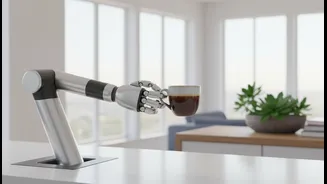
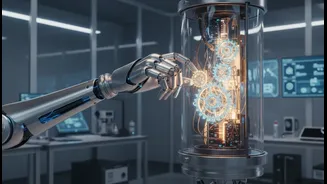
Artificial intelligence is breaking free from its digital confines. While most people associate AI with software like chatbots or image generators, a new frontier is rapidly emerging: physical AI. This refers to AI systems that can perceive their environment
through sensors, reason about what to do, and then physically act on the world. Think autonomous vehicles, advanced factory robots, and, perhaps most famously, quadrupedal robots that resemble dogs. Unlike traditional automation, which follows pre-programmed scripts, physical AI enables machines to adapt to changing conditions and make decisions on the fly. This evolution from digital intelligence to embodied intelligence is what allows a robot to not just repeat a task, but to understand and navigate the complexities of the physical world.
The Rise of the Robot Dog
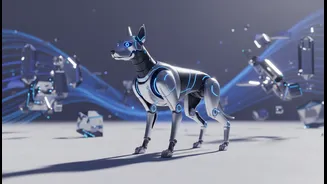
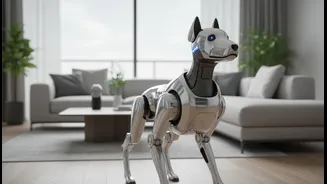
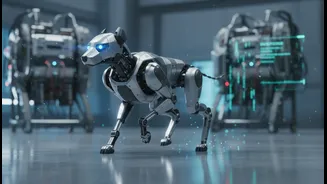
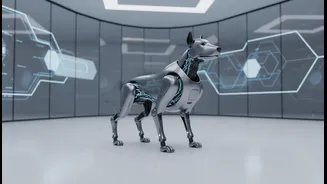
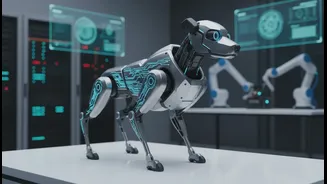
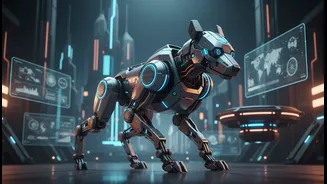
Agile, four-legged robots have become the poster child for physical AI, capturing both public imagination and industrial interest. Companies like Boston Dynamics with its Spot robot, ANYbotics with ANYmal, and Ghost Robotics have developed machines capable of traversing treacherous terrain, climbing stairs, and carrying out complex inspections. These are not consumer pets; they are sophisticated industrial tools. Their applications span numerous sectors, from security and surveillance to emergency response. For example, robot dogs are being deployed to patrol industrial facilities, monitor construction sites for progress, and inspect infrastructure in environments too hazardous for humans, such as nuclear power plants or disaster zones. By combining advanced mobility with AI-powered sensors, they can provide a constant stream of data from places that are dangerous, remote, or difficult to access.
More Than a High-Tech Security Guard
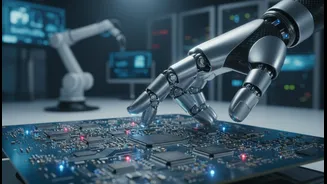
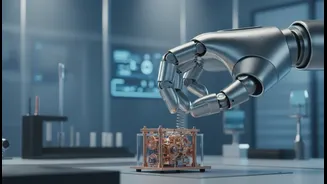
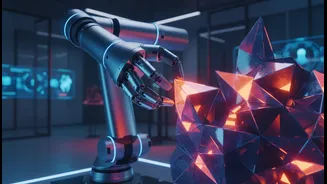
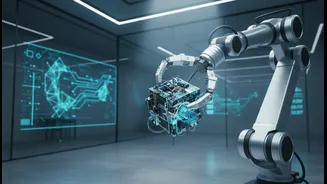
The utility of physical AI extends far beyond simple patrols. In manufacturing, intelligent robots are helping to automate complex assembly lines and perform quality control checks, filling labour gaps and handling repetitive work. In logistics, autonomous robots and drones are streamlining warehouse operations and deliveries. The healthcare industry is also seeing benefits, with physical AI assisting in robotic surgery and monitoring patients. What connects these diverse applications is the ability of the AI to interact with and respond to an unpredictable world, a feat that scripted automation could never achieve. This adaptability is paving the way for humanoid robots to begin working alongside people in factories and hospitals, performing tasks that require a level of dexterity and awareness previously exclusive to humans.
The Irreversible Nature of Physical Risk
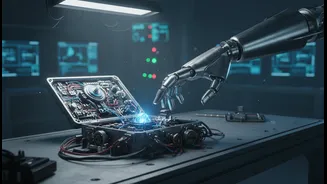
As these machines become more autonomous, the stakes get higher. An error in a digital AI system, like a chatbot giving a wrong answer, can often be corrected. But when an AI is controlling a physical machine, a software flaw or an AI "hallucination" can lead to irreversible and potentially catastrophic consequences. A robotic arm moving unpredictably on a factory floor or an autonomous vehicle misinterpreting a traffic signal poses a direct risk to property and human life. This elevates the conversation from data privacy and algorithmic bias—still crucial issues—to fundamental questions of physical safety and liability. Who is responsible when an autonomous system causes harm? How do you ensure a robot designed to operate in a chaotic human environment can be trusted?
Keeping a Human in the Loop
The answer, for now and the foreseeable future, is meaningful human oversight. This concept, often called "human-in-the-loop" (HITL), is not just about having an emergency stop button. It’s about creating a partnership where machines handle the repetitive, dangerous, or precise work, while humans provide context, judgment, and ethical guidance. For high-risk tasks, this means a person must have the ability to monitor, intervene, and ultimately override the AI’s decisions. This is especially critical to avoid "automation bias," the tendency for people to over-rely on a system's automated output. Regulatory bodies like the European Union are already mandating human oversight for high-risk AI systems to ensure that critical decisions are not delegated entirely to a machine. The goal is to build systems that are transparent and accountable, where humans can step in before an error occurs.