




More Than a Dazzling Sight
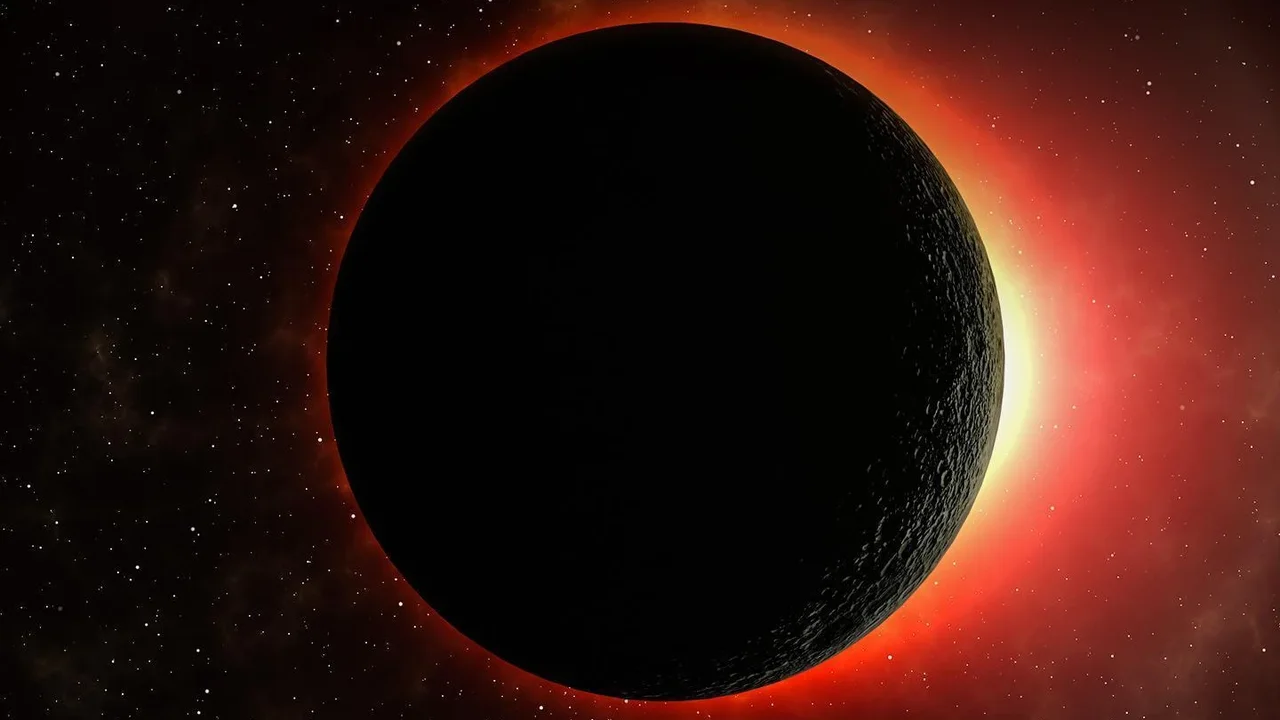
As the Moon perfectly obscured the Sun's bright face for observers across parts of Greenland, Iceland, and Spain, it revealed the star's ethereal outer atmosphere. This ghostly halo of superheated plasma, known as the corona, is usually invisible, completely
washed out by the Sun's intense glare. Total solar eclipses provide a rare, natural laboratory where this enigmatic region can be studied in detail from Earth. For a few precious minutes, the intricate structures of the corona—loops, streamers, and plumes—became visible, offering vital clues about the engine that drives our solar system.
The Sun’s Hottest Paradox
The central reason the corona is a major research focus is a baffling paradox known as the coronal heating problem. The surface of the Sun, the photosphere, sizzles at about 5,500 degrees Celsius. Logic would suggest that the temperature should decrease as you move away from this heat source. Instead, the corona blazes at temperatures of over a million degrees, hundreds of times hotter than the surface below. Understanding how this extreme heating occurs is a fundamental question in astrophysics. Scientists have proposed several theories, including the constant eruption of tiny explosions called 'nanoflares' and the transfer of energy via magnetic waves, but definitive proof remains elusive. An eclipse allows researchers to gather data that can help distinguish between these competing ideas.
A Fleeting Window of Opportunity
While scientists have instruments called coronagraphs that can artificially block the Sun's disk, they cannot replicate the clarity provided by a natural eclipse. The Moon's passage allows a view of the lower corona, a critical region just above the Sun's surface that is typically obscured by instrument limitations. It is in this lower region that much of the mysterious energy transfer is thought to take place. During the August 12 eclipse, research teams scrambled to deploy a variety of instruments to capture high-resolution images and spectroscopic data, which breaks down light to determine the corona's temperature, density, and chemical composition.
Missions on the Ground and in the Air
To maximize this brief research window, scientists undertook several ambitious projects. NASA flew its WB-57 high-altitude research aircraft along the eclipse path over the Atlantic. Flying at 50,000 feet, above most clouds and atmospheric distortion, the jet used a suite of advanced cameras to capture infrared and visible light images of the corona, extending the viewing time of totality to nearly three minutes. Other initiatives included the Nationwide Eclipse Ballooning Project, which launched balloons to study atmospheric changes, and ground-based observations in Spain, where new instruments like the Circular Slit Spectrometer were tested. These efforts aimed to understand the corona's structure and the origins of the solar wind.
From Solar Physics to Space Weather
Unlocking the corona's secrets is not just an academic exercise. The corona is the source of the solar wind, a continuous stream of charged particles that flows throughout the solar system. Violent events like coronal mass ejections (CMEs) can hurl vast amounts of this material toward Earth, creating space weather that poses a risk to our technology-dependent society. These solar storms can disrupt satellites, damage power grids, and endanger astronauts. By studying the corona's magnetic fields and plasma dynamics during an eclipse, scientists can improve models for predicting space weather, giving us a better chance to prepare for and mitigate its effects.