






Saturn at Its Brightest
Get ready for the best views of Saturn this year. On October 4, 2026, the ringed planet will be at opposition. This astronomical term simply means that Earth will be directly between Saturn and the Sun. From our perspective, Saturn will rise in the east
around sunset, travel across the night sky, and set in the west around sunrise, making it visible all night long. Because of this alignment, the planet will be at its closest point to Earth for the year, approximately 1.26 billion kilometres away. This proximity, combined with being fully illuminated by the sun, makes Saturn appear exceptionally bright and large in our sky.
How to Spot the Ringed Planet
You won't need any special equipment to see Saturn itself. It will be visible to the naked eye as a bright, steady, yellowish point of light. For those in India, Saturn will rise at approximately 6:11 PM IST on October 4 and will be visible throughout the night. To find it, look towards the eastern sky after sunset; it will appear in front of the constellation Cetus, below the large square of stars known as the Great Square of Pegasus. While you can spot the planet easily, its famous rings require a bit of help. A small backyard telescope is needed to clearly distinguish the rings from the planet itself. Even a good pair of binoculars might show Saturn as a slightly oval-shaped object, but a telescope with at least 25x to 40x magnification will reveal the magnificent rings more clearly.
A Dazzling Display from Halley's Comet
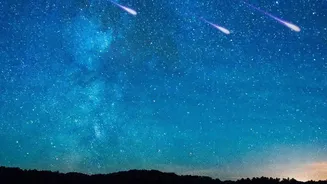
Later in the month, another cosmic show begins. The Orionid meteor shower, one of the year's most reliable and beautiful showers, will reach its peak. These shooting stars are not random; they are tiny pieces of cosmic dust and debris left behind by one of the most famous comets in history: Halley's Comet. As Earth passes through this trail of ancient cometary dust, the particles burn up in our atmosphere at high speeds—about 66 kilometres per second—creating fast, bright streaks of light across the sky. So, every Orionid meteor you see is a tiny fragment of Halley's Comet, which itself won't be visible again from Earth until 2061.
When and Where to See the Orionids
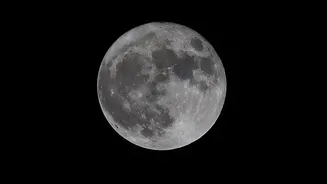
The Orionid meteor shower will be active from early October to early November, but the best time to watch will be during its peak on the night of October 21-22, 2026. During the peak, under dark skies, you can expect to see around 15 to 20 meteors per hour. The best viewing window is in the pre-dawn hours, from midnight until just before sunrise. This is when the shower's radiant—the point in the sky where the meteors appear to originate—is highest. As the name suggests, the radiant is in the constellation Orion the Hunter. While a waxing gibbous Moon will be present during the peak in 2026, it is expected to set around 3 a.m., leaving the sky dark for prime viewing before dawn.
Tips for a Great Night of Stargazing
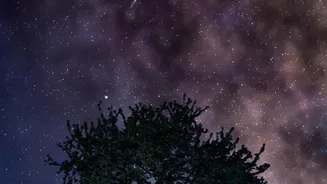
To make the most of these celestial events, preparation is key. The most important step is to get away from city lights. Light pollution can wash out all but the brightest meteors and planets. Look for a dark spot with a clear, open view of the sky. Locations like Velhe or Panshet near Pune are popular dark-sky sites. Give your eyes about 15-20 minutes to fully adapt to the darkness; this will help you spot fainter meteors. Dress warmly and get comfortable in a reclining chair or on a blanket. You don't need to stare at the radiant point of the meteor shower; in fact, meteors can appear anywhere in the sky. Just lie back, look up, and be patient. The universe is putting on a show, and you have a front-row seat.