







The End of an Era for the ISS
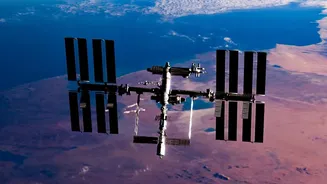
Since November 2000, the International Space Station (ISS) has been a symbol of global cooperation and a hub for groundbreaking science, hosting more than 4,000 experiments. But after decades of continuous operation, the 430-tonne structure is aging.
NASA and its international partners have committed to operating the station through 2030. After its final mission, the plan is to perform a controlled deorbit, guiding the station to a fiery reentry over a remote part of the South Pacific Ocean known as Point Nemo, a designated graveyard for spacecraft. This retirement is not just an end but a strategic transition. The massive operational costs of the ISS, which consume a significant portion of NASA's human spaceflight budget, are a key driver for the shift toward a new model.
NASA's New Role: From Owner to Customer
Instead of building a government-owned successor, NASA is pivoting to a new role: anchor tenant. Through its Commercial Low-Earth Orbit Destinations (CLD) program, the agency is stimulating the private sector to build, own, and operate new orbital habitats. NASA intends to buy services from these commercial stations, such as research time and crew accommodation, rather than managing the hardware itself. This public-private partnership model is based on the success of NASA's commercial cargo and crew programs, which used companies like SpaceX to service the ISS. By becoming a customer, NASA frees up resources to focus on its deep-space exploration goals under the Artemis program, including missions to the Moon and Mars, while ensuring a continued American presence in low-Earth orbit (LEO).
The Frontrunners: Axiom, Starlab, and Orbital Reef
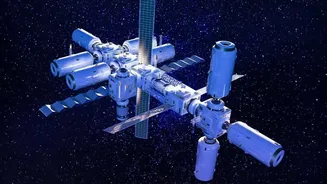
Several companies are leading the charge to build the next generation of space stations. Axiom Space is perhaps the furthest along, with an innovative plan to first attach its own modules to the ISS. The first module is targeted for launch no earlier than 2027. These modules will eventually detach to form the free-flying Axiom Station around 2028, ensuring a seamless transition. Another major contender is Starlab, a joint venture between Voyager Space and Airbus. Their design features a large inflatable habitat and a dedicated science park, with a potential launch date no earlier than 2029. Northrop Grumman has also joined the Starlab team after discontinuing its own station concept. Meanwhile, Blue Origin and Sierra Space are developing Orbital Reef, envisioned as a "mixed-use business park" in space designed to support a crew of ten. Though facing some developmental hurdles, the project continues to move forward.
A New Business Model for Orbit
These private stations are not just science labs; they are commercial ventures. Their business models rely on a diverse customer base beyond just NASA. Operators plan to offer services for in-space manufacturing of unique materials like advanced semiconductors and fiber optics, which are difficult to produce in Earth's gravity. Other potential markets include pharmaceutical research, technology development, and the burgeoning field of space tourism. Some stations will even function as orbital data centers, processing information in space. By serving a mix of government, commercial, and international clients, these companies hope to create a self-sustaining economy in low-Earth orbit, lowering the cost of access for everyone.
The Race Against the Clock
The primary challenge is time. A significant gap between the ISS decommissioning and the operational readiness of a commercial replacement is a major concern for NASA and the U.S. government. Any delays in the ambitious schedules of these private companies could mean a period with no American human presence in LEO, a first in over 30 years. Funding is another critical factor. While NASA has provided seed money through the CLD program, these companies are also reliant on significant private investment to complete their multi-billion-dollar projects. In early 2026, policy debates swirled around the best way to support this transition, with NASA briefly considering a different strategy before recommitting to the original commercial-first plan after industry feedback. The success of this new era hinges on these companies hitting their marks, on budget and on time.