








A Deluge of Threats
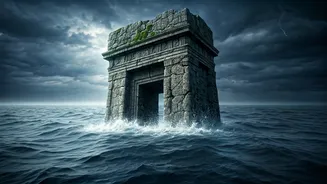
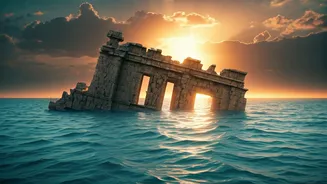
Our planet’s shared cultural heritage, from the Ellora Caves in Maharashtra to the iconic city of Venice, is facing an unprecedented crisis. According to UNESCO, climate change is fast becoming one of the most significant risks to World Heritage sites.
These are not distant, future problems; the damage is happening now. A staggering one in six cultural heritage sites is already threatened. The culprits are varied and relentless: rising sea levels, more frequent and intense storms, extreme rainfall, wildfires, and punishing heatwaves are all taking their toll.
When the Water Rises
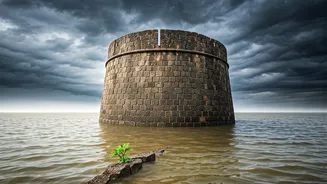
For coastal heritage sites, the most immediate danger is from rising seas. In India, numerous historical treasures are located near the coast. The Shore Temple in Tamil Nadu, forts in Goa and Kerala, and the Elephanta Caves off Mumbai are all increasingly vulnerable to coastal erosion and flooding. This isn't just an Indian problem. Venice has been famously plagued by more frequent and severe floods, which damage the foundations of its ancient buildings. Even the iconic Moai statues on Easter Island are at risk of being lost to the sea due to coastal erosion. Storm surges, made worse by higher sea levels, can inundate sites that have stood for centuries, washing away archaeological treasures and weakening foundations.
Trial by Fire and Flood
It's not just the sea. Extreme weather events are becoming more common and destructive. In recent years, parts of the 12th-century Sonar Fort in Jaisalmer, a structure built for an arid climate, collapsed after unusually heavy rainfall. Similarly, in 2019, Cyclone Fani caused minor damage to the Jagannath Temple in Odisha. This pattern is global. Increased humidity and rainwater leaks are damaging ancient cave paintings in China, while more intense storms threaten sites across the Asia-Pacific region. These events don't just cause immediate structural damage; increased moisture leads to the growth of algae and moss, and causes salt to crystallize within porous stone, slowly breaking monuments apart from the inside.
The Slow, Silent Damage
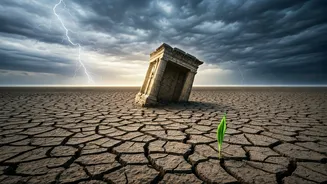
Beyond the dramatic floods and storms, slower and less visible changes are also wreaking havoc. In arid regions, cycles of extreme heat and low humidity cause materials like stone and brick to expand and contract, leading to cracks. In Delhi, Humayun's Tomb faces threats from unpredictable rainstorms and air pollution, which lodges in the porous stone and weakens the structure. The soot and chemicals from pollution can cause permanent discolouration and compromise the integrity of monuments like the Red Fort and even the Taj Mahal. These gradual processes are a quiet but constant assault on our history.
A Race Against Time
The scale of the threat is immense, but so are the efforts to combat it. Conservationists are in a race against time. The Archaeological Survey of India and other bodies are working to protect vulnerable sites, but funding and resources are a constant challenge. Around the world, solutions range from building sea walls and improving drainage systems to high-tech documentation. Using 3D laser scanning and other digital tools, organisations are creating precise records of sites, preserving them digitally in case the physical structures are lost. At Humayun's Tomb, for instance, a major conservation effort involved planting thousands of trees to reduce local pollution and improving drainage systems. However, experts agree that these site-specific interventions can only do so much. The most vital step is global action to limit emissions and slow the pace of climate change itself.