





Prioritise a Dry & Cosy Haven
The single most important rule of monsoon cat care is to fight the damp. Constant moisture can lead to fungal infections and skin problems. If your cat gets wet, even from a quick jaunt on a balcony, dry them thoroughly with a towel, paying special attention
to their paws and underbelly. It’s crucial to create a dedicated warm, dry space for them indoors, away from drafts and leaky windows. A simple cardboard box lined with soft, absorbent blankets can become a perfect den. Regularly wash their bedding to prevent mould and bacterial growth, and if the sun makes an appearance, use it to dry everything completely.
Step Up Paw and Grooming Patrol
A cat's paws are their primary contact with the world, and during the monsoon, they can track in a lot of muck and moisture. Illness-causing germs often make their way into your home via their paws. Get into the habit of gently wiping their paws with a clean, damp cloth and drying them completely every time they explore a wet area. Regular brushing is also more important now; it helps prevent matting in damp fur and allows you to spot any early signs of skin irritation or parasites. While full baths should be infrequent to avoid stripping natural oils from their coat, keeping their paws clean is non-negotiable.
Manage Monsoon-Related Anxiety
Loud thunder and lightning can be incredibly stressful for many cats. Their anxiety symptoms are often subtle, such as hiding, restlessness, or being unusually clingy. The best approach is to create a calm environment. Close curtains to block out lightning flashes and play soft music or turn on the TV to provide white noise that can mask the sound of thunder. It is vital to let your cat decide where it feels safest, whether that’s under a bed, in a closet, or on your lap; never force them out of a hiding spot. Creating a secure “safe space” with their favourite blankets before a storm hits can provide them with a comforting retreat.
Rethink Their Diet and Hydration
The damp and dreary weather can sometimes lead to digestive issues or a reduced appetite in cats. A fibre-rich diet can help maintain good gut health during this period. It is also a time when immunity can be challenged, so ensuring they have a balanced, high-quality diet is crucial. Pay close attention to their water source. Stagnant water can harbour bacteria, so provide fresh, clean drinking water several times a day. Some experts even recommend boiling your pet's drinking water during the monsoon as an extra precaution. Since wet food can spoil faster in high humidity, it's best to remove any uneaten portions promptly.
Beware of Pests and Parasites
The monsoon is peak season for fleas, ticks, and other parasites that thrive in warm, humid conditions. Even indoor cats are at risk, as these pests can easily be brought into the home. Stick to your vet-recommended flea and tick prevention schedule without fail. Regularly inspect your cat's fur, especially around the ears, neck, and between their toes, for any signs of parasites. Keeping your home clean by vacuuming frequently and washing pet bedding can also help disrupt the life cycle of fleas.
Provide Indoor Enrichment
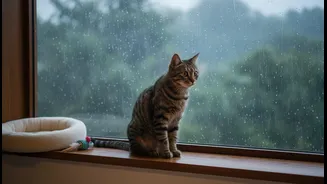
For cats used to spending time outdoors, being cooped up inside during the rains can lead to boredom and frustration. You can enrich their indoor environment to keep them mentally and physically stimulated. Vertical spaces like cat trees or shelves near a window can provide a great vantage point to watch the rain. Interactive toys, such as feather wands, and puzzle feeders that make them work for treats are excellent for engaging their minds. Even simple things like a cardboard box or a crumpled paper ball can provide hours of entertainment. Rotating their toys can also keep things feeling new and exciting.