


An Artform Born of the Desert
Lippan Kam, also known as mud and mirror work, is a traditional mural art form native to the Kutch region of Gujarat. The name itself offers a clue to its process; 'lippan' is a local word for applying or plastering. Historically, women from pastoral
communities like the Rabari, Mutwa, and Meghwal would decorate the interior and exterior walls of their circular mud huts, or 'bhungas'. They used a readily available mixture of clay and animal dung, sculpting intricate, low-relief patterns by hand. Into these wet clay designs, they would press small pieces of mirror, or 'aabhla'. This wasn't just for beauty; the mirrors served a practical purpose, catching and reflecting the precious desert light to brighten up the interiors of their homes.
From Bhunga Walls to Urban Interiors
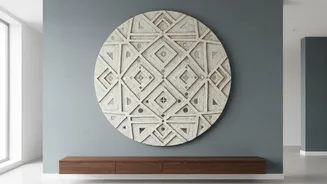
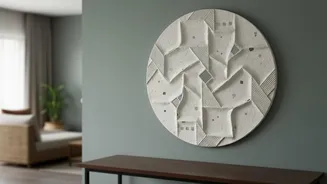
For centuries, Lippan art was inseparable from the architecture it adorned. It was a communal act, often done to celebrate festivals or weddings, with skills passed from mother to daughter. But what was once fixed to a village wall has undergone a remarkable transformation. The art form, which faced a decline as younger generations moved to cities, has found a new audience. Artisans are now creating Lippan Kam on portable wooden or MDF boards, making it accessible to a global market. These modern iterations often use more durable materials like plaster of Paris or adhesives mixed with clay to ensure the pieces can travel and last in different climates. This evolution has allowed the craft to move from rural huts to luxury hotels, galleries, and urban apartments, becoming sought-after accent pieces.
The Artisans Driving the Revival
This revival is not just about adapting a technique; it is a story of economic empowerment and cultural preservation. For many rural families in Kutch, the commercialization of Lippan Kam provides a vital source of income, particularly for women who are the traditional custodians of this craft. Organizations and social enterprises have stepped in to provide platforms and training, connecting artisans directly with urban and international buyers through online stores and social media. This has given the artisans recognition and a fair value for their intricate work, something that was unimaginable when the art was purely for personal decoration. Events like the Rann Utsav have also played a significant role in bringing mainstream attention to the craft and its creators.
More Than Just Decor
While a modern Lippan wall hanging is a beautiful decorative object, it carries deep cultural weight. The motifs are a visual language, telling stories of the desert ecosystem and community life. Common designs include peacocks, camels, elephants, trees of life, and geometric patterns inspired by the artisans' surroundings and spiritual beliefs. By purchasing one of these pieces, a consumer does more than acquire a beautiful object; they become a patron of a living heritage. Supporting these artisans helps preserve ancient skills and ensures that the cultural identity of the Kutchi communities continues to thrive. It is a conscious choice to value handcrafted traditions in a world of mass production, bringing a story and a soul into the home.