





What the Arabica Bean Demands
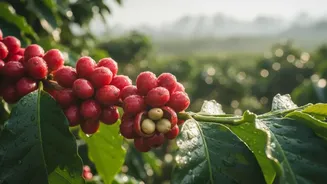
The Arabica coffee plant is notoriously particular. Unlike its hardier cousin, Robusta, Arabica requires a specific set of conditions to thrive and develop the complex, aromatic flavours it's prized for. It flourishes at high altitudes, typically between
3,000 and 6,000 feet, where cooler temperatures slow the cherry's maturation process, allowing more intricate sugars and acids to develop. This plant needs well-defined rainy and dry seasons, with annual rainfall around 60 to 80 inches to support growth, followed by a dry spell for harvesting. Crucially, Arabica prefers partial shade rather than direct sun, which is why India's best coffees are almost all shade-grown, a practice that also promotes biodiversity. This unique combination of elevation, temperature, water, and shade is the foundation of quality.
Chikmagalur: The Cradle of Indian Coffee
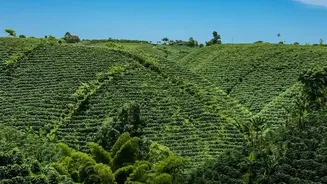
Located in Karnataka’s Western Ghats, Chikmagalur is the historical heartland of Indian coffee. Its environment is almost tailor-made for premium Arabica. The region's estates are situated at altitudes ranging from 3,000 to 5,000 feet, hitting the sweet spot for slow bean development. This elevation provides a mild, consistent temperature that rarely gets too hot or cold, allowing the coffee cherries to ripen gradually and build flavour complexity. The area receives heavy monsoon rainfall, which is essential for the growing season, followed by a cooler, dry period perfect for harvesting and drying the beans. The famous two-tier shade canopy of native trees protects the delicate plants, prevents soil erosion, and enriches the earth, contributing to beans known for their floral and citrus notes.
Coorg: Where Coffee and Spices Intertwine
Just a short drive from Chikmagalur lies Coorg (Kodagu), India's largest coffee-producing district. While sharing the benefits of the Western Ghats, Coorg's terroir has its own distinct character. The elevation is generally a bit lower than in Chikmagalur, which contributes to coffees that are fuller-bodied and less acidic. The region is a mosaic of coffee plantations interwoven with spices like pepper and cardamom. This intercropping is not just for economic diversity; it profoundly impacts the ecosystem. The spice plants and shade trees enrich the soil and create a unique microclimate, which many believe imparts the subtle spicy and chocolatey notes found in Coorg’s coffee. The combination of ample rainfall, rich soil, and a biodiverse environment makes Coorg's coffee comforting, balanced, and robust.
Araku Valley: Organic and Altitude-Driven
Shifting to the Eastern Ghats in Andhra Pradesh, Araku Valley presents a different but equally ideal environment for Arabica. Its plantations are located at altitudes between 3,000 and 4,300 feet, offering the cool nights and hot days that lead to slow, flavour-building maturation. What truly sets Araku apart is its commitment to organic cultivation, driven by local tribal communities. The iron-rich laterite soil, combined with chemical-free farming practices, produces a coffee with a distinctly bright, acidic profile and notes of stone fruit. The region’s biodiversity is protected by shade-growing under silver oaks and fruit trees, a method adopted as a sustainable alternative to traditional farming. This focus on community and ecology has helped Araku coffee gain international acclaim for its unique, clean taste.
The Terroir in Your Cup
Ultimately, the distinct flavours of coffee from Chikmagalur, Coorg, and Araku Valley come down to terroir—a term borrowed from wine that describes how a specific place influences taste. The higher altitude of Chikmagalur brings floral brightness, while Coorg's warmer climate and spice-laden ecosystem create a rounder, bolder cup. Meanwhile, Araku's unique combination of high elevation, iron-rich organic soil, and distinct climate in the Eastern Ghats results in a coffee that is bright and fruity. Each region, with its specific blend of natural conditions and human cultivation, offers a unique expression of the Arabica bean, turning every sip into a journey through India's diverse landscapes.