




The Grand Return: The Artemis Program
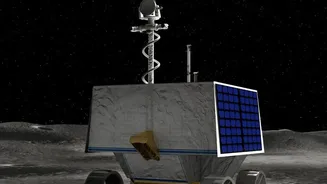
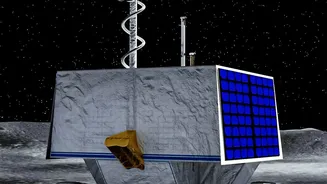
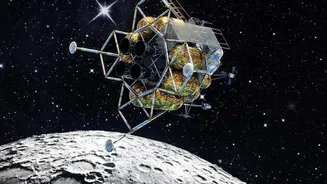
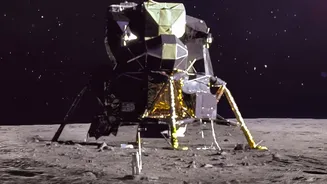
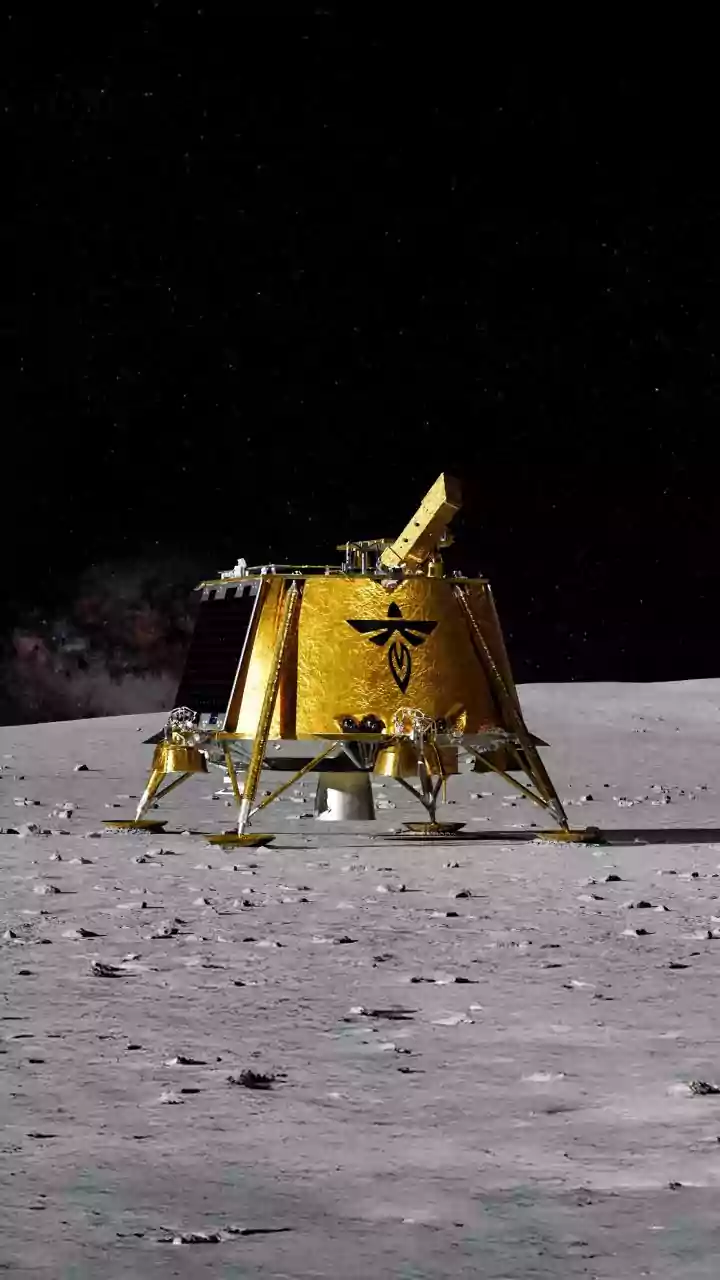
NASA's headline-grabbing initiative is the Artemis program, which aims to return humans to the Moon for the first time in over half a century. Following the Artemis II mission, preparations are in full swing for Artemis III, which will involve complex
rendezvous and docking tests in 2027, paving the way for a lunar landing in 2028. For India, which celebrated its own historic lunar south pole landing with Chandrayaan-3, Artemis represents a parallel ambition. India is a signatory to the Artemis Accords, a set of principles for lunar exploration, signalling a willingness to participate in this new era of Moon missions. In August 2026, NASA formally invited ISRO to join its Moon Base program, an initiative to build a permanent human outpost near the Moon's South Pole. This potential collaboration builds on the shared goal of sustainable lunar exploration and places India at the heart of future international efforts.
A Landmark Partnership: The NISAR Mission
Perhaps the most direct link between the Indian and American space programs right now is the NASA-ISRO Synthetic Aperture Radar (NISAR) mission. Launched in July 2025, the Earth-observing satellite became fully operational in July 2026 and is now providing a wealth of data. This joint mission is one of the most sophisticated Earth-observation satellites ever built. NISAR uses two different radar frequencies to scan nearly all of Earth's land and ice surfaces every 12 days. Its goal is to monitor changes in ecosystems, track natural disasters like earthquakes and volcanoes, and study the effects of climate change on glaciers and agriculture. For India, this provides invaluable data for disaster management and resource monitoring. The success of NISAR, discussed at the India-U.S. Civil Space Joint Working Group in August 2026, serves as a powerful example of the strategic partnership between the two space agencies.
The Ambitious Quest: Mars Sample Return
Bringing a piece of Mars back to Earth is one of the most challenging goals in planetary science. NASA's Mars Sample Return (MSR) mission, a project to retrieve rock samples collected by the Perseverance rover, has recently undergone a major overhaul due to cost and scheduling concerns. The agency is now evaluating two different landing strategies, with a final decision on the mission's design expected in the second half of 2026. While the samples will now likely return in the 2030s, the mission remains a top priority. This matters to India, which proved its own interplanetary capabilities with the highly successful Mars Orbiter Mission (Mangalyaan). While ISRO is not directly involved in MSR, the scientific findings from returned Martian samples would be available to researchers worldwide, including in India. Furthermore, as China moves forward with its own Mars sample return mission, NASA's project underscores the competitive and collaborative dynamics shaping the future of Mars exploration.
A Shared Vision for the Cosmos
Beyond specific missions, the relationship between NASA and ISRO points to a broader trend of global cooperation. India’s decision to join the Artemis Accords and the ongoing discussions on data sharing highlight a deepening trust. Over the past decade, India has emerged as a major space power, launching hundreds of foreign satellites and forging partnerships with dozens of countries. The nation's ability to achieve ambitious goals, like the Chandrayaan-3 landing, at a comparatively low cost has made it an attractive partner. With India planning its own human spaceflight mission (Gaganyaan) and a future space station, the opportunities for collaboration with established players like NASA are only set to grow. This positions Indian scientists, engineers, and a burgeoning private space sector to play a crucial role in the next chapter of human exploration.