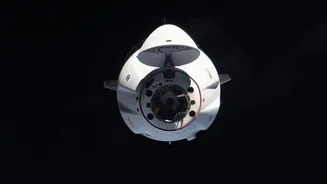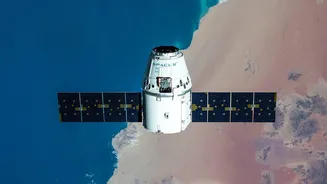







A SpaceX Dragon capsule recently arrived at the International Space Station, but it was carrying more than just routine supplies. It held the building blocks for groundbreaking medical research: living cells ready for study in microgravity.
Another Delivery, Another Leap for Science
The arrival
of the SpaceX CRS-35 mission at the International Space Station (ISS) marks another successful collaboration between NASA and its commercial partners. These Commercial Resupply Services (CRS) missions have become the reliable backbone of the station’s logistics, ensuring astronauts have the supplies and equipment they need. This delivery was especially significant for what it carried in its temperature-controlled compartments. Beyond the usual provisions, the Dragon capsule ferried thousands of pounds of scientific hardware and biological samples. This mission underscores the ISS’s evolution from a construction project into a world-class orbiting laboratory, where the unique environment of space is harnessed to push the boundaries of science and medicine.
The Precious Cargo: Cells in a Spaceship
Tucked securely inside the Dragon were the materials for a suite of advanced biomedical experiments. These aren't just random cells; they are specifically prepared cultures intended for studying complex human ailments. Some investigations focus on growing 3D models of human tissue, like cardiac cells to better understand heart failure or brain organoids to research neurodegenerative diseases like Alzheimer's and Parkinson's. By sending these cells to space, scientists are not just changing their location; they are fundamentally changing the rules of the experiment. The process involves launching these living samples, transferring them to specialized habitats aboard the ISS, and allowing them to grow and develop in a way that is impossible on the ground.
Why Study Biology Without Gravity?
On Earth, gravity is an ever-present force that shapes everything, including how cells grow, interact, and organize into tissues. It pulls on cellular structures, influencing their shape and behaviour. In the microgravity environment of the ISS, this constant downward pull is all but removed. This allows scientists to observe biological processes in their purest form. Cells that would normally grow in flat layers in a petri dish can assemble themselves into complex three-dimensional structures that more closely resemble how they function inside the human body. This '3D cell culture' provides a far more accurate model for testing drugs and studying disease progression, offering insights that would otherwise remain hidden.
From Space Station to Your Doctor's Office
The research initiated by the CRS-35 mission has profound implications for health on Earth. Studying cardiac cells in microgravity could lead to new therapies for heart disease, while observing brain organoids may pave the way for breakthroughs in treating Alzheimer's. Furthermore, this research is critical for the future of human space exploration. Understanding how microgravity affects the human body at a cellular level—from muscle atrophy to a weakened immune system—is essential for keeping astronauts healthy on long-duration missions to the Moon and Mars. Every discovery made on the ISS helps build a safer and healthier future, both in space and on our planet.
The New Business of Orbiting Labs
This mission is also a powerful example of the burgeoning space economy. The partnership between NASA, a government agency, and SpaceX, a private company, has made access to the ISS more frequent and cost-effective than ever before. This opens the door for a wider range of universities, research institutions, and pharmaceutical companies to conduct experiments in orbit. The ISS operates as a U.S. National Laboratory, which facilitates this kind of groundbreaking research. As launch costs continue to fall, we can expect to see an acceleration of scientific discovery, with the orbiting platform serving as a vital hub for innovation in medicine, materials science, and more.