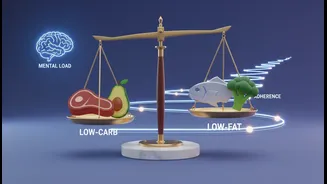








The Great Diet Debate
Pick up any health magazine or scroll through social media, and you will find a dizzying array of diet plans, each hailed as the ultimate solution for weight loss. From ketogenic and paleo diets that restrict carbohydrates, to low-fat plans that focus
on whole grains and vegetables, to intermittent fasting which dictates when you eat, not just what. The promises are bold and the testimonials compelling, but the advice is often contradictory. This constant battle for supremacy leaves many people confused and frustrated, hopping from one trend to the next in search of something that finally works.
What the Research Actually Says
In an attempt to settle the score, scientists have conducted numerous large-scale studies comparing these popular diets. A major study from Stanford University, for example, put more than 600 people on either a healthy low-fat or a healthy low-carb diet for a year. The result? On average, both groups lost a similar amount of weight. This finding has been echoed in multiple network meta-analyses, which pool data from many different trials. These comprehensive reviews consistently show that after 12 months, the differences in weight loss between various diet plans like low-carb and low-fat are minimal and often not statistically significant. While some diets may show slightly faster results in the initial months, these advantages tend to disappear over the long term. The research is clear: there is no single macronutrient-based diet that is universally superior for long-term weight loss for everyone.
The Real Key: Adherence
If it’s not the specific diet, then what is the secret? The evidence overwhelmingly points to one factor: adherence. Simply put, the best diet is the one you can actually stick with. Studies show that adherence is the single most important predictor of weight-loss success, regardless of whether the diet is low-carb or low-fat. The problem is that long-term adherence is challenging. Many studies note that while people may follow a diet strictly at the beginning, their commitment naturally wanes over time. This is why sustainability is more important than short-term restriction. Creating a negative energy balance—burning more calories than you consume—is the fundamental mechanism behind weight loss for any diet, but if the rules are too rigid or the food is unenjoyable, you are unlikely to follow it long enough to see and maintain results.
You Are the 'Secret Ingredient'
The reason researchers can’t declare a winner is because of bio-individuality. We are all different. Our genetics, metabolism, hormones, gut microbiome, activity levels, and food preferences create a unique profile that determines how we respond to different foods. One person might feel energetic and full on a high-protein, low-carb plan, while another finds it unsustainable and prefers a plant-based, high-fibre diet. Research from King's College London on thousands of people, including twins, showed that even identical twins can have vastly different metabolic responses to the same meal. This highlights why a one-size-fits-all approach is doomed to fail. The focus should not be on finding the 'best' diet, but on discovering the best diet for you.
How to Find Your Winning Strategy
Instead of jumping on the next trend, the evidence suggests a more personalized approach. Focus on the principles that all successful, healthy diets share. Prioritize whole, minimally processed foods like vegetables, fruits, lean proteins, and healthy fats. Reduce your intake of added sugars, refined grains, and highly processed foods. Pay attention to protein and fibre, as both are known to increase feelings of fullness and can help with adherence. Most importantly, build a pattern of eating that you genuinely enjoy and that fits into your lifestyle, culture, and social life. The goal is not a temporary fix, but a long-term, sustainable shift in your relationship with food.