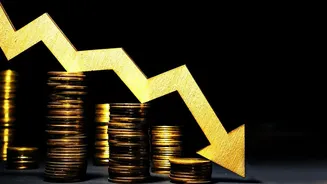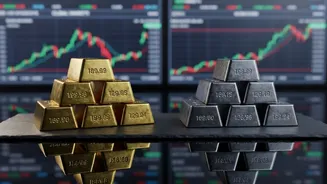








It’s a confusing scenario for any investor: the long-term outlook for gold is strong, and the year is heading for a positive finish, yet the price takes a sudden, sharp dip. These corrections are a normal feature of even the strongest bull markets.
The Big Picture vs. The Short-Term Swing
To
understand gold prices, it’s crucial to distinguish between the long-term trend and short-term volatility. An annual positive return reflects the overall upward trajectory across 12 months. A correction, however, is a temporary drop in price that occurs within that larger trend. These pullbacks are not only normal but are often considered a sign of a healthy market. They prevent the asset from becoming overvalued too quickly and can shake out speculative investors. In fact, many long-term investors view these dips as buying opportunities, allowing them to accumulate more gold at a lower price before the next upward movement.
Profit-Taking: The Market Catches Its Breath
One of the most common reasons for a correction is 'profit-taking' or 'profit-booking'. After a strong rally where prices have risen quickly, investors who bought at lower levels decide to sell a portion of their holdings to lock in their gains. This wave of selling temporarily increases supply on the market, which naturally pushes prices down. It’s important to note that this is a tactical move, not necessarily a sign that investors have lost faith in gold's long-term value. It’s simply the market's natural rhythm of converting paper gains into actual cash before the trend continues.
The Influence of Interest Rates
Gold has a complex and often inverse relationship with interest rates. Gold itself does not generate any yield or income; you don't earn interest by holding it. When central banks, particularly the US Federal Reserve, raise interest rates, other investments like government bonds become more attractive because they offer a guaranteed return. This can lead some investors to shift money out of gold and into these yield-bearing assets, causing gold's price to dip. Conversely, when rates are low, the opportunity cost of holding gold is lower, making it more appealing.
Strength of the US Dollar
Because gold is priced in US dollars globally, the strength of the dollar has a direct impact on its price. When the US dollar strengthens against other currencies, it makes gold more expensive for investors holding those other currencies. This can reduce overall demand, leading to a price drop. Conversely, a weaker dollar makes gold cheaper for foreign buyers, which can boost demand and push prices higher. Therefore, even in a year where the fundamental case for gold is strong, short-term currency fluctuations can cause temporary price corrections.
Market Sentiment and Economic Data
Gold is widely seen as a 'safe-haven' asset, meaning investors flock to it during times of economic or geopolitical uncertainty. However, positive economic news can have the opposite effect. Stronger-than-expected data on employment or manufacturing might boost investor confidence in the stock market and other assets, reducing the immediate need for the safety of gold. This shift in sentiment can trigger a sell-off in gold as investors move towards riskier, higher-growth assets. These corrections are often short-lived responses to specific economic reports or a temporary easing of global tensions.