


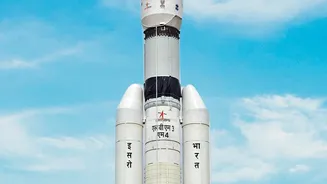
A Policy-Powered Launch
The transformation of India's space sector began with a fundamental policy shift. The Indian Space Policy 2023 was a game-changer, formally opening the doors for private companies to participate in end-to-end space activities. This policy redefined the roles
of key institutions. The Indian Space Research Organisation (ISRO) is now transitioning to focus on advanced research, scientific missions, and technology development, moving away from routine manufacturing. To facilitate this new ecosystem, the government established the Indian National Space Promotion and Authorisation Centre (IN-SPACe) as a single-window agency to promote, authorise, and supervise private space activities. This created a predictable regulatory environment, which, combined with liberalised Foreign Direct Investment (FDI) norms allowing up to 100% foreign investment in certain areas, has sent a clear signal: India's space economy is open for business.
The New Downstream Frontier
For most technology companies, the biggest opportunities lie not in building rockets, but in the downstream applications that space technology enables. The sheer volume of data generated by satellites is creating a massive demand for companies skilled in data analytics, artificial intelligence (AI), and machine learning. This data is invaluable for a multitude of sectors. In agriculture, satellite imagery helps with crop monitoring and yield prediction. In logistics, it powers advanced GPS and fleet management for route optimisation. Furthermore, it is critical for disaster management through early warning systems and for urban planning by monitoring infrastructure development. Companies that can build platforms to process, analyse, and deliver these space-derived insights are finding themselves at the centre of a booming market. The demand for satellite communication services, from rural broadband to in-flight connectivity, also presents a significant opening for tech firms specialising in telecommunications and network management.
Upstream and Midstream Opportunities
While downstream applications offer the broadest entry point, significant opportunities also exist for tech companies in the upstream (manufacturing) and midstream (ground segment) parts of the value chain. There is a growing need for specialised software for satellite design, simulation, and in-orbit operations. The development of launch vehicles and satellites requires sophisticated avionics, communication systems, and space-grade electronics. Indian tech companies with expertise in embedded systems, cybersecurity for space assets, and precision engineering can find a lucrative niche. Furthermore, the ground segment—which includes earth stations, telemetry, tracking, and control centres—requires robust software and hardware infrastructure, creating another avenue for tech sector involvement.
The Rise of Space-Tech Startups
The policy reforms have ignited a vibrant startup ecosystem. India is now home to hundreds of space-tech startups, a number that has grown exponentially in recent years. Companies like Skyroot Aerospace, which developed India's first privately built rocket, and AgniKul Cosmos, which established its own launch pad, are pioneering the private launch industry. Others like Pixxel are focused on building constellations of earth-imaging satellites. This startup boom is attracting significant venture capital, with funding rounds growing larger. These new companies are not just building hardware; they are innovating across the board in areas like green propulsion systems, robotics, and AI-driven space applications, creating a dynamic and competitive landscape.
The Path to a $44 Billion Economy
The potential is immense. India's space economy, currently valued at around $8-9 billion, is projected to grow to over $40 billion by the next decade. However, challenges remain. The sector is capital-intensive with long development cycles, which can be a mismatch for traditional venture capital models. Ensuring a steady pipeline of skilled talent and continuing to streamline regulatory processes will be crucial for sustained growth. Despite these hurdles, the direction is clear. The collaborative ecosystem involving ISRO's research leadership, IN-SPACe's regulatory support, and the commercial drive of private companies is creating a powerful engine for growth. For India's technology companies, space is no longer a final frontier but the next major arena for innovation, wealth creation, and global leadership.