



The Time Commitment: Hours vs. Days
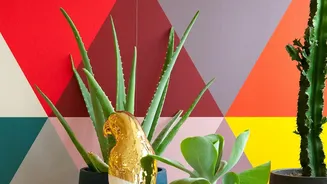
The central claim that wallpaper is faster holds up, but with nuance. A complex painted colour-block design is a multi-day affair. The process involves surface prep, priming, taping precise lines, painting one colour, waiting for it to dry completely
(often several hours or overnight), re-taping, and then painting the next colour. Each colour needs at least two coats, with drying time in between. This can easily stretch a project across an entire weekend. By contrast, installing a wallpaper accent wall is often a single-day job. A simple feature wall might only take one to two hours for a prepared DIYer. Even a larger, more complex room can often be completed in four to six hours. The time savings come from eliminating the wait for multiple coats of paint to dry. Once a wallpaper panel is up, you can immediately move to the next, making the active working time much more condensed.
The Preparation Process
Both methods require a clean, smooth wall for a professional finish. For painting, this means filling any holes or cracks, sanding them smooth, and cleaning the wall. The most time-consuming part of paint prep is the meticulous application of painter's tape to achieve crisp, clean lines between colours. This step requires patience and a steady hand. Wallpaper also needs a clean and smooth surface. Major imperfections will show through, so some wall repair might be necessary. Removing old wallpaper, if present, can be a significant task, sometimes taking several hours on its own. However, for a clean wall, prep for modern peel-and-stick wallpaper can be as simple as wiping it down. Traditional wallpaper may require a specific primer to ensure good adhesion and easier removal later.
Skill and Precision Required
Achieving a flawless finish has different challenges for each method. With paint, the biggest challenge is preventing bleed under the painter's tape, which can ruin the sharp edges that make colour-blocking so effective. Techniques like sealing the tape with the base colour can help, but it adds another step and more drying time. Wallpaper, especially papers with large or geometric patterns, requires precise measurement and pattern matching from one panel to the next. An incorrectly aligned pattern can be jarring to the eye. While peel-and-stick wallpapers are forgiving and can be repositioned, getting the first panel perfectly straight is critical as it guides all subsequent panels. For many, wallpaper installation feels more technical, but paint requires more artistic patience to get right.
The Cost Factor: Upfront vs. Long-Term
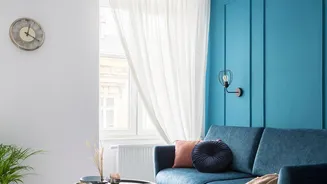
In India, paint is almost always the more affordable option upfront per square foot. Basic emulsion paint is significantly cheaper than even budget-friendly wallpaper. However, the true cost is more complex. Designer wallpapers or textured varieties carry a premium price tag. But wallpaper tends to be more durable, often lasting 10-15 years, while a painted surface may need refreshing every 5-7 years. When you factor in the cost of repainting over a decade, the long-term cost difference narrows considerably. A popular strategy in Indian homes is to use wallpaper on a single feature wall and paint the other three, creating a high-impact look without the cost of papering an entire room.
Design Flexibility and Final Effect
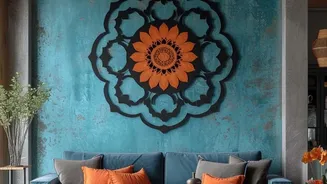
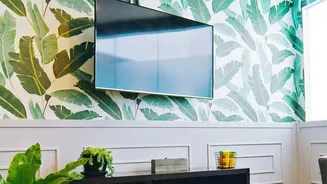
Paint offers limitless colour possibilities, allowing you to create a completely custom palette. It's perfect for subtle, tonal looks or bold, solid shapes. However, paint can't easily replicate the intricate patterns, textures, and metallic or shimmery finishes available in wallpaper. Wallpaper can instantly introduce a complex design—be it floral, geometric, or abstract—that would be incredibly difficult and time-consuming to paint by hand. This makes wallpaper a powerful tool for adding personality and a 'designer' feel to a space with relatively little effort compared to a custom mural.
Durability and Reversibility
High-quality modern wallpaper is surprisingly durable and many vinyl types are scrubbable, making them suitable for high-traffic areas. Peel-and-stick versions, in particular, have revolutionised the market for renters or those who like to redecorate often, as they can be removed without damaging the wall. Removing traditional, pasted wallpaper can be a laborious process involving scoring, steaming, and scraping. Paint, on the other hand, is easy to touch up when scuffed. Changing a painted wall is as simple as painting over it, making it the more flexible option for those who anticipate changing their minds. However, in climates with high humidity, like many parts of India, some wallpapers can be prone to peeling at the edges over time if not installed correctly in a well-ventilated space.