




The Old Way: The Limits of Chemical Fuel
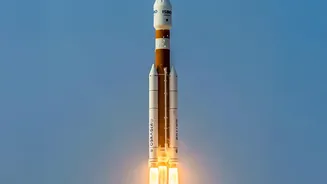
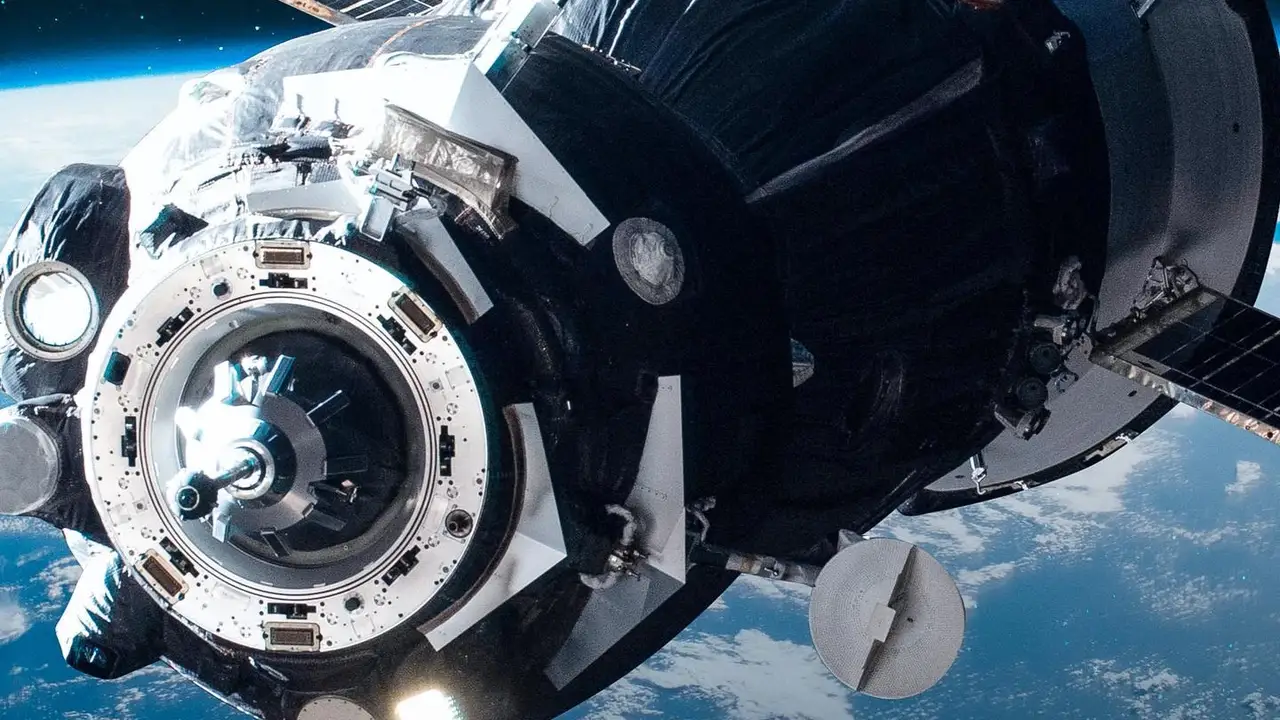
For decades, satellites have navigated the vacuum of space using chemical propulsion. Think of these as small, high-powered rocket engines that fire in short bursts to perform crucial tasks like raising a satellite to its final orbit or making fine adjustments
to maintain its position, a process known as station-keeping. These systems work by combining a fuel and an oxidizer to create a controlled explosion, generating powerful thrust. The problem is that this method is fuel-hungry. A significant portion of a satellite's launch weight is just propellant. Once that fuel runs out, the satellite's useful life is over, even if its complex electronics are still perfectly functional. This fundamental limitation has always defined the operational lifespan of even the most advanced satellites.
The New Era: A Gentle, Unrelenting Push
Electric propulsion (EP) systems work on a completely different principle. Instead of a forceful chemical reaction, they use electrical power, typically generated by the satellite's solar panels, to accelerate a propellant. One of the most common types is the Hall-effect thruster, which uses electric and magnetic fields to ionize an inert gas like xenon, turning it into plasma. This stream of charged ions is then accelerated out of the thruster at incredibly high speeds, generating a gentle but continuous push. The thrust from an electric engine is tiny—sometimes compared to the force of a single sheet of paper resting on your hand—but because it can operate for thousands of hours, it achieves massive changes in velocity over time.
The Big Payoff: Lighter, Longer, and Cheaper
The primary advantage of electric propulsion is its extraordinary fuel efficiency. These systems have a much higher specific impulse, the metric used to measure the efficiency of rocket engines. They can achieve the same change in velocity using a fraction of the propellant mass compared to chemical systems. For a large communications satellite that might need over two tonnes of chemical fuel, an electric system could perform the same job with just a couple hundred kilograms of xenon. This massive weight reduction has a cascading effect: lighter satellites are cheaper to launch. More importantly, with fuel no longer being the main limiting factor, the operational lifespan of a satellite can be extended by years, maximising the return on investment.
ISRO's Leap Forward
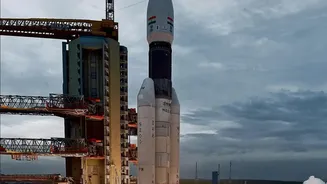
ISRO has been systematically developing its own electric propulsion technology to achieve self-reliance. While an earlier satellite, GSAT-9, used an imported thruster in 2017, the agency is now focused on fully indigenous systems. A key milestone is the development of a 300-millinewton Stationary Plasma Thruster, which has undergone extensive endurance testing. This homegrown technology is slated for demonstration on the Technology Demonstration Satellite (TDS-01), which will use the electric system for its entire orbit-raising phase. This marks a major step for ISRO, moving from chemical to electric systems for primary satellite manoeuvres. The successful test and deployment of this technology will enable future ISRO communication satellites to carry more transponders or scientific payloads instead of heavy fuel.
A Trade-Off for a New Generation of Missions
The switch to electric propulsion does involve a trade-off: time. The low thrust of electric engines means that manoeuvres take much longer. Raising a satellite to a geostationary orbit, which might take a week with chemical thrusters, could take several months with an electric system. However, for most commercial and scientific missions, this extended travel time is a small price to pay for a much longer operational life and enhanced capability. This technological shift not only makes current satellite applications more sustainable but also opens the door for more ambitious future projects, including complex interplanetary missions where fuel efficiency is paramount.