




The Canine Conundrum
Across the animal kingdom, larger species almost always live longer than smaller ones; an elephant outlives a mouse. But within a single species, the opposite can be true, and nowhere is this more apparent than in domestic dogs. A tiny Chihuahua can live for
15 years or more, while a majestic Great Dane is lucky to see eight. For decades, scientists have theorized about this trade-off, suggesting that the rapid growth of large breeds puts immense strain on their bodies. A landmark study involving 864 dogs from the Dog Aging Project, a massive nationwide research initiative, has now pinpointed a specific molecular process that appears to drive this accelerated aging.
Unlocking the Epigenetic Clock
The researchers, led by a team at Arizona State University, didn't just look at the dogs' basic DNA. Instead, they focused on epigenetics—the chemical tags on DNA that act like switches, telling genes when to turn on and off. These tags change over a lifetime due to age and environmental factors, creating what scientists call an 'epigenetic clock'. By analyzing these patterns, the team found a clear signature: as dogs get older, they lose crucial regulatory tags. This process happens significantly faster in larger dogs than in smaller ones.
The Trouble with 'Jumping Genes'
The study found that this loss of regulation was most pronounced in specific parts of the genome called transposable elements, or 'jumping genes'. One class in particular, known as LINE1s, stood out. In healthy cells, DNA methylation—a type of epigenetic tag—keeps these jumping genes locked down. But as dogs age, and especially in large breeds, this methylation erodes. On average, giant breeds lost about 35 percent more LINE1 methylation per year than small breeds. When these genes are no longer suppressed, they can copy themselves and 'jump' to new locations in the DNA, causing damage and instability. This process is linked to the development of cancer and other age-related diseases.
The Cancer Connection
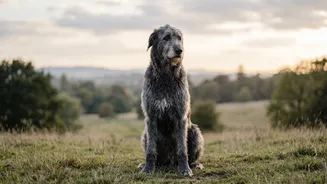
This finding provides a powerful molecular link to an observable reality: large dogs often have a higher risk for certain cancers, particularly bone cancers like osteosarcoma. Studies from the Royal Veterinary College have shown that giant breeds like the Scottish Deerhound and Great Dane are many times more likely to develop osteosarcoma than crossbreeds. The new DNA research suggests a mechanism for this. The very thing we've bred large dogs for—rapid growth—may be driven by biological pathways that, without strong genetic regulation, also pave the way for the genomic instability that leads to cancer. It's an evolutionary trade-off: live fast, grow big, and die young.
What This Means for Dog Lovers
While these findings are a major leap in our understanding, they don't yet offer a way to stop the clock. The research is observational, meaning it identifies a strong correlation but doesn't prove that unruly jumping genes are the sole cause of faster aging. However, it gives scientists a clear target for future research. By understanding the specific mechanisms of aging, researchers hope to one day develop interventions that could promote healthier, longer lives for all dogs. For now, the best strategy for owners of all breeds remains the same: provide excellent nutrition, regular exercise, and consistent veterinary care to give their companions the best quality of life possible.