




Mission Accomplished Above Earth
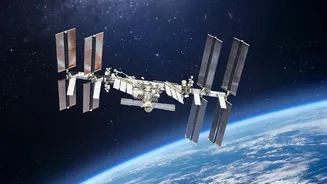
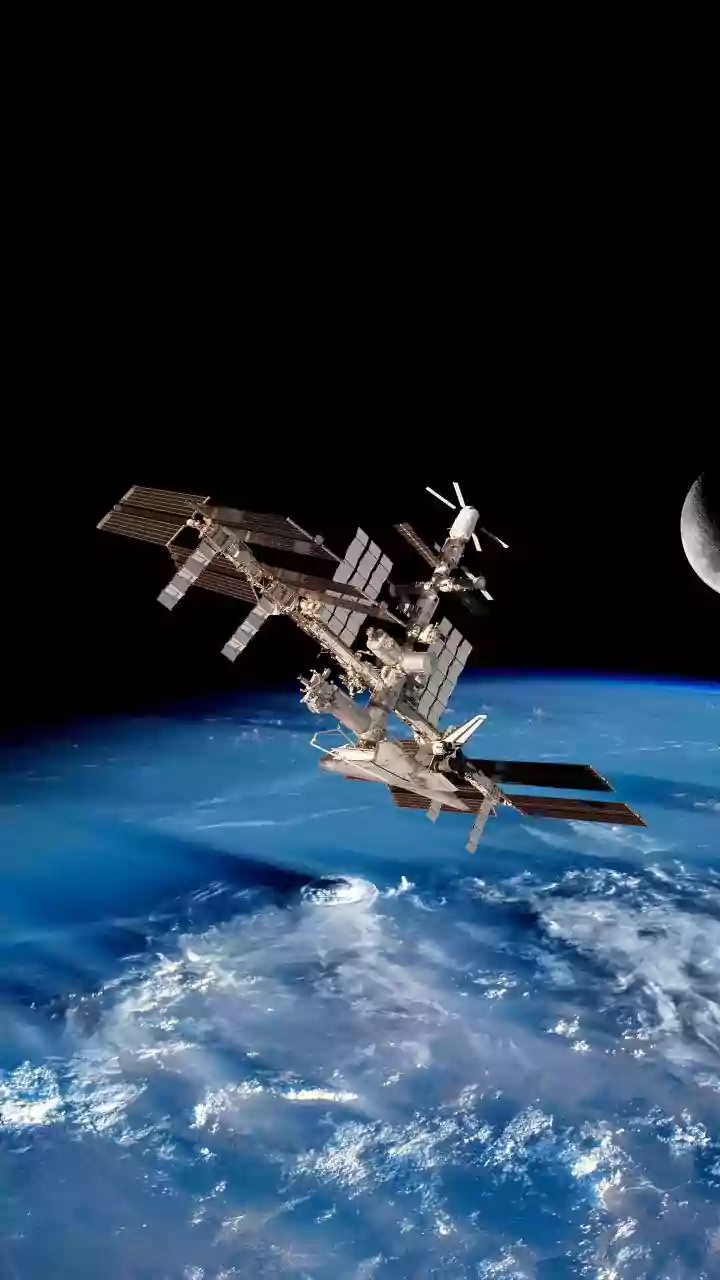
On Tuesday, August 25, NASA astronaut Anil Menon and ESA astronaut Sophie Adenot completed a spacewalk lasting approximately six and a half hours. The primary goal of their extravehicular activity (EVA) was to install a new Space-to-Ground antenna, a vital
piece of hardware for the orbiting laboratory. The astronauts switched their suits to battery power to officially begin the spacewalk, before exiting the station's Quest airlock. Initial tests from ground control confirmed that the newly installed antenna was receiving power and transmitting data, signaling a successful operation. This was the 283rd spacewalk in support of the station's assembly and maintenance, marking the third for Menon and the second for Adenot.
A Critical Communications Upgrade
The antenna is not just a spare part; it's a crucial link for high-speed communication between the International Space Station and Mission Control in Houston. This connection is essential for transmitting vast amounts of scientific data, video feeds, and other telemetry that are fundamental to the station's purpose as a research outpost. The system allows for a robust, high-data-rate connection via NASA's Tracking and Data Relay Satellite System, ensuring that scientists and flight controllers on Earth have a clear and constant line to the crew and their experiments. While the ISS has redundant communication systems, restoring this antenna to full functionality was a key priority to ensure operational margins.
Overcoming an Earlier Setback
This successful installation followed a challenging spacewalk on August 18. During that earlier excursion, Menon and Adenot managed to remove the failed antenna, but the task proved more difficult than anticipated. The astronauts encountered stubborn electrical cables and bolts that took longer than expected to loosen, consuming valuable time. Due to the delay, mission planners decided to postpone the installation of the new antenna to a future date. The failed unit was temporarily secured to the station's truss structure, awaiting this follow-up mission to complete the replacement and move the old hardware to a more permanent storage platform.
The High-Stakes Ballet of Spacewalking
The successful completion of this task highlights the immense precision and resilience required for spacewalks. Working in bulky, pressurized suits, astronauts must perform delicate tasks in a vacuum, with every movement carefully choreographed. For this mission, Menon was positioned at the end of the Canadarm2 robotic arm, which was controlled from inside the station, to retrieve the spare antenna. Adenot, meanwhile, traversed the station's exterior by hand to assist. The coordination between the spacewalkers, the robotic arm operator, and the team at Mission Control demonstrates the complex, collaborative nature of maintaining humanity's outpost in space. It's a high-stakes ballet performed hundreds of kilometers above the planet.