






An Unplanned Journey's End
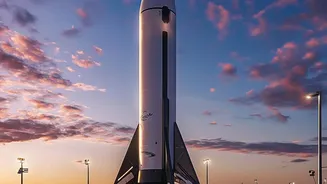
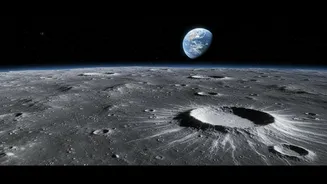
On August 5, 2026, a large piece of space hardware concluded its 19-month journey through space with a dramatic, high-speed collision with the Moon. The object was the spent upper stage of a SpaceX Falcon 9 rocket, measuring about 45 feet long and weighing
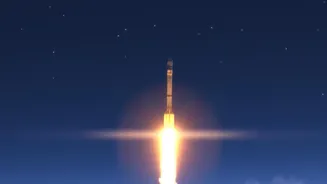
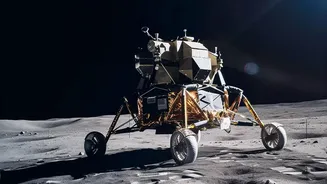
around four metric tonnes. It originated from a January 2025 mission that successfully sent two commercial lunar landers on their way. After completing its primary task, the rocket stage lacked the fuel to either escape into a stable solar orbit or be safely guided back to burn up in Earth's atmosphere. Instead, it was left in a chaotic orbit where the complex gravitational pulls of the Earth, Moon, and Sun gradually sealed its fate. Astronomers, both amateur and professional, tracked the derelict stage for months, eventually confirming with 100% certainty that it was on a collision course.
A Scientific Silver Lining
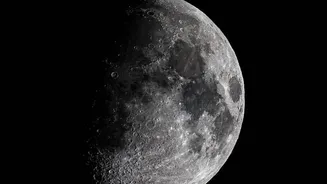
While the term 'crash' sounds negative, the scientific community saw an unexpected upside. Artificial impacts on the Moon are rare, and this one provided a free experiment. The collision, which struck near the Einstein Crater on the Moon's sunlit side, was predicted to excavate a crater up to 60 feet wide. The main event for scientists was the resulting plume of ejecta—a massive cloud of lunar dust and rock thrown miles into the sky. By studying this plume with powerful telescopes and orbiting spacecraft, researchers can learn a great deal about the Moon's surface. Spectrometers can analyse the light passing through the dust cloud to determine its chemical composition. This helps scientists understand the difference between the loose topsoil, or regolith, and the solid bedrock beneath. Early reports from ground-based telescopes in Chile indicated the detection of a plume containing sodium and lithium gas, confirming the impact was observed.
The Global Observation Effort
The scientific community scrambled to point its best assets toward the predicted impact zone. NASA’s Lunar Reconnaissance Orbiter (LRO) and South Korea's Pathfinder Lunar Orbiter were tasked with trying to capture before-and-after imagery of the site to analyse the new crater. Obtaining these images can take days or weeks, depending on orbital paths and lighting conditions. Back on Earth, astronomers with powerful ground-based telescopes hoped to catch a glimpse of the impact flash or, more likely, the ejecta plume silhouetted against the bright lunar surface. This coordinated observation campaign is crucial because it allows scientists to compare what they see with predictive models. The more data gathered from events like this, the better they can understand the physics of high-velocity impacts, a process that has shaped every rocky body in the solar system.
A Wake-Up Call for Lunar Litter
Beyond the immediate science, the event throws a spotlight on a growing problem: space junk in the vicinity of the Moon. While Earth's orbit is crowded with tens of thousands of pieces of tracked debris, the cislunar environment has been relatively pristine. However, with a new era of lunar exploration led by national agencies and private companies like SpaceX, that is changing. This impact was not the first piece of human-made equipment to hit the Moon—the Apollo missions intentionally crashed their booster stages for seismic experiments. But as an uncontrolled and accidental event, it highlights a lack of international regulations for the disposal of deep-space hardware. As more missions head to the Moon, the risk of collisions, contamination of scientifically interesting sites, and interference with active missions will only increase without clear guidelines for responsibly managing post-mission debris.