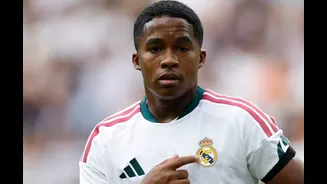



For a few glorious years, he was not just the world’s best footballer; he was joy personified on a pitch. With a beaming smile and impossible skill, Ronaldinho conquered the world. But how did football's greatest entertainer fall so fast?
The Smile That Conquered the World
Ronaldo de Assis
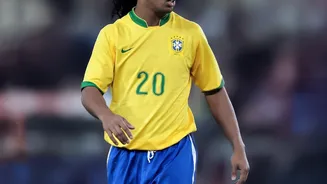
Moreira, known to the world as Ronaldinho, arrived in Europe with a reputation forged in the streets and futsal courts of Brazil. After a formative spell at Paris Saint-Germain, he joined a Barcelona side desperate for a saviour in 2003. The club was in a slump, but the Brazilian's arrival was the catalyst for a spectacular revival. His game was a dizzying blend of no-look passes, elastic dribbles, and audacious free-kicks, all delivered with an infectious, gap-toothed grin. He didn't just play football; he performed it, bringing a sense of carnival and creativity that had fans on their feet. Alongside winning the 2002 World Cup with Brazil, his early years in Spain re-established Barcelona as a dominant force and made him a global icon.
The King of the Camp Nou
Between 2004 and 2006, Ronaldinho was untouchable. He led Barcelona to back-to-back La Liga titles and the 2006 Champions League crown, the club's first in 14 years. He was twice named FIFA World Player of the Year and won the prestigious Ballon d'Or in 2005. His peak was perhaps best exemplified in a 2005 match against arch-rivals Real Madrid at their home stadium, the Santiago Bernabéu. He scored two breathtaking solo goals, humiliating their defenders to such an extent that the Madrid fans gave him a standing ovation—an almost unheard-of tribute for a Barcelona player. At 26, he had won every major trophy available and was universally regarded as the best player on the planet, an artist at the absolute height of his powers.
The Party Begins to Take Over
The fall began almost as soon as the peak was reached. After the 2006 World Cup, whispers about Ronaldinho’s dedication began to grow louder. Reports of a fervent commitment to nightlife and a declining work ethic in training became common. His physical condition, always precarious according to former manager Carlo Ancelotti, started to visibly deteriorate. The explosive acceleration that made his dribbling so devastating began to fade. While he could still produce moments of magic, the consistency vanished. In the background, a disciplined young prodigy named Lionel Messi was rising through the ranks. When Pep Guardiola took over as Barcelona’s manager in 2008, he sought to instill a new culture of professionalism and saw Ronaldinho as a bad influence, ultimately deciding to sell the club's icon.
A Nomadic Decline and Lingering Questions
A move to AC Milan in 2008 offered a chance at redemption. There were flashes of the old brilliance, including a season where he was Serie A's top assist provider, but the decline was irreversible. He struggled with fitness and was often relegated to the bench in a league known for its tactical and physical demands. From Milan, his career became nomadic, with spells back in Brazil and a brief, unsuccessful stint in Mexico. The central problem was a loss of motivation. Having won everything by age 26, some close to him felt he lacked the obsessive drive of contemporaries like Messi and Cristiano Ronaldo to maintain that level. For Ronaldinho, football was about joy, not longevity. Once the joy became harder to find, the effort waned.
A Complicated PoststFootball Life
After officially retiring, Ronaldinho's life took a series of bizarre and troubling turns. His name was linked to various financial schemes, including a cryptocurrency pyramid scheme that used his image. Most shockingly, in March 2020, he and his brother were arrested in Paraguay for attempting to enter the country with falsified passports. He spent over five months detained, first in a maximumsecurity prison and then under house arrest in a luxury hotel, before being released. The incident served as a sad and public postscript to his fall from grace, turning the world's most beloved footballer into 'Prisoner No. '194'. While recent reports in 2026 suggest a marketingfocused 'comeback' with a lowertier Italian club, it appears to be a commercial arrangement rather than a serious return to playing.