



When an Asteroid Acts Like a Comet
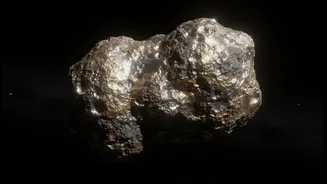
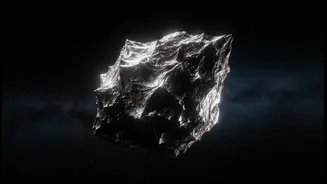
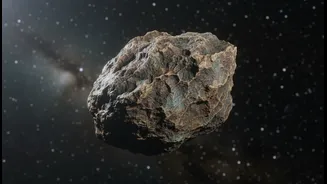
For a long time, the rules seemed simple. Asteroids were chunks of rock and metal, mostly found in the belt between Mars and Jupiter, that did little more than orbit the Sun. Comets were dirty snowballs of ice and dust from the frigid outer solar system,
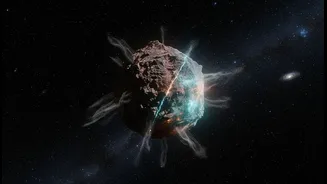
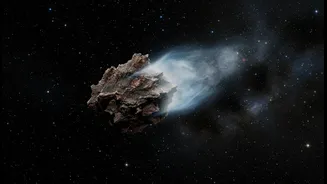
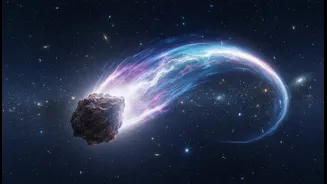
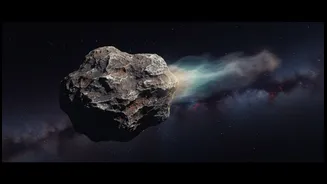
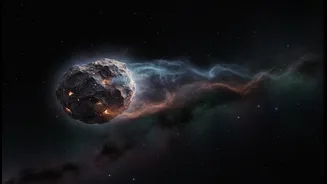
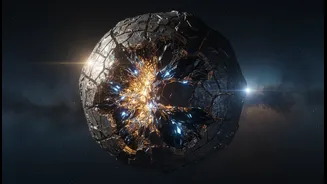
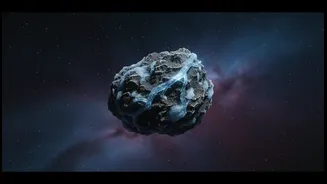
which grew spectacular tails as they neared the Sun and their ices turned to gas. But a fascinating class of objects is forcing scientists to rethink these neat categories. Known as “active asteroids” or “main-belt comets,” these bodies have the orbits of asteroids but display the activity of comets. They were discovered masquerading as simple, inactive rocks but were later caught sprouting tails or fuzzy comas of dust and gas, challenging our core definitions of these celestial bodies. This discovery proves that the space between Mars and Jupiter isn't just a static collection of ancient rubble but a dynamic and evolving environment.
The Search for Earth's Water
The existence of these hybrid objects is more than just a cosmic curiosity; it could hold the key to one of the biggest questions in planetary science: Where did Earth’s water come from? For years, scientists hypothesized that comets from the outer solar system delivered water to our young, dry planet. However, chemical analysis of many comets showed their water had a different isotopic fingerprint than Earth’s oceans. Active asteroids present a compelling alternative. Since they formed closer to us, in the main asteroid belt, it’s possible they hold a type of water that is a much better match. The recent discovery of water vapor around a main-belt comet named 238P/Read by the James Webb Space Telescope confirms that ice can, in fact, survive in this warmer region of the solar system. These active asteroids are now considered prime candidates for being the original source of Earth's life-giving water.
Waking the Sleeping Giants
So what causes a supposedly dead rock to spring to life? The activity is often driven by the sublimation of buried ice—the same process that drives traditional comets. An impact from a smaller body could expose a fresh patch of ice, or a subtle shift in its orbit could bring it slightly closer to the Sun, providing just enough extra energy to begin vaporizing volatiles that have been dormant for eons. Some scientists poetically refer to these as “Lazarus comets,” rising from a long slumber. However, this isn’t the only explanation. In other cases, the “activity” isn’t from melting ice at all. It could be dust and debris kicked up by a recent collision with another asteroid, or the asteroid could be spinning so fast that it starts to fling pieces of itself off into space. Distinguishing between these causes is a major focus for astronomers, as each one tells a different story about the object's history and composition.
A New Frontier for Discovery
Finding these active asteroids is incredibly difficult. They are small, faint, and their activity can be fleeting. Fewer than a hundred have been confirmed among the more than 1.3 million known asteroids. Yet, the pace of discovery is increasing thanks to powerful survey telescopes and dedicated projects. A NASA-partnered citizen science project called Active Asteroids recently enlisted over 8,000 volunteers to scan hundreds of thousands of telescope images, resulting in the identification of 15 new candidates. This shows how crucial public participation can be in modern science. By finding and studying more of these objects, scientists can build a clearer picture of their properties, distribution, and how common they are. This, in turn, will help refine models of how our solar system formed and how the building blocks of life, like water, were distributed.