


A One-in-a-Million Discovery
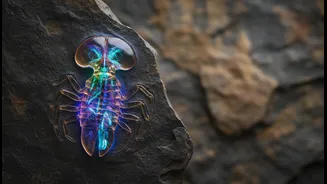
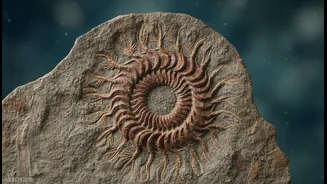
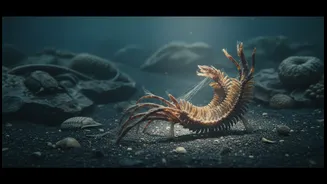
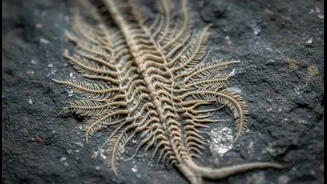
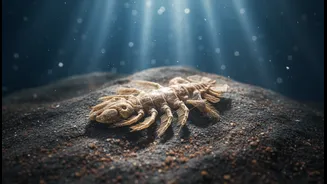
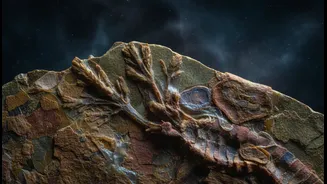
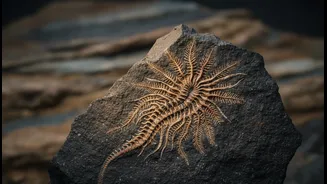
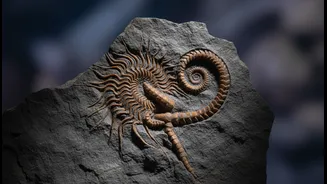
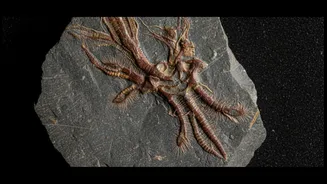
Paleontology often seems like a science of hard parts—bones, teeth, and shells. Soft tissues like skin and organs are the first to decay and are almost never preserved. That’s why a recent find is so astonishing: the fossil of a 450-million-year-old crinoid,
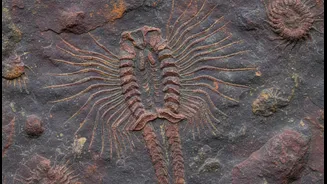
a sea creature related to modern starfish, was discovered with its delicate tube feet intact. This occurred during the Ordovician period, long before dinosaurs, when the most complex life was still in the ocean. Found in a small museum in Montréal, the fossil of the species Dendrocrinus simcoensis represents only the second time soft tissue has ever been found in the millions of crinoid fossils discovered, and it is by far the oldest. For preservation this perfect to occur, the creature had to be buried rapidly in fine mud under conditions with very little oxygen, essentially mummifying the delicate structures before they could decay.
Beyond a Physical Reconstruction
For decades, the primary goal with a new fossil was to reconstruct what the animal looked like and how it moved. But modern paleontology aims much higher. The focus has shifted from functional morphology—how bones and teeth were used—to paleoecology, the reconstruction of entire ancient ecosystems. This incredibly rare crinoid fossil is a perfect example. Its preserved tube feet, which are used for feeding, offer direct evidence of how this ancient animal lived. By comparing the fossil's anatomy with that of living crinoids, scientists have determined that this ancient species fed and behaved very differently from its modern relatives, suggesting it occupied a unique ecological role that no longer exists today.
Technology Unlocks Ancient Secrets
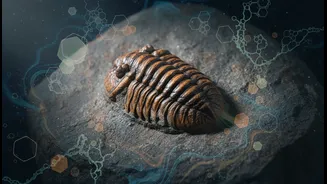
These deeper questions are possible thanks to a technological revolution in paleontology. Scientists no longer rely solely on chisels and keen eyes. High-resolution X-ray CT scans and synchrotron scanning allow researchers to peer inside fossils without destroying them, revealing minute internal structures. This digital approach creates 3D models that can be easily shared and analyzed, allowing scientists to reconstruct flattened skulls or even model muscle attachments. In some cases, artificial intelligence is now being used to speed up the painstaking process of separating fossil from rock in digital scans, reducing months of work to days. For specimens like the crinoid, this means analyzing the preserved soft tissues at a microscopic level to understand their structure and function in unprecedented detail.
A Window into Past and Future Climates
A single fossil is a data point from a lost world, offering clues about ancient climates that have surprising relevance today. The Ordovician Period, when this crinoid lived, was a time of significant environmental change. By studying fossils from this era, scientists gain insight into how life responds to shifting global conditions. The chemical composition of microscopic shells from ancient plankton can reveal past ocean temperatures and atmospheric carbon dioxide levels. This research provides a crucial long-term perspective on climate change, helping scientists model how modern ecosystems might react to rising temperatures and CO2. Understanding how a 450-million-year-old ecosystem functioned and changed helps us understand the forces that continue to shape our planet.
Redrawing the Tree of Life
Perhaps the most profound questions sparked by new fossils involve evolution itself. Each major find can potentially redraw branches on the tree of life. For instance, recent discoveries of Cambrian-era fossils have helped place bryozoans, or 'moss animals', correctly within the animal kingdom's great diversification event, solving a long-standing mystery. The crinoid fossil, by providing a detailed look at the anatomy of a very early echinoderm, gives scientists new data on how this major animal group evolved its unique features. It’s not just about one creature; it’s about understanding the evolutionary pressures and innovations that led to the vast diversity of life on Earth. These fossils are records of how life and the planet have transformed together across immense stretches of time.