


The Proposed Deal Explained
In early October 2026, SpaceX announced a significant agreement to acquire a nationwide portfolio of 800 MHz low-band spectrum from the investment firm Grain Management. This deal, which is still subject to approval by the Federal Communications Commission
(FCC), would give SpaceX's Starlink Mobile division control over key airwaves. Elon Musk, CEO of SpaceX, referred to this as the 'last critical piece of the spectrum puzzle' needed to provide complete phone coverage across America. The plan is to create a hybrid network that uses both its massive satellite constellation and a terrestrial network, positioning Starlink Mobile to compete directly with established giants like T-Mobile, Verizon, and AT&T.
Why Low-Band Spectrum Is a Game Changer
Wireless spectrum is the range of radio frequencies used to transmit data, and not all frequencies are created equal. Low-band spectrum, which typically sits below 1 GHz, is highly valued for two main reasons: its extensive reach and its ability to penetrate physical obstacles. These frequencies can travel for miles, making them ideal for covering vast rural areas where cell towers are scarce. Furthermore, low-band signals are much better at passing through walls, windows, and other building materials, a major weakness of higher-frequency signals. By acquiring 800 MHz spectrum, SpaceX aims to solve the problem of indoor dead zones, allowing Starlink Mobile to provide reliable service inside buildings, not just in open areas with a clear view of the sky.
The Ambition: A Hybrid Satellite-Terrestrial Network
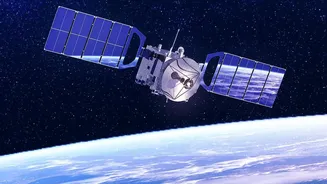
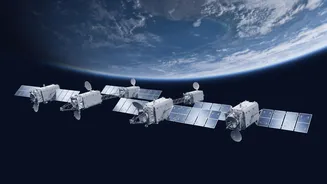
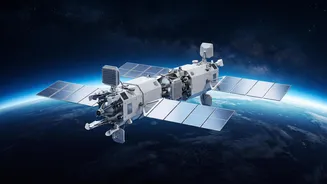
SpaceX's strategy isn't just about satellites anymore. The company plans to use this newly acquired low-band spectrum to build out an 'advanced terrestrial deployment'. This means Starlink Mobile will operate as a hybrid network, combining the global reach of its satellites with the in-building reliability of ground-based infrastructure. For users, this could mean seamless connectivity that transitions between satellite and terrestrial signals without interruption. The FCC has already given SpaceX a green light to launch and operate 15,000 next-generation 'Direct to Cell' satellites, which are designed to connect directly with standard, unmodified smartphones on the ground. This combination of advanced satellites and crucial low-band ground spectrum is what underpins SpaceX's ambition to become a full-fledged mobile carrier.
Navigating Regulatory and Competitive Hurdles
The path forward is not without challenges. The deal first needs the blessing of federal regulators, including the FCC and the Department of Justice, who will review it for potential impacts on market competition. Beyond regulatory approval, SpaceX faces skepticism from its would-be rivals. T-Mobile's Chief Technology Officer, John Saw, publicly stated that acquiring spectrum is only the first step and doesn't equate to building a high-performing nationwide network overnight. He pointed out that T-Mobile holds nearly 400 MHz of low- and mid-band spectrum, compared to the roughly 80 MHz Starlink Mobile would have after the deal. Building the necessary ground infrastructure, customer service, and retail presence to compete at scale will require immense investment and time.
What This Means for the Future of Connectivity
If SpaceX succeeds, it could fundamentally disrupt the US wireless market. The introduction of a fourth major national carrier built on a novel satellite-terrestrial model would inject new competition, potentially leading to better coverage and pricing for consumers. The initial market reaction saw shares of T-Mobile, AT&T, and Verizon dip on the news, signaling that investors are taking the threat seriously. Starlink's 'Direct to Cell' technology promises to eliminate mobile dead zones, a compelling proposition for millions of customers in rural and underserved areas. However, the real test will be whether SpaceX can execute its complex vision, overcoming the technical, financial, and regulatory hurdles to build a network that can truly rival those that have been built and optimized over decades.