


Meet 'Mechazilla': The Rocket Catcher
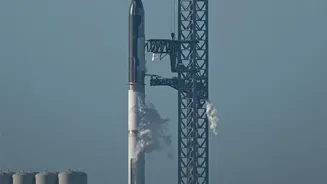
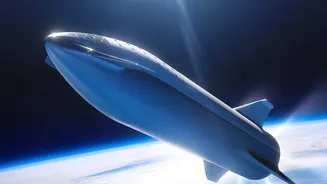
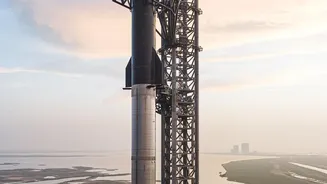
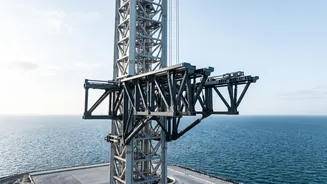
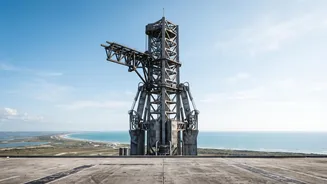
SpaceX's strategy revolves around its launch and catch tower, an immense steel structure equipped with two large arms. Nicknamed 'Mechazilla' or the 'chopsticks', these arms are designed to do more than just stack the massive Super Heavy booster and Starship
spacecraft before launch; their primary job is to catch them on their return. The process is a high-stakes ballet of steel and fire. After separating from the Starship upper stage, the Super Heavy booster reignites some of its engines to slow down and fly back to the launch site. Using its grid fins for steering, it guides itself into position next to the tower, performs a final landing burn to hover briefly, and allows the chopsticks to close around reinforced catch points on the booster.
Why Not Just Use Landing Legs?
SpaceX mastered propulsive landings with its Falcon 9 rocket, which uses deployable legs to touch down on drone ships or landing pads. So why abandon a proven method? The answer lies in two words: mass and speed. For a vehicle as enormous as Starship, a robust set of landing legs would weigh several tons. By removing them, SpaceX can dedicate that mass to more important things, like payload or fuel. More importantly, the tower catch is crucial for rapid reusability. Catching the booster directly on the launch mount means it can be inspected, refueled, and potentially relaunched in a matter of hours or days, not weeks. This 'airline-like' operational tempo is the only way SpaceX believes it can achieve its long-term goal of building a city on Mars, which requires launching an immense fleet of Starships in a short window.
The Challenge of Unprecedented Precision
The core engineering challenge is the mind-boggling precision required. You are catching a 70-meter-tall building falling from the sky. While the booster controls its descent, the final catch requires the tower's arms to align perfectly with the catch points on the rocket as it hovers. This is a dynamic robotics problem on a scale never before attempted. The system must account for the booster's velocity, position, and attitude while also compensating for environmental factors like wind gusts. A miscalculation of even a few centimeters could lead to a catastrophic failure, destroying both the booster and the expensive launch tower infrastructure.
From Theory to Reality
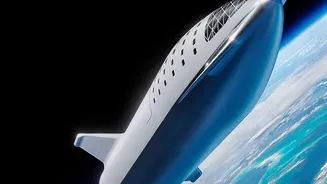
For a long time, the concept was met with skepticism in the aerospace community. However, SpaceX successfully caught a Super Heavy booster on its very first attempt in October 2024, a feat that an astronomer described as unexpected and an engineering triumph. The company has since repeated the booster catch successfully, proving the system's viability. The next, and even more difficult, step is to catch the Starship upper stage. This part of the vehicle travels to orbit and must endure the intense heat of atmospheric reentry before returning for its own catch attempt. As of late 2026, SpaceX is preparing for this next major milestone, with CEO Elon Musk stating the first attempt to catch the Ship will happen on an upcoming flight, possibly before the end of the year.