





You may never fly through the hazy orange skies of Saturn’s largest moon, but your name can. NASA is offering the global public a chance to be part of a historic journey to one of the most intriguing worlds in our solar system: Titan.
Your Name on a Mission to Titan
NASA has officially
opened its 'Journey to Titan' campaign, inviting people from around the world to submit their names for a billion-mile voyage. These names will be stenciled onto a special microchip and placed aboard the Dragonfly spacecraft, a nuclear-powered rotorcraft destined for Titan. Every person who signs up receives a personalized digital boarding pass as a souvenir of their part in this cosmic adventure. This initiative follows a long tradition of NASA engaging the public with its missions, including sending millions of names to Mars on the Perseverance rover and to Jupiter's moon on the Europa Clipper. The deadline to secure your spot on this unique passenger list is January 15, 2027.
Meet Dragonfly, the Nuclear-Powered Drone
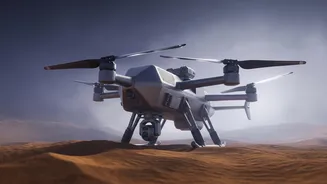
The vehicle for this incredible journey is no ordinary lander. Dragonfly is a car-sized, eight-rotor drone, essentially a robotic quadcopter designed for planetary exploration. Scheduled to launch in July 2028, it will undertake a long cruise through space, arriving at Titan in 2034. Unlike rovers that are limited to crawling across the surface, Dragonfly is built to fly. Taking advantage of Titan's thick atmosphere and low gravity, it will be able to perform multiple flights, traveling dozens of miles at a time to explore various locations. This makes it the first-ever science mission designed for powered, controlled flight on another world, hopping between diverse environments like sandy dunes and the floor of an impact crater to conduct its research.
Why Is Titan So Important?
Titan is one of the most compelling destinations in the solar system for scientists searching for the building blocks of life. It is the only moon known to have a dense atmosphere, which, like early Earth's, is rich in nitrogen and methane. This fascinating world features an Earth-like cycle of liquids, but with a crucial twist: its rivers, lakes, and seas are filled not with water, but with liquid methane and ethane. Beneath its thick, organic haze, Titan has a surface abundant in complex carbon-based molecules. Scientists believe that studying this prebiotic chemistry—the chemical steps that occurred before life emerged—could provide profound insights into how life may have started on our own planet.
A Laboratory for Prebiotic Chemistry
The Dragonfly mission's primary goal is to investigate habitability and search for clues of this prebiotic chemistry. While not searching for existing life, the mission will analyze how far the chemistry of life has progressed in an environment that is both strangely alien and remarkably similar to primordial Earth. Dragonfly will land in a dune field called Shangri_La, near the Selk impact crater. Scientists are particularly interested in the crater because the heat from the impact could have melted the local water ice, creating a temporary mixture of liquid water and the abundant organic material on the surface—a potential primordial soup. By sampling and analyzing materials from different locations, Dragonfly will help us understand the ingredients necessary for life.