







The Tale of Two Sugars
At a chemical level, glucose and fructose seem similar. They're both simple sugars and provide the same amount of energy, measured in calories. Glucose is the body's primary fuel source, circulating in our bloodstream and used by our cells for immediate
energy. Fructose, found naturally in fruits and honey, is metabolized differently, primarily in the liver. For years, nutrition science has debated their distinct impacts. While our bodies need glucose, high fructose consumption, especially from processed foods and sugary drinks like high-fructose corn syrup (a mix of both sugars), has been linked to metabolic issues. This has led to a simple narrative: glucose is necessary, fructose is suspect. But emerging research suggests this view might be too simplistic.
Your Gut Is Talking to Your Brain
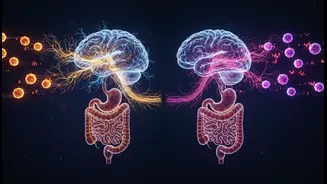
The key to understanding how these sugars affect us lies in the gut-brain axis, a complex communication network connecting our digestive system and our central nervous system. Think of it as a constant feedback loop. When you eat, your gut sends signals to your brain about what you've consumed and how much energy it contains. This influences everything from hunger and fullness to mood and cravings. Key players in this conversation are hunger-related neurons in the brain, like the AgRP neurons, which drive our desire to eat. When we consume calories, the activity of these neurons is supposed to decrease, telling us we're full. Hormones like leptin (the satiety hormone) and ghrelin (the hunger hormone) also play a crucial role in this signalling cascade.
What Lab Studies Reveal
Recent studies, primarily in mice, have shown that glucose and fructose talk to the brain through surprisingly different channels. Research from mid-2026 found that glucose is much more effective at suppressing the activity of those hunger-driving AgRP neurons than fructose is. In other words, glucose sends a stronger "I'm full" signal to the brain's hunger control centre. Fructose, meanwhile, uses a different, less direct pathway involving a gut hormone called PYY and the vagus nerve to send a weaker satiety signal. Interestingly, when mice were given high-fructose corn syrup, the combination of glucose and fructose seemed to suppress hunger signals more strongly than fructose alone, which may partly explain its appeal. These findings suggest that not all calories are equal when it comes to communicating with our brain.
The Problem with Simple Questions
This is where the headline's critique becomes crucial. While these lab findings are fascinating, they have limitations. Much of this research uses pure, isolated sugars delivered directly to animals, which doesn't reflect how humans eat. We rarely consume pure fructose or glucose. We eat foods that contain a complex mix of nutrients. A fruit, for example, contains fructose, but it's packaged with fibre, water, and vitamins, which completely changes how our body processes it and the satiety signals it sends. Nutrition science has been criticized for this kind of reductionist approach—focusing on a single nutrient instead of whole foods and dietary patterns. The real world is not a lab, and our food choices are influenced by culture, context, and the sheer complexity of our meals, not just the chemical structure of one sugar molecule.
Asking Better Questions for Better Health
So, what are the better questions? Instead of asking 'Is fructose bad?', we should be asking, 'In what context is this fructose being consumed?'. Is it from a can of soda or a whole apple? The answer matters immensely. Future research needs to move beyond isolated nutrients and focus on the effects of whole foods and realistic dietary patterns. We also need to better understand how individual factors like genetics, gut microbiome, and insulin sensitivity affect our response to different foods. The goal isn't to find a single villain nutrient, but to understand how our overall diet impacts the intricate gut-brain conversation. The science is evolving, but the practical advice for a healthy life in India remains grounded: prioritise whole, unprocessed foods and be mindful of added sugars in all their forms. This focus on dietary patterns over single ingredients is a more robust and useful way to think about nutrition.