
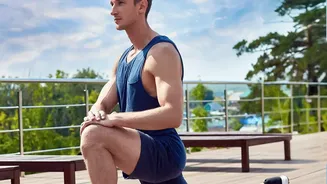
Your Park Is Your New Gym
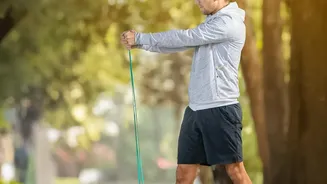
The secret to a consistent fitness routine might not be inside a gym, but right outside in your local park. Bodyweight training, which uses your own resistance to build strength, can be as effective as lifting weights. Playgrounds and parks offer the
perfect setting for this, providing the space and simple equipment needed for a full-body workout. This approach is not only free but also a great way to get fresh air and sunshine, which can boost your mood. It's an opportunity to make fitness a natural part of your life, whether you're taking a quick break during the day or exercising while your kids play. The goal is to see the potential in a simple park bench or a set of monkey bars.
Mastering The Walking Lunge
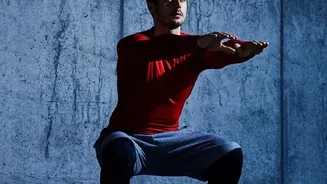
The walking lunge is a powerhouse exercise for your lower body and core. It strengthens your quads, glutes, and hamstrings while also challenging your balance and coordination. To perform it correctly, start by standing tall with your feet shoulder-width apart. Take a large step forward with your right leg, lowering your hips until both knees are bent at a 90-degree angle. Your front knee should be directly above your ankle, and your back knee should hover just above the ground. Keep your torso upright and your core engaged to maintain stability. Instead of pushing back to the start, drive through your front heel and bring your back foot forward to step into the next lunge, alternating legs as you 'walk'. Beginners should focus on mastering the form of a static lunge first before progressing to the walking variation to prevent injury.
The Playground Circuit
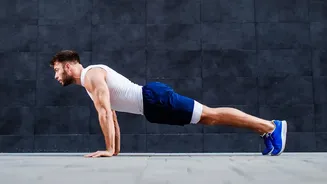
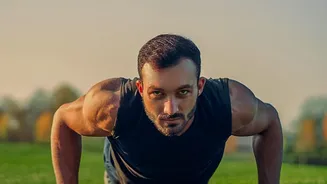
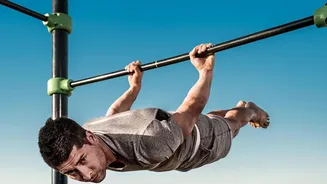
A playground is full of equipment perfect for a varied workout. A park bench, for instance, is incredibly versatile. You can use it for tricep dips by placing your hands on the edge and lowering your body. It's also great for incline push-ups (hands on the bench) for beginners, or decline push-ups (feet on the bench) for a greater challenge. Monkey bars are ideal for building upper body strength. You can simply hang to stretch your back and improve grip, or perform pull-ups (palms facing away) and chin-ups (palms facing you). If a full pull-up is too difficult, you can start by jumping to the top position and lowering yourself down slowly. Swings can be used for challenging core exercises like knee tucks, where you place your feet in the swing from a plank position and pull your knees towards your chest.
Putting It All Together
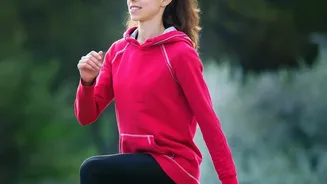
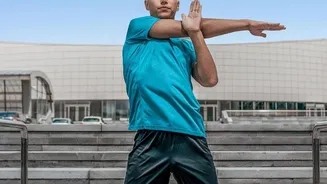
A well-rounded workout includes a warm-up, a main set, and a cool-down. Start with 5-10 minutes of light cardio, like brisk walking or jogging around the park, to get your muscles warm. For your main workout, you can perform a circuit. Try completing three rounds of the following: 10-12 walking lunges per leg, 10 incline or regular push-ups, 10 bench dips, and a 30-second hang from the monkey bars. Rest for a minute between each round. This combination targets your lower body, upper body, and core. After your final round, finish with a 5-minute cool-down consisting of light stretching. Focus on stretching the major muscle groups you just worked, such as your quads, hamstrings, chest, and back. Listening to your body is key; adjust the number of reps and sets based on your fitness level.
Workout Safely And Smartly
Exercising outdoors requires a few extra precautions. Always be aware of your surroundings, especially in the early morning or evening. If you're exercising near roads, wear bright clothing to make yourself visible to drivers. Hydration is crucial, especially in warmer weather. Drink water before, during, and after your workout, even if you don't feel thirsty. Try to avoid exercising during the hottest part of the day, typically between 10 a.m. and 5 p.m. Before using any playground equipment, give it a quick check to make sure it's dry and stable. Finally, always listen to your body. If you feel pain, stop the exercise. If you experience dizziness, nausea, or headache, find a shady spot to rest and rehydrate.