


Why Functional Power Matters
Functional power is strength you can use in your daily life. Think about lifting groceries, picking up a child, or simply getting out of a chair without groaning. These actions all rely on a stable and strong core. Your core isn't just the 'six-pack'
muscles; it's a complex group of muscles that wrap around your torso, including your abs, obliques, lower back, and glutes. They work together to stabilize your spine, transfer force between your upper and lower body, and protect you from injury. Training for functional power means focusing on movements that build this integrated strength, rather than just isolated crunches.
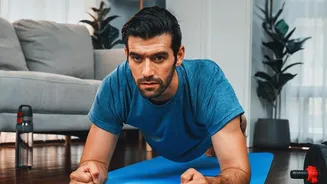
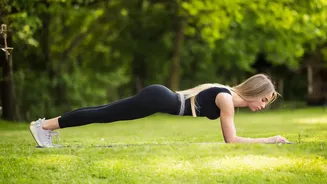
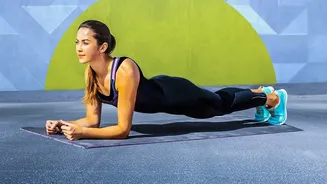
1. The Plank
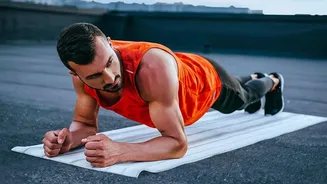
The plank is a foundational exercise for a reason: it engages the entire core. To perform it, lie on your stomach and prop yourself up on your forearms and toes, keeping your body in a straight line from your head to your heels. Avoid letting your hips sag or rise too high. Brace your abdominal muscles as if you're about to be lightly punched and squeeze your glutes. Start by holding for 20-30 seconds, focusing on perfect form. As you get stronger, work your way up to 60 seconds. For a modification, you can perform the plank on your knees.
2. The Dead Bug
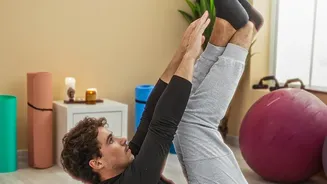
This exercise is fantastic for building deep core stability and coordination without straining your back. Lie on your back with your arms extended toward the ceiling and your knees bent at a 90-degree angle over your hips. Press your lower back gently into the floor. Slowly lower your right arm and left leg toward the floor simultaneously, moving with control. Go only as low as you can without your back arching. Exhale as you lower, and inhale as you return to the starting position. Alternate sides for 10-12 repetitions per side. The key is slow, deliberate movement.
3. The Bird-Dog
The bird-dog challenges your balance and teaches your core to resist rotation, a key functional skill. Start on all fours with your hands directly under your shoulders and your knees under your hips. Keep your back flat and your gaze toward the floor. Engage your core, then simultaneously extend your right arm straight forward and your left leg straight back. Keep your hips and shoulders square to the ground. Hold for a moment before returning to the start with control. Alternate sides for 10-12 reps per side. This move is excellent for improving stability across the entire torso.
4. The Glute Bridge
Your glutes are a crucial part of your core, and the glute bridge targets them directly while also engaging your hamstrings and lower back. Lie on your back with your knees bent, feet flat on the floor hip-width apart, and your arms by your sides. Squeeze your glutes and abs, then lift your hips off the floor until your body forms a straight line from your shoulders to your knees. Hold the position for a couple of seconds at the top, focusing on the glute squeeze, before lowering back down with control. Aim for 12-15 repetitions.
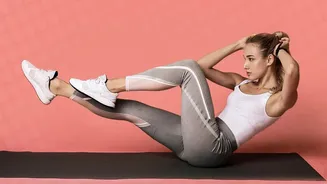
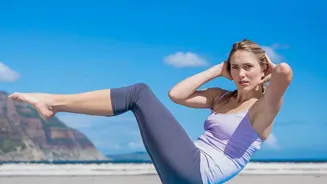
5. Bicycle Crunches
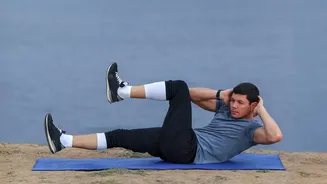
While traditional crunches have their limits, the bicycle crunch is a dynamic movement that targets the rectus abdominis and the obliques. Lie on your back with your hands gently behind your head. Lift your knees to a 90-degree angle and raise your head and shoulders off the floor. Bring your right elbow toward your left knee while extending your right leg straight. Switch sides in a controlled 'pedaling' motion. Focus on the twist coming from your torso, not from pulling on your neck. Keep the movement controlled rather than rushing through it to maximize muscle engagement.