
The Old Problem: Chemical Propulsion
For decades, satellites have navigated space using chemical propulsion. Think of it like a series of short, powerful bursts from a rocket engine. This method is great for big, fast moves, like getting into the correct orbit after launch. However, it has
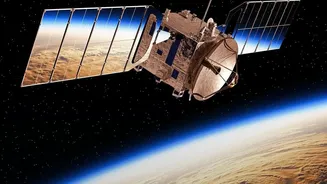
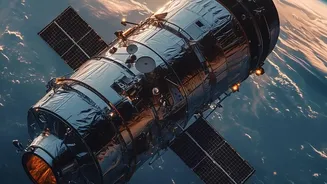
a major drawback: it's incredibly fuel-hungry. A significant portion of a satellite's launch weight is just propellant. Once this chemical fuel is used up for station-keeping—the small adjustments needed to keep a satellite in its precise orbital slot—the satellite, no matter how functional its electronics are, becomes a piece of space debris. This limitation has historically defined the operational lifespan of a satellite, typically capping it at around 15 years for geostationary spacecraft.
The Solution: A Gentle, Electric Push
Enter electric propulsion (EP). Instead of powerful, fuel-guzzling bursts, EP systems provide a very gentle but continuous thrust over a long period. It’s the difference between a sprinter and a marathon runner. While chemical thrusters offer high thrust, electric thrusters provide what is known as a very high specific impulse. Specific impulse is the engineering measure of a propulsion system's efficiency. The higher the number, the more push you get from each kilogram of propellant. ISRO is developing its own advanced EP systems, including stationary plasma thrusters, to move away from this dependency on chemical fuels for in-orbit operations.
How Electric Propulsion Works
So, how does it create this gentle push? Most of ISRO's focus, like that of other major space agencies, is on Hall-effect thrusters. These devices use electricity, typically generated by the satellite's solar panels, to create a magnetic field. A neutral gas, most commonly xenon, is fed into a channel. The magnetic field traps electrons, which then collide with and ionise the xenon atoms, stripping them of their electrons and giving them a positive charge. An electric field then accelerates these newly created positive ions out of the thruster at incredibly high speeds—up to 30 kilometres per second—generating a small but steady thrust. It's a highly efficient process that uses a tiny amount of propellant to achieve a significant change in velocity over time.
More Kilometres Per Kilogram
The primary advantage of this technology is its remarkable fuel efficiency. Electric propulsion systems can be five to six times more efficient than their chemical counterparts. This efficiency has a revolutionary impact on satellite design. For a typical large communications satellite, the propellant alone can weigh thousands of kilograms. With electric propulsion, this can be reduced by as much as 90%. This massive weight saving means two things. First, the satellite can be launched on a smaller, cheaper rocket. Second, and more importantly, the weight saved on fuel can be reallocated to the actual payload—the transponders, sensors, and scientific instruments that perform the satellite's mission. This allows for more powerful and capable satellites without increasing launch costs.
A Longer and More Productive Life
This incredible fuel economy directly translates to a longer operational lifespan for the satellite. The main task that consumes fuel during a satellite's life is station-keeping—the constant, minor adjustments required to counteract gravitational pulls from the Sun and Moon and maintain a stable orbit. With a far greater number of manoeuvres possible from the same amount of propellant mass, a satellite equipped with electric propulsion can remain in its correct orbit for many more years. While a conventional satellite might be designed for a 15-year life, electric propulsion can potentially extend that to 25 or 30 years. This not only increases the return on investment for each mission but also provides continuity of service for applications like communication and broadcasting.
The Future of ISRO's Fleet
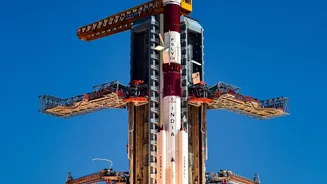
ISRO is actively integrating this technology into its future missions. The organisation has been developing and testing its own thrusters, aiming for self-reliance in this critical area. After demonstrating an earlier version on the GSAT-9 satellite using an imported thruster, ISRO is now preparing to launch satellites like the Technology Demonstration Satellite (TDS-01) with fully homegrown electric propulsion systems. This capability is not just for communication satellites. The high efficiency of electric propulsion is also a key enabler for future interplanetary missions, where long travel times make chemical propulsion impractical due to the enormous fuel requirements. By mastering this technology, ISRO is paving the way for more ambitious, cost-effective, and longer-duration missions across its entire space programme.