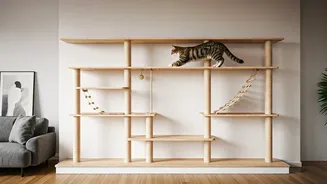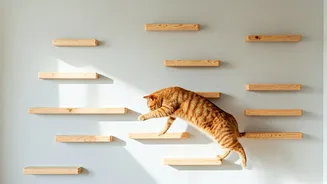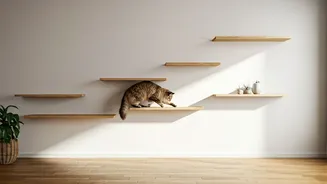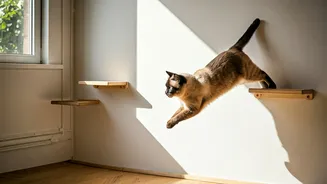



Why Go Vertical?
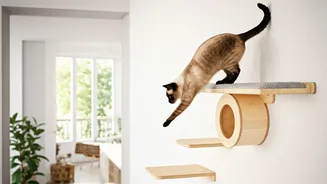
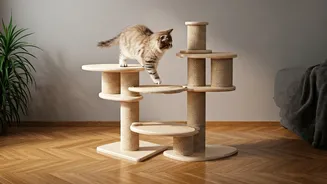
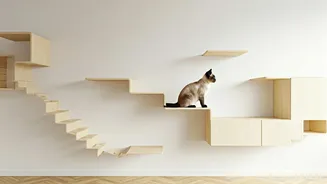
Before we grab the tools, let's understand why a wall-mounted setup is so beneficial. For cats, height equals safety and status. In a multi-cat household, it provides separate perches, reducing territorial spats. For a single cat, it's an enriching environment
that staves off boredom. Indoor cats especially need outlets for their climbing and scratching instincts. A vertical wall gives them a designated zone to do just that, potentially saving your sofas and curtains from their sharp claws. Plus, it transforms unused wall space into a functional and often beautiful feature of your home, freeing up valuable floor real estate.
Planning Your Cat Superhighway
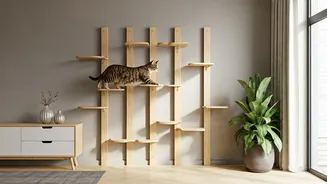
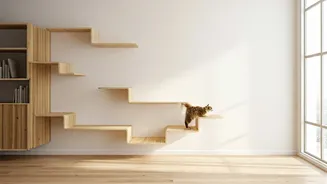
Good design starts with a good plan. Begin by observing your cat. Are they a bold leaper or a cautious climber? This will influence the distance you leave between shelves. A good rule of thumb is a gap of 30-45 cm vertically and 20-30 cm horizontally, but adjust for kittens, senior cats, or less agile felines. Sketch out your design on paper. Think about the path. It should have a logical flow, allowing your cat to easily move up and down. Consider including a high-up 'destination' shelf—a wider plank for lounging. Use a tape measure and painter's tape to mark the intended shelf locations on the wall. This helps you visualise the final look and check for obstructions like light switches or artwork.
Gathering Your Materials
The beauty of this project is its simplicity. You’ll need a few key items: - **Planks:** Untreated pine or spruce planks are affordable and readily available. A common size is 20 cm deep and about 2-3 cm thick. Avoid woods toxic to cats like cherry, teak or certain oaks, and stay away from particleboard (MDF), which can’t hold screws securely and may contain harmful resins. - **Jute Rope:** Choose a natural, untreated 100% jute rope, at least 6mm in diameter. It provides excellent grip and is perfect for scratching. - **Brackets:** Strong, metal L-brackets are essential. Ensure they are rated to hold significant weight—at least 10-15 kg per bracket to be safe. - **Hardware:** You'll need screws for attaching the planks to the brackets and different, longer screws for mounting the brackets to the wall. Wall anchors are a must if you cannot drill directly into a wall stud. - **Tools:** A power drill, stud finder, level, tape measure, sandpaper, and a staple gun will make this job much easier.
Prepping the Components
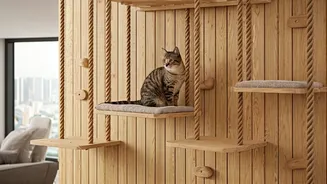
Once you have your materials, it's time for prep work. Sand all your wooden planks thoroughly. Pay special attention to the edges and corners to ensure there are no sharp splinters that could harm your cat's paws. Wipe them down with a damp cloth to remove any dust. Next, prepare your scratching surfaces. To wrap a plank in jute, apply a small line of non-toxic wood glue or use a staple gun to secure the rope's end to the underside of the plank. Then, wrap the rope tightly and neatly around the plank, ensuring there are no gaps. Every few wraps, push the coils together tightly. When you reach the end, secure it again on the underside with more glue or staples.
The Mounting Process
This is the most critical step for safety. Use your stud finder to locate the wooden studs within your wall. Whenever possible, mount your brackets directly into these studs for maximum stability. If a stud isn’t available in your desired location, use a heavy-duty wall anchor (like a toggle bolt or drywall anchor) specifically designed for your wall type. Mark your drill holes with a pencil, using a level to ensure your brackets are perfectly straight. Drill pilot holes first, then secure the brackets to the wall. Once the brackets are firmly in place, attach your prepped planks. Test each shelf by applying firm, downward pressure before letting your cat on it. It should not wobble or move at all.
Introducing Your Cat to the Wall
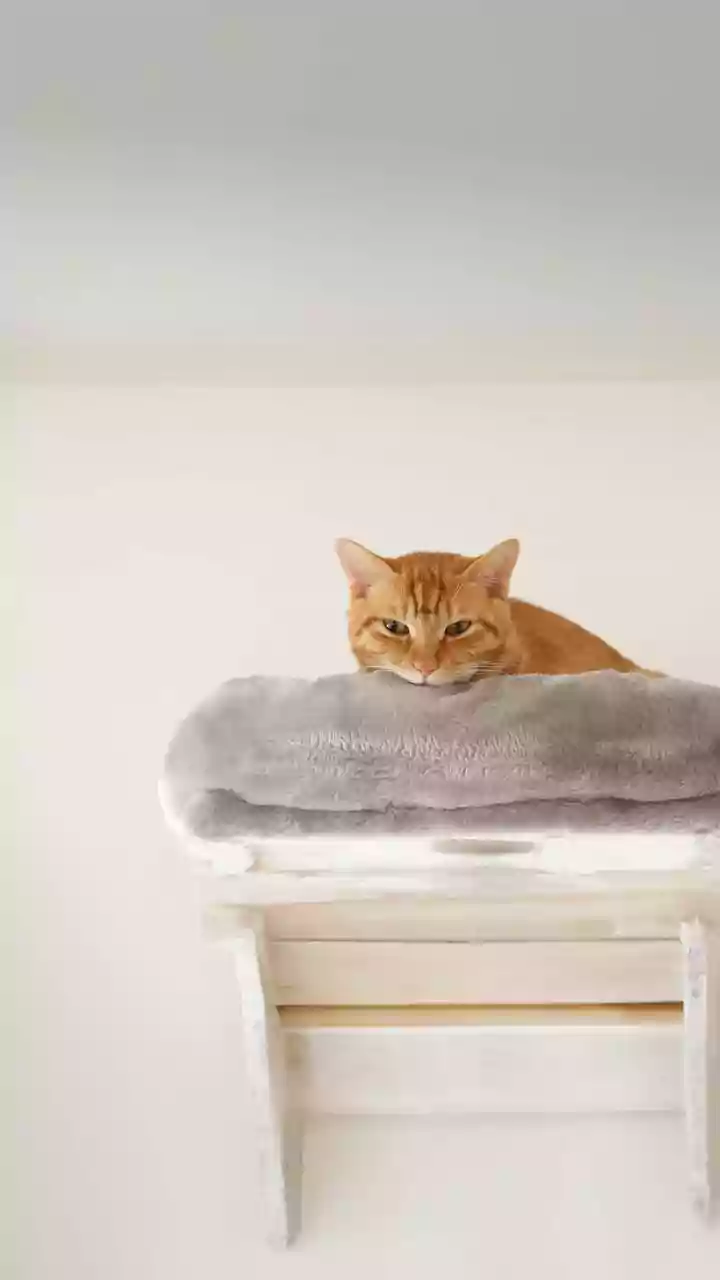
Don't be discouraged if your cat doesn't immediately take to their new jungle gym. Cats can be wary of new things. Introduce them to it gently. Place them on the lowest shelf and offer a treat or their favourite toy. You can also use a bit of catnip to entice them. Let them explore at their own pace. Once they realise it's a safe and fun place to be, their natural curiosity and climbing instincts will take over. Before you know it, you'll find them napping on the highest perch, confidently ruling their new domain.