





The Problem with 'Tech Neck'
In our digitally driven world, many of us spend hours hunched over laptops or peering down at smartphones. This constant forward-head posture is the primary culprit behind what is often called 'tech neck'. An adult head weighs about 10 to 12 pounds, but
when you tilt it forward just 15 degrees, the force on your neck increases to nearly 27 pounds. At a 45-degree angle, common for phone use, it’s closer to 50 pounds. The muscles in the back of your neck must work overtime to support this extra weight, leading to strain, fatigue, and soreness. Over time, this sustained tension can result in chronic pain, stiffness, tension headaches, and reduced mobility in your upper back and shoulders.
Why Movement Is Your Best Medicine
Holding a static position for long periods is what causes the trouble. Muscles become tight, blood circulation is reduced, and stiffness sets in. This is why short, frequent breaks for stretching are so effective. Taking a moment to stretch every hour does several critical things. First, it boosts blood flow to the neck muscles, delivering fresh oxygen and nutrients that aid in recovery and reduce inflammation. Second, it helps release the accumulated tension in the muscle fibres, allowing them to relax and lengthen. This not only provides immediate relief but also helps prevent the micro-damage that leads to chronic stiffness and pain. Finally, these regular movements help maintain flexibility and a better range of motion in the neck and shoulder joints, making you less susceptible to injury.
Three Simple Stretches to Do at Your Desk
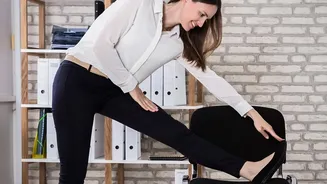
You don't need a yoga mat or special equipment to find relief. These simple stretches can be done right in your office chair. Aim to hold each stretch for 15 to 30 seconds without pushing into pain. 1. Chin Tucks: Sit or stand up straight, looking forward. Gently pull your chin straight back, as if you are trying to make a double chin. You should feel a stretch at the back of your neck. Hold for a few seconds and release. This exercise counteracts the forward-head posture. 2. Side Neck Tilt: Sit tall and slowly tilt your head, bringing your right ear toward your right shoulder. Keep the opposite shoulder down and relaxed. To deepen the stretch, you can gently use your right hand to apply light pressure. Hold, then repeat on the left side. 3. Shoulder Rolls: Sit or stand with your back straight. Inhale as you lift your shoulders up toward your ears. Exhale as you roll them back and down. Repeat this motion five times, then reverse the direction, rolling them forward and down. This helps release tension in both the neck and shoulders.
Beyond Stretching: Create a Neck-Friendly Workspace
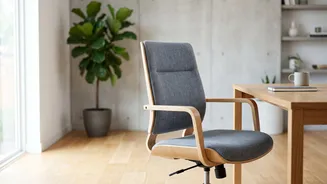
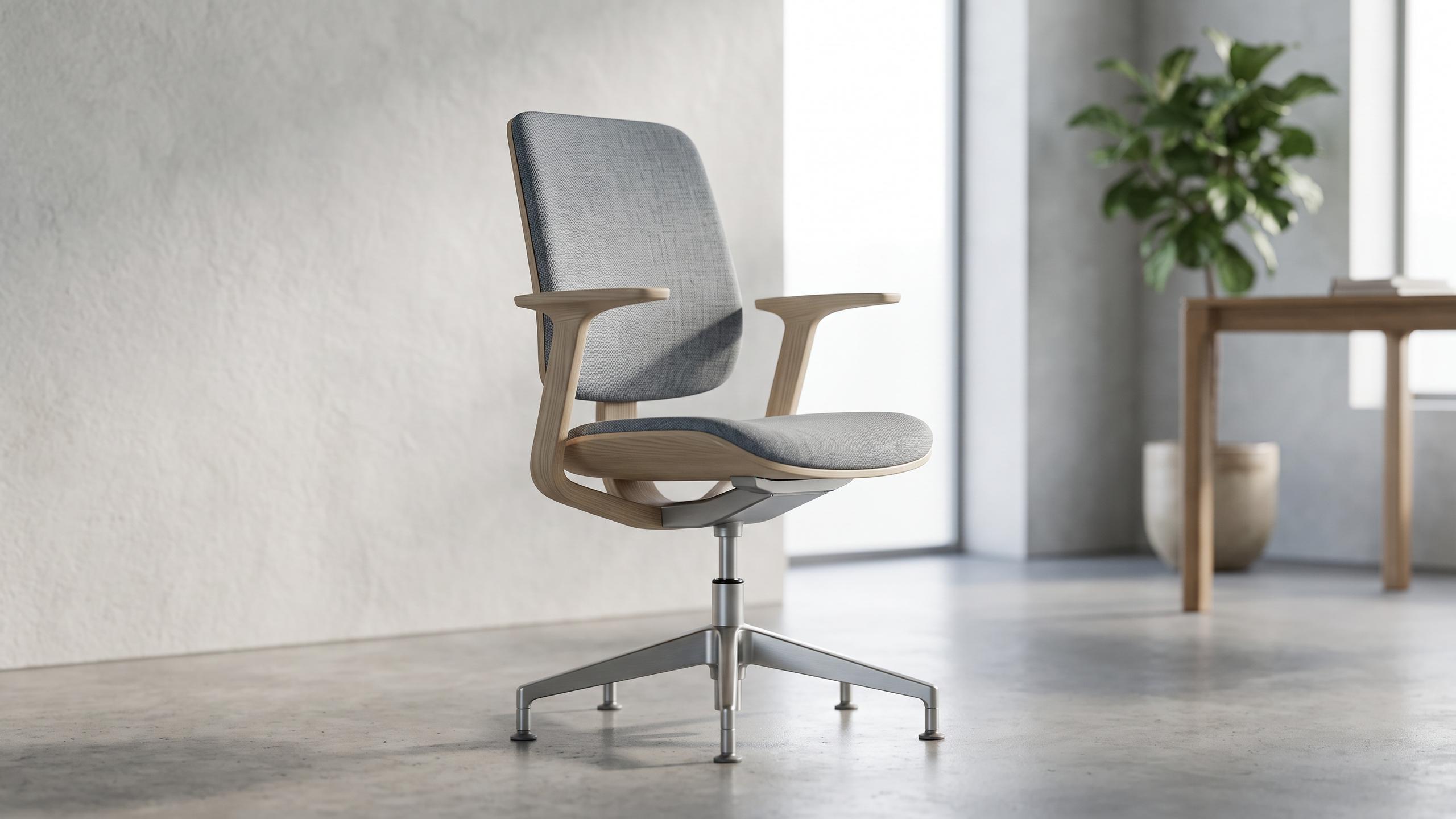
While hourly stretches are a powerful tool, your daily desk setup plays an equally important role in preventing neck pain. Make small ergonomic adjustments to support your body throughout the day. Position your computer monitor directly in front of you at eye level, so you don't have to look down. Your screen should be about an arm's length away. Use a chair with good lumbar support to help you sit up straight, and ensure your feet can rest flat on the floor with your knees at roughly a 90-degree angle. These adjustments, combined with your new stretching habit, create a comprehensive strategy for keeping your neck healthy and pain-free.