


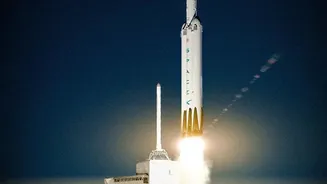
Meet 'Mechazilla': The Rocket Catcher
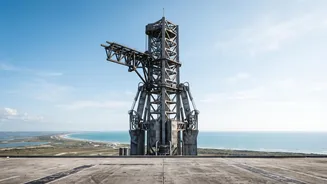
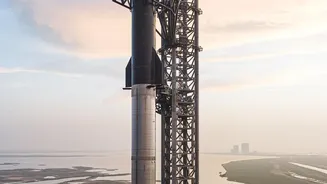
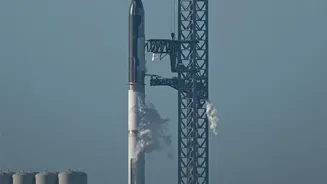
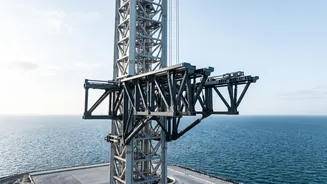
At the center of this strategy is the launch and integration tower, nicknamed 'Mechazilla' by CEO Elon Musk. This colossal structure stands nearly 400 feet tall and is equipped with two large, powerful arms often referred to as 'chopsticks'. These arms are
not just for support; they are designed to perform the high-stakes task of catching the returning Super Heavy booster — the massive first stage of the Starship system — before it touches the ground. The arms run on a track along the tower and are powered by robust hydraulic systems, allowing them to move vertically and clamp shut with precision to secure the descending rocket. The system uses a combination of high-resolution cameras, LiDAR, and advanced control algorithms to track the booster's trajectory and ensure a perfect alignment for the catch.
The Ultimate High-Stakes Catch
The process is an engineering marvel of timing and precision. After propelling the Starship upper stage towards orbit, the Super Heavy booster separates and performs a series of engine burns to return to the launch site. As it approaches the tower, the booster uses its grid fins for aerodynamic control and fires its Raptor engines for a final deceleration, slowing to a near-hover. With the booster precisely positioned between the open arms, the chopsticks close in, catching the vehicle on two small, reinforced hard points located just below the grid fins. The rocket's engines then cut off, allowing its weight to settle onto the arms, which can cushion the final capture. This entire sequence, from launch to catch, takes only a matter of minutes.
Why Not Just Use Landing Legs?
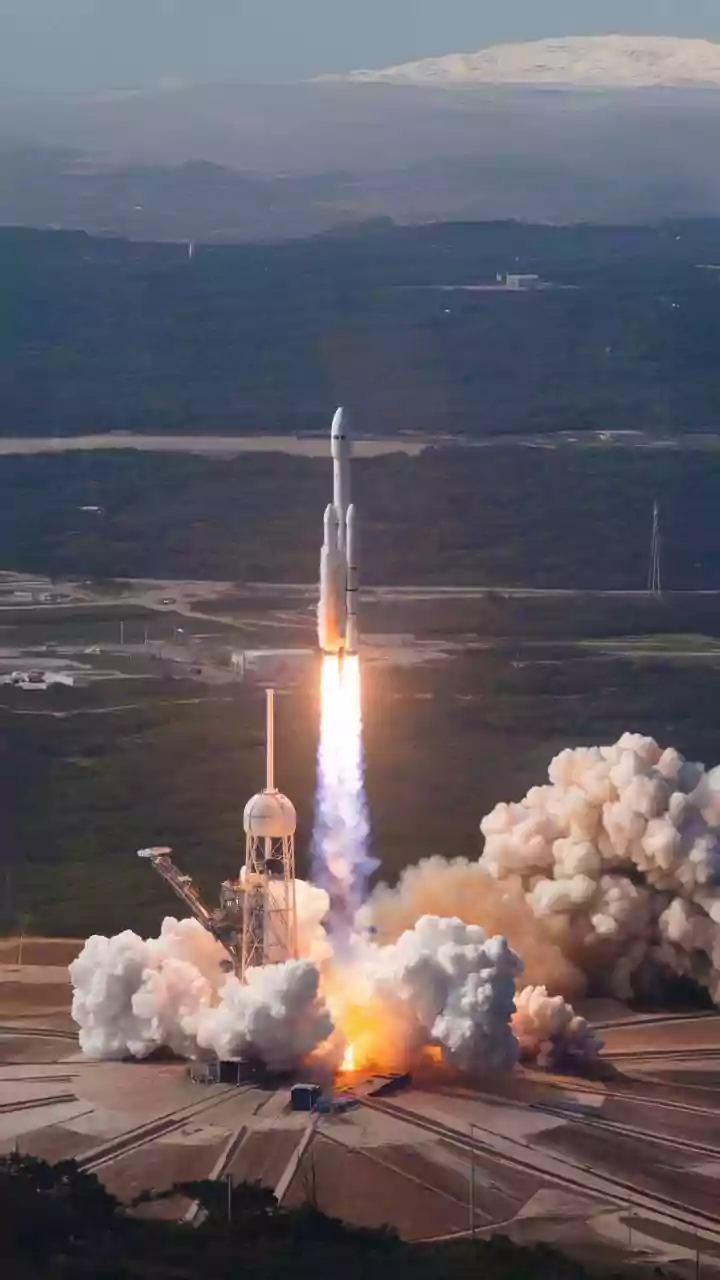
SpaceX already perfected booster landings with its Falcon 9 rocket, which uses deployable legs to touch down on droneships or landing pads. So why the radical change for Starship? The answer lies in mass and speed. Landing legs, especially ones large and strong enough to support the immense Super Heavy booster, add significant weight. By eliminating them, Starship's payload capacity increases, meaning it can carry more cargo, fuel, or crew for the same amount of thrust. Every kilogram saved on the rocket itself is a kilogram that can be dedicated to the mission. The tower-catch method essentially moves the complexity of landing hardware from the flying rocket to the stationary ground, where weight is not a penalty.
The Dream of Rapid Reusability
The tower-catch strategy is about more than just weight savings; it's the key to unlocking truly rapid reusability. Once the booster is caught, the same tower arms can immediately lift it and place it back onto the launch mount. This eliminates the need for a complex and time-consuming recovery operation involving ships, cranes, and ground transport, as is the case with Falcon 9. The goal is to create a system akin to airline operations, where a booster can be caught, inspected, refueled, and prepared for its next flight in a matter of hours, not weeks. This high launch cadence is critical for SpaceX's long-term ambitions, such as building a self-sustaining city on Mars, which would require launching a massive fleet of Starships in a short window every 26 months.
From Audacious Theory to Proven Reality
While the concept sounds incredibly risky, SpaceX has already proven it can be done. The company successfully caught a Super Heavy booster for the first time on October 13, 2024, during the vehicle's fifth test flight. The achievement was hailed as a historic moment in aerospace engineering. Since then, the company has had further successful catches, though not every attempt has been made or succeeded, highlighting the immense difficulty. The company continues to refine the process, with ambitions to eventually catch the Starship upper stage in the same manner. Each test, whether a success or a failure, provides invaluable data that feeds back into the design and operational procedures, pushing the boundaries of what's possible in rocket recovery.