






India's ambitions to become a global AI powerhouse are soaring, built on a crucial partnership with chipmaker Nvidia. But a leadership crisis involving its CEO, Jensen Huang, and allegations of espionage have sent shockwaves from Silicon Valley to Bengaluru.
A Crisis at the Top
In early November 2026, Nvidia, the world's most dominant AI chip producer, was plunged into controversy. Its co-founder and CEO, Jensen Huang, resigned on November 12 after admitting to an extramarital affair. The situation was complicated by reports linking him to Alice Huang, a Chinese businesswoman and former executive at a key Nvidia customer, Megaspeed. US intelligence agencies reportedly suspected Alice Huang of being an asset for Chinese intelligence, raising national security alarms in Washington. While Huang has not been accused of knowingly aiding espionage and Nvidia's board stated it had no reason to believe secrets were compromised, the company launched an independent investigation. The scandal grew with further reports of other affairs, including one with an Nvidia executive, leading to immense pressure and Huang's eventual, though temporary, departure.
The Geopolitical Fallout
The controversy quickly escalated beyond personal conduct into a geopolitical firestorm. At the heart of the matter is the intense technological rivalry between the United States and China, where advanced semiconductors like Nvidia's are critical strategic assets. The allegations suggested a potential vulnerability at the highest level of a company central to America's technological dominance. This was magnified by reports that Megaspeed, Alice Huang's former company, had purchased nearly $4.8 billion in Nvidia hardware and was suspected of routing chips to China, circumventing US export controls. The scandal prompted US lawmakers to schedule hearings and put new pressure on the government to tighten regulations on chip sales, particularly to third-party countries that could act as intermediaries for China.
Why It Matters for India
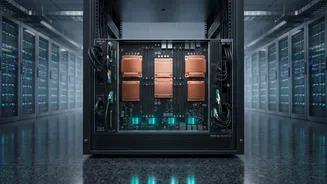
The drama at Nvidia is being watched with acute concern in India, where the company's technology is the backbone of the nation's AI aspirations. According to industry estimates, Nvidia chips power over 85% of the shared computing infrastructure under the ambitious IndiaAI Mission, a government initiative with an outlay of over ₹10,300 crore. Major Indian conglomerates like Reliance Industries and Adani Group, as well as data centre providers like Yotta, have announced massive investments in AI infrastructure heavily reliant on Nvidia's advanced GPUs. Yotta alone plans to deploy over 20,000 of Nvidia's latest Blackwell GPUs. Any disruption to this supply chain—whether through leadership instability, reputational damage, or stricter US export controls—could create significant headwinds for India's AI development, potentially causing delays and increasing costs.
A Magnifying Glass on Existing Threats
The Nvidia episode serves as a powerful reminder of the security risks inherent in a heavily import-dependent technology ecosystem. Even before this controversy, India's cybersecurity landscape was fraught with challenges. A recent study found that 92% of Indian organisations experienced at least one AI-related security incident in the past year. Experts have warned that India is a prime target for AI-powered cyberattacks, which are becoming more automated and sophisticated. These threats range from AI-generated phishing attacks and deepfake fraud to autonomous malware. India's Computer Emergency Response Team (CERT-In) has issued multiple advisories in late 2026 about the weaponization of AI agents by threat actors. The reliance on foreign hardware and a shortage of skilled AI-cybersecurity talent create structural vulnerabilities that the Nvidia situation has thrown into sharp relief.
The Path Forward
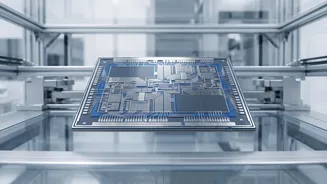
While there is no immediate indication that the supply of Nvidia chips to India will be halted, the controversy is a critical wake-up call. For India's AI industry, it highlights the strategic imperative to diversify its supply chain and accelerate efforts toward semiconductor self-reliance. The government's India Semiconductor Mission is a step in this direction, but developing high-performance AI processors domestically is a long-term challenge. In the short term, the incident may lead to increased scrutiny of supply chains and stricter 'know-your-customer' compliance for Indian companies. Paradoxically, some analysts believe that tighter US controls on other regions could even position India as a more attractive and secure destination for AI infrastructure investment. Ultimately, the episode underscores that true technological sovereignty requires not just building infrastructure, but also securing it against a complex web of corporate, geopolitical, and digital threats.