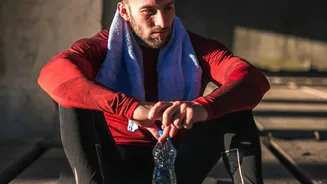








Why Humidity is a Challenge
It’s not just the heat; it’s the humidity. When the air is saturated with moisture, your sweat can't evaporate effectively. Evaporation is your body's primary cooling mechanism, so when it's impaired, your core temperature can rise more quickly, putting
extra strain on your cardiovascular system. Your heart has to work harder to pump blood to the skin to try and cool you down, which can make your usual jog feel like a monumental effort. This increases the risk of dehydration and heat-related illnesses like heat exhaustion and heat stroke.
Time Your Workouts Wisely
One of the simplest modifications is changing when you exercise. Avoid working out during the hottest part of the day, typically between 10 a.m. and 4 p.m. Instead, schedule your movement for the early morning or later in the evening when the temperature and humidity are lower. This small change can make a significant difference in how you feel and perform, reducing the overall stress on your body while still allowing you to get your workout in.
Hydration is Non-Negotiable
In humid conditions, you lose fluids faster than you might realize. It’s crucial to hydrate before, during, and after your workout. Start hydrating a few hours before you plan to exercise. During your workout, take regular sips of water every 15 to 20 minutes. For workouts lasting longer than an hour, consider a sports drink to replenish electrolytes like sodium and potassium lost through sweat. A good way to check your hydration status is to monitor the color of your urine; it should be pale yellow.
Adjust Intensity and Duration
Accept that you may not be able to perform at your peak in high humidity, and that's perfectly fine. Your body is already working overtime just to stay cool. Reduce the intensity of your workout; if you’re a runner, slow your pace. If you're lifting weights, perhaps lower the weight or do fewer reps. It's also wise to shorten the duration of your exercise session. Consistency is more important than intensity, and pushing too hard in tough conditions can lead to setbacks or injury.
Take Your Workout Indoors
When the heat index is dangerously high, the safest option is to move your workout indoors. This doesn't mean you have to skip it. An air-conditioned gym offers a controlled environment for running on a treadmill, cycling, or lifting weights. At home, you can try a variety of effective exercises like calisthenics (squats, lunges, push-ups), yoga, or workouts using resistance bands. Swimming in an indoor pool is another excellent full-body workout that keeps you cool.
Listen to Your Body's Signals
This is perhaps the most critical rule. Pay close attention to how you feel. Symptoms of heat exhaustion include heavy sweating, dizziness, fatigue, headache, nausea, and muscle cramps. If you experience any of these, stop exercising immediately, move to a cool place, and rehydrate. Heat stroke is a more severe, life-threatening emergency with symptoms like a high body temperature, confusion, slurred speech, and a loss of consciousness. Changes in mental state are a key sign that distinguishes heat stroke from heat exhaustion and require immediate medical attention.