



The Celestial Main Event
So, what is this “huge sky gathering?” Tonight marks the peak of one of the year's most prolific meteor showers. As Earth travels through a dusty trail of debris left behind by an ancient comet or asteroid, dozens of tiny particles will burn up in our
atmosphere every hour. The result is a breathtaking display of “shooting stars” streaking across the darkness. Unlike a fleeting, solitary meteor, a shower provides a sustained performance, with rates potentially reaching 60 to 120 meteors per hour under perfect conditions. For enthusiasts, this isn't just a light show; it’s a connection to the cosmos, a predictable yet always unique event that brings the vastness of space a little closer to home.
A Community of Wonder
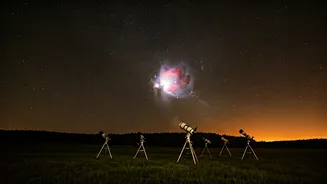
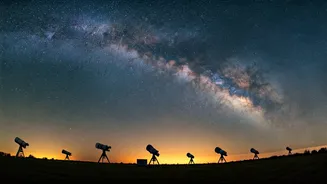
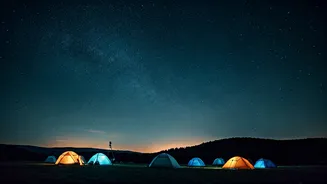
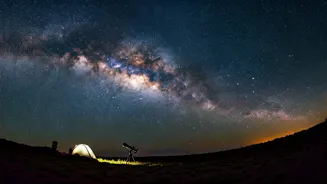
For India’s vibrant amateur stargazing societies, nights like this are the highlight of the calendar. Groups from Delhi to Bengaluru and Mumbai to Kolkata have been planning for weeks. These are not professional scientists but passionate individuals—IT professionals, students, teachers, and retirees—united by their love for the night sky. Their preparations go beyond just dusting off telescopes. They organise “star parties,” inviting the public to dark-sky locations, away from the glare of city lights. Their forums and WhatsApp groups are abuzz with weather forecasts, tips for astrophotography, and coordination for a collective viewing experience. It's a community built on shared awe, where the goal is not just to see, but to understand and share the wonder.
The Stargazer's Toolkit
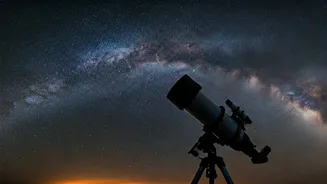
While you might imagine an arsenal of complex equipment, the gear for a meteor shower is surprisingly accessible. Many seasoned astronomers will tell you the best tool is simply your own two eyes. Telescopes have a narrow field of view, which is counterproductive when you want to scan a large patch of sky. Binoculars, however, are perfect for getting a closer look at a meteor’s glowing train after it has passed. The rest of the kit is about comfort and practicality: a reclining chair or a blanket to lie on (to avoid neck strain), warm clothing as the night cools, and a flask of hot tea or coffee. One crucial piece of gear is a red-light torch; red light preserves your night vision, unlike the harsh glare of a standard white flashlight or phone screen.
Your Guide to Watching
You don’t need to be a member of a society to join in. The sky is, after all, for everyone. Here’s how to have the best experience: 1. **Escape the Lights:** The single most important factor is getting away from light pollution. Find the darkest spot you can access safely—a park on the outskirts of town, a rural area, or even a high-rise rooftop with minimal direct lighting. 2. **Be Patient:** Your eyes need about 20-30 minutes to fully adapt to the dark. Put your phone away, resist the urge to check it, and let the darkness settle in. The show will become more brilliant as your eyes adjust. 3. **Know When and Where to Look:** The best viewing hours are typically after midnight and before dawn, when the part of the sky where the meteors appear to originate from (the “radiant”) is high in the sky. Lie down, look straight up, and take in as much of the sky as possible. The meteors can appear anywhere. 4. **No Equipment Necessary:** Remember, the best way to watch a meteor shower is with the naked eye. Just lie back, relax, and enjoy the cosmic fireworks.