






A Divine Mandate for Renewal
The primary reason for rebuilding the chariots annually is rooted in a deep spiritual philosophy of renewal and impermanence. In Jagannath culture, the chariots are not seen as inanimate vehicles but as living entities that have fulfilled their sacred
purpose, or 'dharma', once the festival concludes. Just as the idols themselves are periodically replaced in a ritual known as Nabakalebara, the yearly construction of new chariots signifies a fresh start, purity, and the cyclical nature of creation. According to tradition, this practice follows a divine command from Lord Jagannath himself, making it a sacred 'leela' or divine play. For devotees, building the chariots is not a repetitive chore but an act of continuous devotion, reinforcing the belief that nothing material is permanent, not even the vehicle that carries the Lord of the Universe.
The Quest for Sacred Timber
The construction process begins long before the first piece is joined. It starts with the ritualistic sourcing of specific wood, a tradition known as the 'Banajaga Yatra'. More than a thousand logs are required, harvested from designated forests like the ex-princely state of Dasapalla. The trees—primarily Phassi, Dhausa, Asana, and Simili—are chosen for their strength, durability, and sacred properties. The selection is not random; temple servitors identify the trees, and the process begins only after receiving the 'Agyanmala' (garland of permission) from the deities. The logs are traditionally floated down the Mahanadi river before being transported to Puri. This careful selection ensures that the wood itself is considered holy and fit to carry the gods, imbuing the entire construction with spiritual significance from the very start. After the festival, the dismantled wood is not discarded but used as sacred firewood in the temple's massive kitchen.
A Symphony of Hereditary Craftsmanship
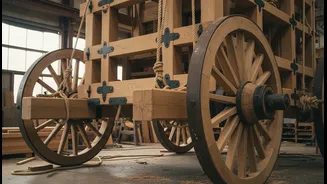
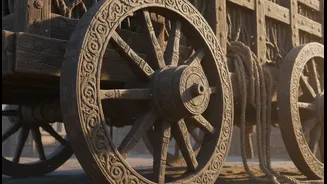
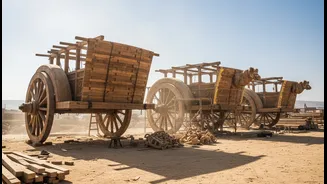
The assembly of the chariots is a marvel of ancient engineering and hereditary skill, performed by designated families of artisans known as 'sevayats'. More than 200 craftsmen, including carpenters (Maharanas), blacksmiths (Ojha Maharanas), painters (Chitrakaras), and tailors, work for nearly two months to bring the chariots to life. These roles are passed down through generations, preserving centuries-old knowledge. The construction begins on the auspicious day of Akshaya Tritiya. Remarkably, no iron nails are used in the primary structure; the massive wooden components are joined using ancient techniques of interlocking joints, dowels, and clamps, a testament to their sophisticated understanding of carpentry. This precision ensures the chariots are strong enough to hold the deities and withstand the journey.
Three Chariots, Three Divine Identities
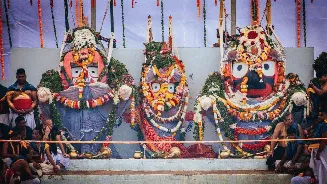
Each of the three chariots is distinct in its design, reflecting the identity of the deity it carries. Lord Jagannath's chariot, 'Nandighosha', is the largest, standing about 45 feet tall with 16 wheels, and is draped in red and yellow cloth. Lord Balabhadra's chariot, 'Taladhwaja', is 44 feet high with 14 wheels and covered in red and green cloth. Devi Subhadra's chariot, 'Darpadalana', is 43 feet tall with 12 wheels and uses a red and black colour scheme. The number of wooden pieces required for each is also specified: 832 for Nandighosha, 763 for Taladhwaja, and 593 for Darpadalana. Each chariot has its own flag, guardian deities painted on its sides, and designated horses and a charioteer, making each a unique masterpiece of devotional art.