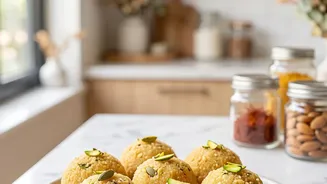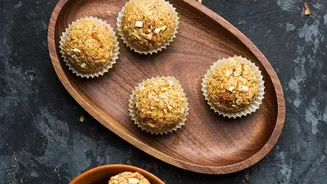

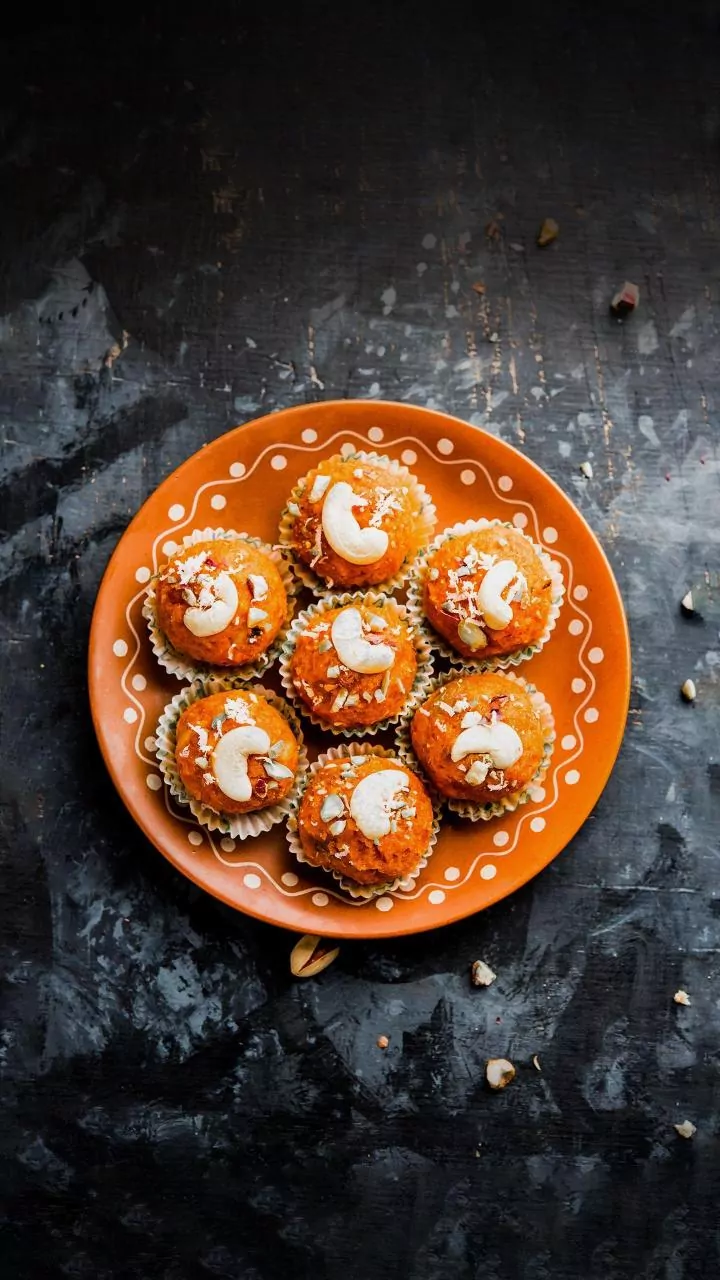



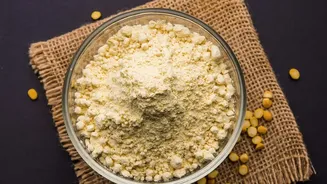
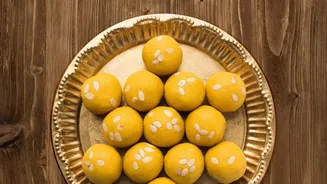
Every festive season brings with it the craving for that perfect besan ladoo: a golden, fragrant sphere that melts the moment it hits your tongue. But achieving this at home can be tricky. Often, the result is dry, hard, or overly greasy.
The Soul of the Ladoo
In a recipe with
only a few core ingredients—besan (gram flour), ghee, and sugar—each one plays a monumental role. Ghee, however, is arguably the most critical element influencing the final texture. It's not just a fat for cooking; it is the medium that roasts the flour, the agent that gives the ladoo its rich mouthfeel, and the binder that holds it all together. Without the right amount and application of ghee, the entire sweet can fail to come together correctly.
The Golden Ratio: Ghee to Besan
The most common reason for ladoos turning out dry and crumbly is an insufficient amount of ghee. While recipes vary, a reliable starting point is a ratio of roughly 1 part ghee to 2 parts besan by weight. For example, for 250 grams of besan, you would use around 125-130 grams of ghee. Adding too little ghee prevents the besan from roasting evenly and makes it impossible to bind the ladoos later. Conversely, too much ghee will result in a greasy mixture that won't hold its shape, often slumping and leaving a pool of fat on the plate. The key is to add ghee gradually. Start with about half the required amount and add more as the besan roasts and if the mixture appears too dry.
The Magic is in the Roasting
The single most important step in making besan ladoo is the slow roasting of the flour in ghee. This process, which can take 25-35 minutes on a low, steady flame, is where patience pays off. Rushing this with high heat is the primary cause of raw or bitter-tasting ladoos. As you stir continuously in a heavy-bottomed pan, the ghee ensures every grain of besan cooks evenly, preventing it from burning while developing a deep, nutty aroma. You'll know the besan is perfectly roasted when the mixture loosens, turns a beautiful golden brown, and the entire kitchen is filled with its signature fragrant smell.
Texture Tricks: The 'Danedar' Effect
For that classic, slightly grainy (or 'danedar') texture that halwais perfect, a couple of tricks can be employed. Some cooks prefer using a coarse variety of besan, often sold as 'ladoo besan', which naturally yields a more granular bite. If you only have fine besan, you can achieve a similar effect. One popular technique involves sprinkling a tablespoon of milk or water over the roasted besan mixture right at the end of cooking. The mixture will sizzle and froth, creating tiny granules as the moisture evaporates, which contributes to that delightful melt-in-the-mouth feel.
Temperature and Timing are Everything
Just as crucial as the roasting is knowing when to add the sugar. A common mistake is mixing sugar into the besan while it's still piping hot. This causes the sugar to melt into the ghee, resulting in a sticky, greasy, or hardened texture. You must let the roasted besan mixture cool down until it is just warm to the touch before stirring in the powdered sugar. This allows the sugar to blend in perfectly without dissolving, preserving the intended texture. If you find your mixture is too loose to shape, refrigerating it for 15-20 minutes can help the ghee solidify, making it easier to form the balls.