
The Cosmic Puzzle
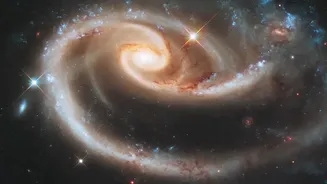
For decades, astronomers have worked with a standard story of galaxy evolution. The theory, known as hierarchical formation, suggested that the first galaxies were small, chaotic collections of stars and gas. Over billions of years, these smaller structures
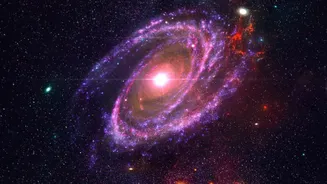
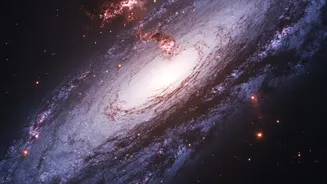
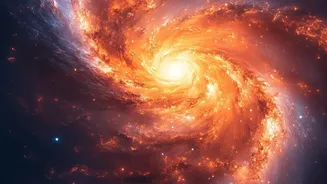
would gradually merge, pulled together by gravity, to form the grand, orderly spiral and elliptical galaxies we see in the universe today, including our own Milky Way. This model made sense and explained a lot, but it also left big questions. How quickly did this process happen? Were the first galaxies really so simple? The earliest chapters of cosmic history were largely blank, waiting for a powerful enough tool to read them.
A New Eye on the Universe
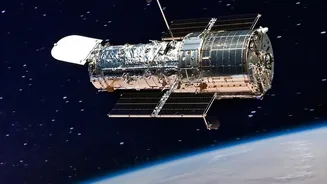
That tool has arrived. The James Webb Space Telescope (JWST) is an engineering marvel designed to see the universe in infrared light. This is crucial because, as the universe expands, light from the most distant objects gets stretched out into longer, redder wavelengths—a phenomenon called redshift. The JWST can detect this faint, ancient light, allowing it to peer back in time to when the universe was just a few hundred million years old. It effectively parts the cosmic dust clouds that obscured the view of older instruments like the Hubble Space Telescope, revealing the cradles where the very first galaxies were born.
Galaxies, Younger and Stranger
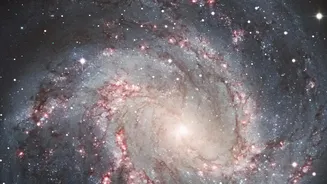
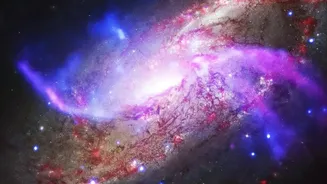
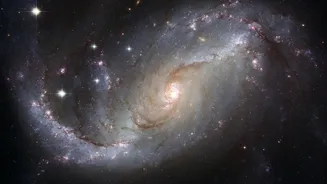
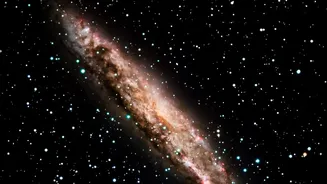
And what Webb is finding has been a shock to the system. Instead of the small, messy infant galaxies that theories predicted, JWST is discovering systems that are surprisingly massive, bright, and structured for their age. Recent observations have revealed galaxies in the very early universe that already contain features, like dense central disks and galactic bars, that were thought to take billions of years to develop. Some of these ancient galaxies even appear to be "quenched" or "dead," meaning they have already stopped forming new stars. It’s like finding a fully grown adult in a nursery, and it’s forcing a major rethink of cosmic timelines.
Rewriting the First Chapter
These discoveries don’t break cosmology, but they do suggest our understanding of the early chapters is incomplete. The presence of such mature galaxies so early on means the process of galaxy formation must have been far more efficient or rapid than previously thought. Scientists are now scrambling to adjust their models. Did the first stars form sooner? Did gas collapse into stars more efficiently than we imagined? Or is there something new we need to learn about the nature of dark matter, which provides the gravitational scaffolding for galaxies to form? These “impossible” galaxies are not a crisis but an incredible opportunity to refine our knowledge of the cosmos.
Why It Matters on Earth
Looking at galaxies billions of light-years away might seem disconnected from our daily lives, but this research touches on the most fundamental questions of our existence: Where did we come from? How did a universe of gas and dust give rise to stars, planets, and eventually, us? Every image from the JWST is a postcard from our own cosmic past. Understanding how galaxies evolve is part of understanding our own origin story. Furthermore, the technological innovation required for such a telescope and the global collaboration behind it push the boundaries of human ingenuity, inspiring new generations of scientists and engineers and reminding us of what we can achieve when we look up at the stars together.