

Find Your Sacred Corner
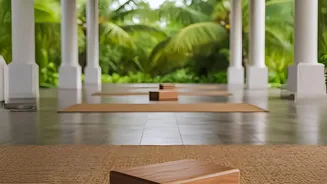
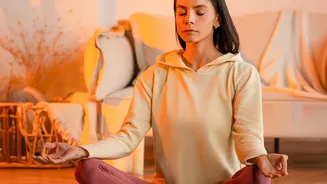
The first step is not about size, but intention. You don’t need an entire room; a quiet corner will do perfectly. Look for a low-traffic spot in your home where you won't be easily disturbed. A space near a window is ideal, as natural light can energize
your practice and improve your mood. The most important rule is to keep this area clutter-free. A tidy space helps cultivate a clear and focused mind, so move aside any laundry, paperwork, or other distractions. This simple act of clearing a space signals to your brain that it’s time to switch off the outside world and turn your attention inward. You only need enough room to stretch your arms and legs out comfortably, typically an area about two metres by one and a half metres.
The Art of the Improvised Prop
High-end yoga props are not a prerequisite for a meaningful practice. Your home is likely already filled with excellent substitutes. For yoga blocks, which help bring the floor closer to you, a stack of sturdy books is a classic alternative. You can wrap them with tape to keep them secure. Tightly rolled bath towels also work well. Instead of a yoga strap to deepen stretches, grab a bathrobe sash, a long scarf, or a belt from your closet. These are often softer and just as effective. For a supportive bolster used in restorative poses, a few firm pillows from your sofa or a couple of thickly rolled blankets offer wonderful cushioning. You can even create a simple eye pillow for savasana by filling a clean sock with rice and tying it off.
One Worthy Investment: The Yoga Mat
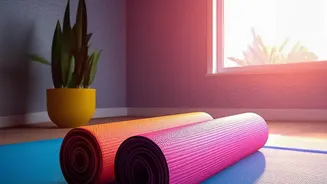
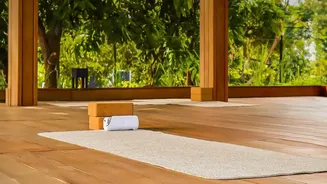
While most items can be improvised, a good-quality yoga mat is one investment worth considering. Unlike a simple towel or rug, a dedicated yoga mat provides the necessary grip to hold poses safely without slipping. This is especially important for your stability and confidence as you flow through different asanas. A cheap mat might seem like a bargain, but it can be slippery and offer poor cushioning for your joints. You don’t need the most expensive option on the market, but look for one that is non-slip and has enough thickness (around 4-6mm is great for beginners) to provide comfort for your knees and spine during floor-based postures. Think of it as the foundation of your sanctuary.
Engage Your Senses, Calm Your Mind
A true sanctuary appeals to all the senses. Soft lighting immediately creates a peaceful atmosphere. Along with natural light, consider using a dim lamp, string lights, or a few candles for a gentle, warm glow. Scent is another powerful tool for shifting your mood. An essential oil diffuser with calming lavender or uplifting peppermint can transform your space. If you don't have a diffuser, a simple scented candle or incense stick works just as well. Finally, consider sound. While silence is golden, sometimes soft, instrumental music or nature sounds can help drown out household noise and deepen your focus. The goal is to create a multi-sensory environment that tells your body and mind it’s time to relax.
Add a Personal, Peaceful Touch
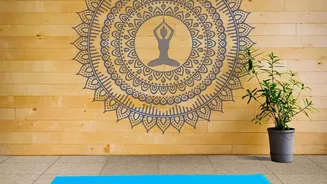
This space is yours, so make it feel that way. Personal touches turn a simple corner into a sacred retreat. Bring in natural elements, like a small potted plant, which can add a calming, earthy feel to your space. You can also set up a small focal point, or 'Drishti', to gaze at during balancing poses. This could be a piece of art you love, a beautiful stone, or a photograph that brings you joy. For many, placing a small statue of a meditating Buddha, perhaps in the 'dhyana mudra' pose, serves as a powerful and inspiring symbol of tranquility and inner peace. These small, meaningful objects infuse the space with your personal energy and intention.