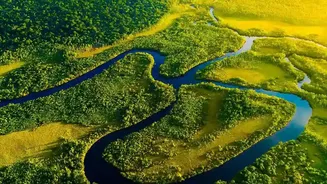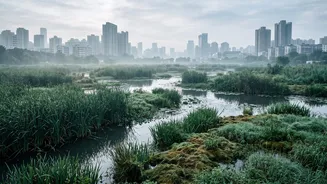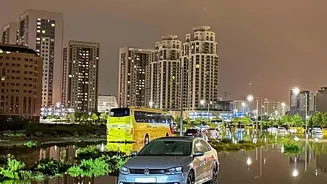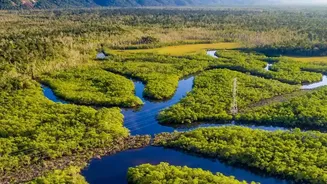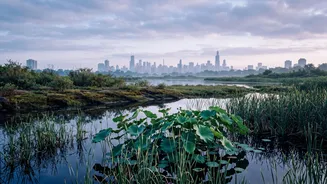




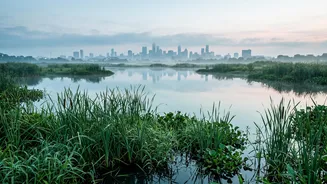

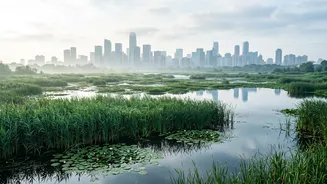
As Indian cities grapple with fiercer monsoons and scorching heatwaves, an often-overlooked feature of the urban landscape holds a key to resilience: wetlands. These vital ecosystems are more than just water bodies; they are nature's infrastructure.
Nature's Sponges Against Urban Flooding
During
heavy monsoon downpours, many Indian cities face crippling floods. Streets turn into canals, and life grinds to a halt. Urban wetlands act as massive natural sponges, providing a crucial first line of defence. These marshlands and lakes absorb and store immense volumes of excess rainwater, slowing its release into overburdened drainage systems. This process, known as flood mitigation, significantly reduces the severity of urban flooding. For example, the Pallikaranai marsh in Chennai has historically played a vital role in soaking up monsoon runoff for a large part of the city. By providing a space for floodwaters to collect and recede naturally, healthy wetlands protect homes and infrastructure, offering a nature-based solution to a problem worsened by unchecked concretization.
The Urban Air Conditioning Effect
Fast-growing metros are becoming 'heat islands', where dense clusters of buildings and asphalt absorb and radiate more heat than natural landscapes. This makes cities significantly warmer than their surrounding rural areas. Wetlands counter this effect by acting as natural air conditioners. Through a process called evapotranspiration, water from the wetland's surface and moisture released by its vegetation cool the ambient air temperature. This creates a cooling 'microclimate' that can provide much-needed relief during extreme heatwaves. The East Kolkata Wetlands, for instance, play a significant role in moderating the local climate for the bustling metropolis. This natural temperature regulation service reduces the reliance on energy-intensive air conditioning and makes urban living more bearable.
Powerful Carbon Sinks in the City
In the global effort to combat climate change, reducing carbon in the atmosphere is paramount. While forests are widely recognised as carbon sinks, wetlands are unsung heroes in this regard. Globally, wetlands store a disproportionately large amount of soil organic carbon compared to their land area. The soil and vegetation in marshlands and swamps capture and lock away carbon dioxide, preventing it from entering the atmosphere. Coastal wetlands like mangroves are particularly effective, sequestering carbon at a much faster rate than even tropical rainforests. By preserving and restoring urban wetlands, cities can contribute to their net-zero carbon goals, using nature to clean the air they breathe.
A Lifeline for Water Security
Beyond managing floods and heat, wetlands are critical for water security. They act as natural filters, purifying water by trapping sediments and breaking down pollutants. The East Kolkata Wetlands, for example, famously treat a significant portion of the city's sewage naturally, turning waste into a resource for fisheries and agriculture. Furthermore, wetlands are essential for recharging groundwater. As water is stored, it slowly percolates down into underground aquifers, replenishing the water table that millions depend on for drinking water. In an era of increasing water scarcity, protecting the ecosystems that naturally clean and store our water is a matter of urban survival.
An Ecosystem Under Severe Threat
Despite their immense value, urban wetlands across India are disappearing at an alarming rate. It's estimated that India has lost nearly a third of its natural wetlands in recent decades. Cities like Chennai and Mumbai have lost over 70% -80% of their wetlands to unchecked urbanisation, illegal construction, and pollution. Wetlands are often incorrectly perceived as 'wastelands' ripe for real estate development. The Pallikaranai marsh in Chennai, a designated wetland of international importance, has shrunk due to encroachment and has been used as a dumping ground, threatening its ability to prevent floods and support biodiversity. This destruction not only eliminates critical climate buffers but also increases the frequency of urban flooding and water crises.
The Path Forward:', Integration and Conservation
Recognising the crisis, India has put in place legal frameworks like the Wetlands (Conservation and Management) Rules, 2017. These rules empower states to protect and manage these vital ecosystems. However, experts argue that effective protection requires more than just laws; it needs a fundamental shift in urban planning. Instead of being an afterthought, wetlands must be integrated into city development plans as essential green-blue infrastructure. Success stories like the communityled management of the East Kolkata Wetlands demonstrate that a symbiotic relationship between a city and its wetlands is possible. Public awareness programs and active citizen participation are crucial to advocate for their preservation, ensuring these natural assets can continue to protect our cities for generations to come.