




Your Connection to a Legendary Comet
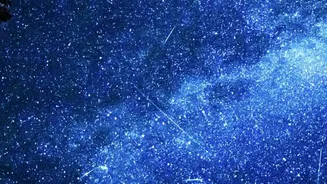
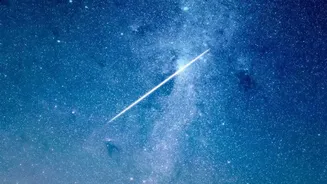
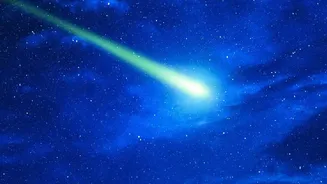
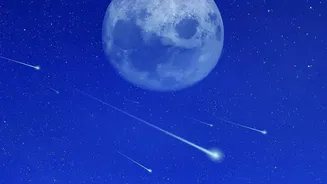
Meteor showers are the beautiful result of our planet passing through the dusty debris stream left behind by a comet or asteroid. The Orionids, which are active from early October to early November, are particularly special because they are born from Halley's
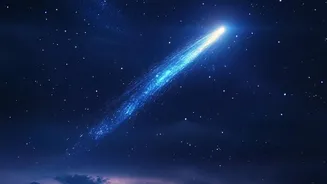
Comet, arguably the most famous comet in history. Though Halley's Comet itself only visits the inner solar system every 76 years (its next appearance is in 2061), we get to see tiny pieces of it burn up in our atmosphere annually. These particles, many no larger than a grain of sand, hit the atmosphere at incredible speeds of around 66 kilometres per second, producing the fast, bright streaks of light we call meteors.
The Perfect Time to Watch in 2026
Mark your calendars for the peak of the Orionid meteor shower on the night of October 21-22, 2026. While you might spot a few meteors on the nights before or after, this is when the show will be at its best. However, there's a crucial detail for this year: a bright waxing gibbous Moon will illuminate the sky for much of the night, making it harder to see fainter meteors. But don’t be discouraged. The key is to wait it out. The Moon is expected to set around 3 a.m. local time on those peak mornings. This opens up a prime viewing window of truly dark sky between roughly 3 a.m. and the first light of dawn. So, set an early alarm rather than staying up late; your patience will be rewarded with the best possible conditions.
Finding Your Urban Observatory
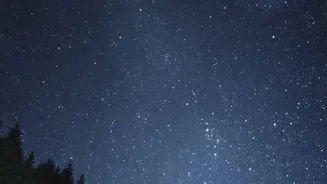
The biggest challenge for any city-based stargazer is light pollution. While you can't escape it completely, you can significantly improve your view by finding the darkest possible spot available to you. Think of local parks, large open fields, or even a golf course that’s accessible. The goal is to get away from the direct glare of streetlights, buildings, and vehicle headlights. Even finding a spot in your own backyard that is shielded from a street lamp by your house can make a difference. The more of the sky you can see, the better your chances. The meteors can appear anywhere, so a wide-open view is more important than looking in any one specific direction.
The Only Gear You Truly Need
Here's the best part: no expensive equipment is necessary. In fact, telescopes and binoculars are not recommended for watching meteor showers. Their narrow fields of view mean you'd miss most of the action. Your naked eyes are the perfect tool for the job, allowing you to take in the widest possible expanse of sky. Your essential gear list is more about comfort than technology. Grab a reclining lawn chair or a thick blanket to lie on so you don’t have to crane your neck. October nights can be chilly, so dress in warm layers and consider bringing a thermos of a hot drink. The more comfortable you are, the longer you’ll be willing to watch and wait.
Let Your Eyes Adjust to the Dark
Once you've settled into your viewing spot, the most important step is to allow your eyes to adapt to the darkness. This process, known as dark adaptation, can take 15 to 30 minutes. During this time, your pupils will dilate, and your eyes will become much more sensitive to faint light, dramatically increasing your ability to spot meteors. The biggest enemy of dark adaptation is the bright screen of your smartphone. Resist the urge to scroll. If you need a flashlight, use one with a red light, as red light has a minimal effect on your night vision. Patience is key; give your eyes the time they need to work their magic.
Patience and Realistic Expectations
Under perfect, dark-sky conditions, the Orionids can produce about 15 to 25 meteors per hour. From a city, even during the dark, moonless window, your count will likely be lower. It's important to go into the experience with the right mindset. You won’t see a constant stream of shooting stars. There may be lulls of several minutes with no activity at all, followed by a sudden, brilliant streak. The joy is in the patient observation and the thrill of spotting one. Don’t focus on a specific part of the sky; just lie back, relax, and look generally upward. Meteors often appear in your peripheral vision, and you'll have the best experience just enjoying the quiet moments under the stars.