



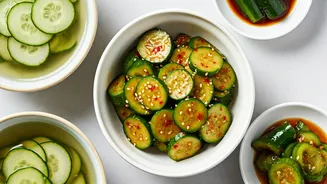


The Perfect Base: Why Cucumbers Shine
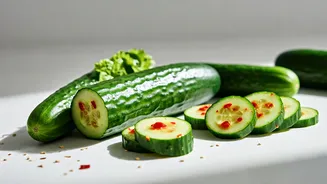
Before diving into the recipes, it's worth appreciating the star of the show. Cucumbers are naturally hydrating, composed of about 96% water, making them incredibly refreshing. This high water content provides a perfect canvas for bold flavors; they don't
compete, they complement. The satisfying crunch of a cucumber provides a textural contrast that works beautifully in a variety of dishes. While any thin-skinned cucumber works well, many recipes favour Persian, Kirby, or specific Korean varieties which tend to have fewer seeds and a crisper texture. A key technique in many Korean preparations is to lightly salt the cucumbers and let them sit for 15-20 minutes. This step draws out excess water, ensuring the final dish isn't diluted and that the cucumbers remain wonderfully crunchy.
The Classic: Spicy Cucumber Salad (Oi Muchim)
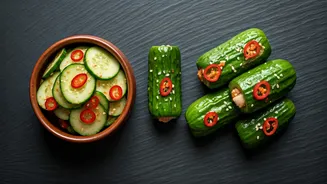
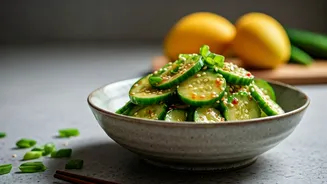
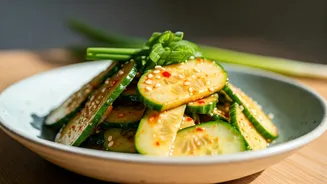
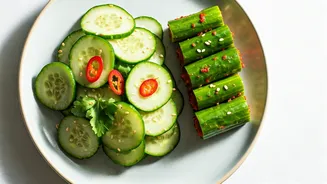
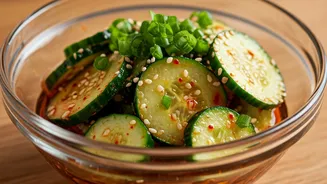
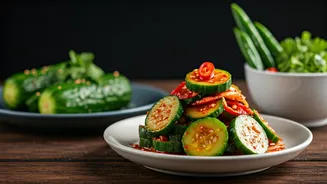
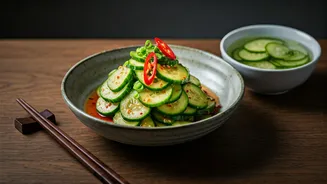
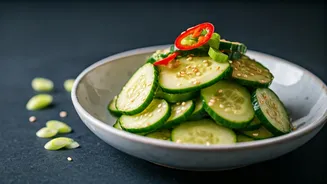
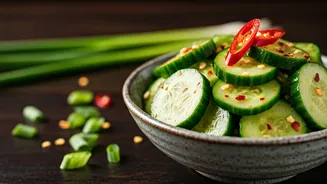
When you think of Korean cucumber salad, Oi Muchim is likely what comes to mind. 'Oi' means cucumber and 'muchim' translates to 'seasoned' or 'mixed'. This dish is a quintessential 'banchan' (side dish) that can be prepared in minutes. Freshly sliced cucumbers are tossed in a vibrant dressing that perfectly balances spicy, savory, and tangy notes. The key ingredient for the heat is gochugaru, Korean chili flakes. Unlike the crushed red pepper found in many Western kitchens, gochugaru has a fruitier, smokier flavor with a heat that builds gently rather than stinging. This is combined with soy sauce, fragrant toasted sesame oil, minced garlic, a touch of sugar for balance, and often some rice vinegar. The result is a dish that is at once fiery and cooling, making it an addictive accompaniment to grilled meats or a simple bowl of rice.
The Crunchy Kimchi: Stuffed Cucumber (Oi Sobagi)
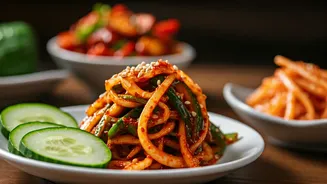
Oi Sobagi is a type of fresh kimchi that offers a unique and satisfying eating experience. Instead of being thinly sliced, the cucumbers are cut into segments with a cross pattern, leaving the base intact to create a pocket. This pocket is then generously stuffed with a flavourful paste. While Oi Muchim is a quick salad, Oi Sobagi is a kimchi designed for fermentation, though it's often enjoyed fresh as well. The stuffing is more complex, typically featuring a mixture of gochugaru, fish sauce for umami depth, minced garlic, ginger, and finely chopped vegetables like Asian chives (buchu), carrots, and onion. The cucumbers are first brined in salt water, which not only seasons them but also helps maintain their crispness during fermentation. As the kimchi ferments over a day or two, the flavors meld and deepen, becoming tangy and complex while the cucumber remains delightfully crunchy.
Beyond the Spice: A World of Variations
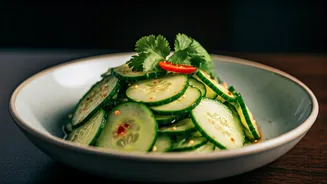
While spicy preparations are popular, Korean cuisine also offers milder cucumber dishes that still pack a flavorful punch. Some recipes focus on a savoury profile, using soy sauce, sesame oil, and toasted sesame seeds to create a nutty and satisfying side dish. There are even sautéed cucumber dishes where the salted cucumber is quickly stir-fried, transforming its texture while retaining a pleasant crunch. These variations prove that the pairing of cucumber with Korean seasonings is incredibly versatile. You can easily adjust the level of gochugaru in any spicy recipe to suit your own heat preference. You can also add other vegetables like thinly sliced onions or matchstick carrots for extra texture and sweetness. The beauty of these recipes lies in their adaptability, allowing you to create a side dish that is perfectly tailored to your palate.