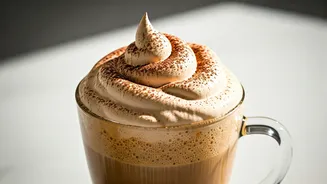









The Problem Is Dilution, Not Ice
The core issue behind a disappointing iced latte isn’t the ice itself—it’s the coffee you start with. Most people brew a regular cup of hot coffee and pour it over ice. As the hot liquid hits the cold cubes, the ice melts rapidly, diluting the coffee before
you’ve even added milk. The result is a weak, flavourless drink that only gets worse as it sits. A true cafe-quality iced latte is built on a foundation strong enough to withstand both chilling and dilution. The secret isn't using less ice; it's using a much more potent coffee base that can hold its own. By fundamentally changing how you brew the coffee, you change the entire outcome of your drink.
Method 1: Embrace Cold Brew Concentrate
Cold brew is naturally suited for iced drinks. Unlike hot brewing, which uses heat to extract flavour quickly, cold brewing uses time. By steeping coarse coffee grounds in cold or room-temperature water for 12 to 24 hours, you create a smooth, low-acid coffee concentrate. This concentrate is intensely flavourful but not bitter, making it the perfect base. To make it, simply combine one part coffee grounds with four parts water in a jar, let it sit on your counter or in the fridge overnight, and then strain it through a fine-mesh sieve or cheesecloth. You're left with a powerful liquid that can be stored in the fridge for up to two weeks. When you’re ready for a latte, just mix a small amount of the concentrate with milk and ice for a drink that stays robust.
Method 2: A Quick, Intense Espresso Shot
If you have an espresso machine or a Moka pot, you already have a tool for creating a strong coffee base. An espresso shot is, by nature, a small volume of highly concentrated coffee. Its intensity is designed to be paired with steamed milk in a hot latte, and that same strength works wonders in an iced version. The key is to cool the espresso shot down immediately without watering it down. One pro-tip is to brew the shot directly over a single, large ice cube in your glass. The hot espresso will melt some of it, but the rapid chilling preserves the flavour. Another method is to brew your shot into a small, pre-chilled metal cup or server. Swirl it for a few seconds to cool it down before pouring it over a full glass of ice and milk.
The Ultimate Hack: Coffee Ice Cubes
This is the single most effective trick in the book. Instead of filling your ice trays with water, fill them with brewed coffee. Let any leftover coffee from your morning pot cool down, pour it into an ice cube tray, and freeze. When you make your next iced latte, use these coffee cubes instead of regular ice. Now, as the ice melts, it releases more coffee into your drink instead of water. This not only prevents dilution but actually enhances the coffee flavour over time. Your last sip will be as strong, if not stronger, than your first. It's a simple, zero-waste solution that completely transforms the iced coffee experience. For best results, use strongly brewed coffee to make your cubes.
Perfecting the Assembly
Once you have your strong coffee base and your coffee ice cubes, the final assembly matters. Start by filling your glass to the brim with your coffee ice cubes (or regular ice, if you must). Next, add your chilled coffee concentrate or cooled espresso shot. Aim for about one-third of the glass. Finally, top it off with your milk of choice—whole milk for creaminess, or oat milk for a rich, dairy-free alternative. By adding the milk last, you get that beautiful layered effect you see in cafes. Give it a gentle stir and enjoy. Remember to also pre-chill your glass in the freezer for five minutes. A cold glass slows down the initial melt, giving you even more time to savour your perfectly crafted drink.