







The Document Checklist
First things first, Indian citizens need a visa to enter Japan for tourism; there is no visa-on-arrival facility. The application process is document-intensive, so precision is key. You will need a valid passport with at least six months of validity from
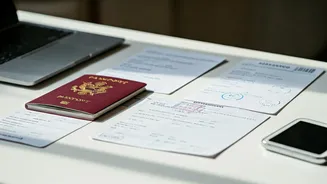
your date of arrival and two blank pages. Alongside a completed visa application form and a specific-sized photograph (typically 45mm x 35mm), you must prepare a detailed day-by-day itinerary. This isn't just a rough sketch; it should list the cities you'll visit, the sights you plan to see, and the addresses of your accommodations for every single night. Confirmed return flight tickets and hotel bookings are also mandatory.
Proving Your Financial Stability
The Japanese authorities need assurance that you can fund your trip. This requires submitting substantial financial proof. You'll need to provide your last six months of bank statements, which should ideally be stamped by the bank. While there's no official minimum balance, a healthy figure, often suggested to be around ₹1,50,000 to ₹2,00,000 per person, is recommended to show you can cover your expenses. In addition to bank statements, you will be required to submit your Income Tax Returns (ITR) for the last two or three years to demonstrate a stable income source. If you are employed, you will also need to include your last three months' salary slips and a No Objection Certificate (NOC) from your employer.
Understanding the Fees
The cost of the visa itself is surprisingly modest. As of a fee revision in April 2026, the Japanese government fee for Indian nationals for a single or multiple-entry tourist visa is just ₹500. This makes the multiple-entry visa a particularly good value for those who might travel again. However, this is not the total cost. You will submit your application through a VFS Global centre, which charges a service fee of around ₹800 per application. If you choose to have your passport couriered back to you, there is an additional optional fee. While the core visa fee is low, it’s important to budget for these extra service charges.
The Virtue of Patience
The headline's mention of 'patience' is not an exaggeration. While the embassy's official processing time is a minimum of five working days after submission, this is just one part of the timeline. The entire end-to-end process, from securing an appointment at a VFS centre (which can take days or weeks depending on demand) to getting your passport back, can realistically take between two to five weeks. It's strongly advised to apply at least three to four weeks before your planned departure, and you can apply up to three months in advance. There is no official express service, so last-minute applications are a risky gamble.
Tips for a Smooth Application
Given the detailed requirements, here are a few tips. First, double and triple-check every document. Incomplete forms or missing paperwork are common reasons for delays. Ensure all photocopies are on A4 size paper, as specified. When filling out the application form, use BLOCK LETTERS. Since April 2024, Japan has introduced an e-visa system for Indian residents applying through VFS Global, which results in a digital 'visa issuance notice' instead of a physical sticker. However, the document submission process largely remains the same. You will need internet access at the Japanese airport to display this notice on your mobile device; screenshots are not accepted. With careful preparation, the process is very manageable.