





A Journey to a Metal World
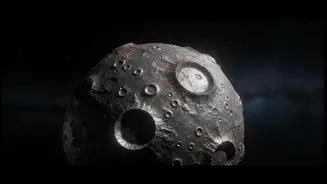
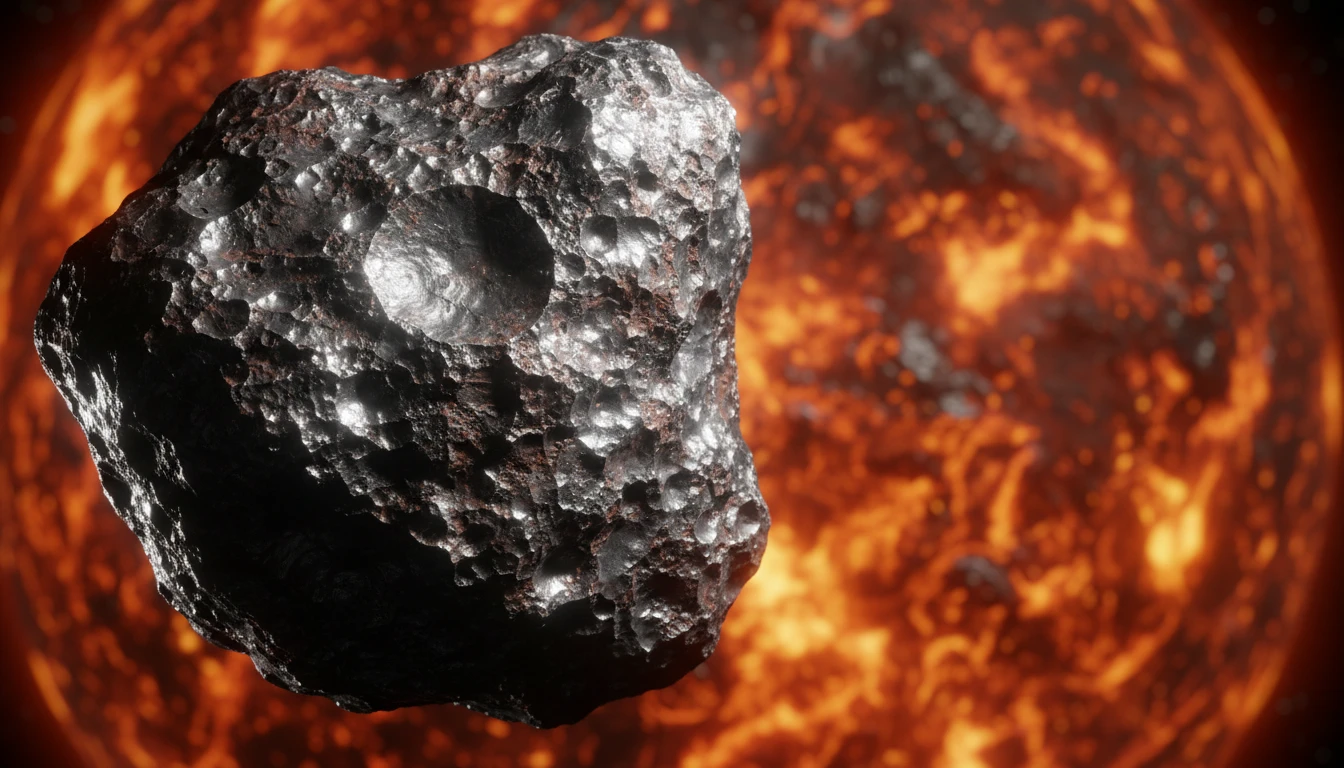
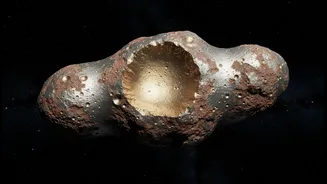
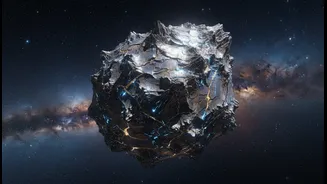
Imagine a world made not of rock or ice, but of metal. That's the extraordinary possibility of 16 Psyche, an object in the main asteroid belt that has fascinated scientists for decades. It is thought to be the stripped-bare iron-nickel core of a planetesimal,
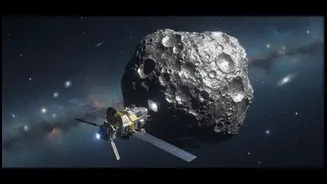
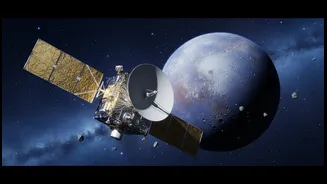
a building block of planets like Earth that was destroyed in violent collisions billions of years ago. While our own planet’s core is hidden thousands of kilometres beneath our feet, Psyche offers a unique chance to study one up close. However, ground-based observations have given mixed signals; its surface reflects light like metal, but its density seems lower than a solid iron-nickel body. This puzzle is exactly what NASA's Psyche mission, which launched in October 2023, aims to solve when it arrives in 2029.
The Elemental Fingerprint Tool
The key to tracking iron and nickel lies in the probe’s Gamma-Ray and Neutron Spectrometer, or GRNS. This instrument doesn't 'see' in the conventional sense. Instead, it measures the elemental composition of the asteroid's surface. The process is fascinating: the surface of Psyche is constantly being bombarded by high-energy cosmic rays from space. When these rays strike atoms on the asteroid, like iron or nickel, they cause the atoms to emit their own unique signatures in the form of gamma rays and neutrons. The GRNS is designed to detect this faint radiation. Each element has a distinct energy 'fingerprint', allowing scientists to map out what the surface is made of and in what quantities. Measuring nickel is a primary goal, and the instrument is specially designed to be sensitive enough to get a robust reading.
Searching for a Ghostly Magnetism
Another crucial tool is the Magnetometer. If Psyche was once the molten, rotating core of a small planet, it might have generated a magnetic field, much like Earth does today. Although the asteroid would have long since cooled and solidified, with its magnetic dynamo switched off, traces of that ancient field could still be 'frozen' into its metallic structure. This is called a remanent magnetic field. The Psyche spacecraft carries a pair of highly sensitive magnetometers on a 2-meter boom to isolate them from the spacecraft's own electronics. Detecting a remanent magnetic field would be powerful evidence that Psyche is indeed a planetary core, providing a window into the earliest days of our solar system.
The Eyes and the Scale
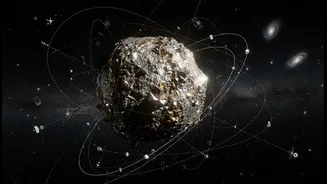
Data from the GRNS and Magnetometer will be combined with information from two other key systems. The Multispectral Imager consists of a pair of cameras that will capture detailed pictures of the surface. By taking images through various colour filters, some beyond the range of human sight, scientists can distinguish between areas that might be metallic and those that might be silicate rock. This will provide a geological map to contextualize the elemental data. Finally, the mission will use the spacecraft's own radio communications system for gravity science. By precisely tracking tiny wobbles in the probe's orbit around the asteroid, scientists can map Psyche's gravity field, revealing how mass is distributed throughout its interior and helping to finally determine its true density and structure.
The Long Road Ahead
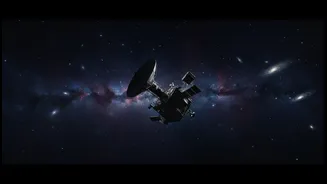
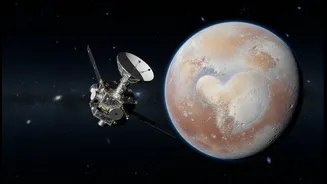
The Psyche spacecraft is currently on its long cruise through the solar system. The journey itself is a marvel of engineering, using highly efficient solar-electric propulsion. In May 2026, the probe performed a crucial manoeuvre, flying by Mars to use the planet's gravity to gain speed and adjust its course—a cosmic slingshot toward its final destination. All instruments were powered on during the flyby to be calibrated against the well-known Red Planet. With the Mars flyby complete, the probe is now on a direct path to the asteroid belt, with arrival scheduled for August 2029. It will then spend 21 months in a series of descending orbits, meticulously scanning the metal world from all angles.