



A New Eye on an Old Mystery
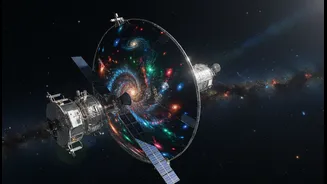
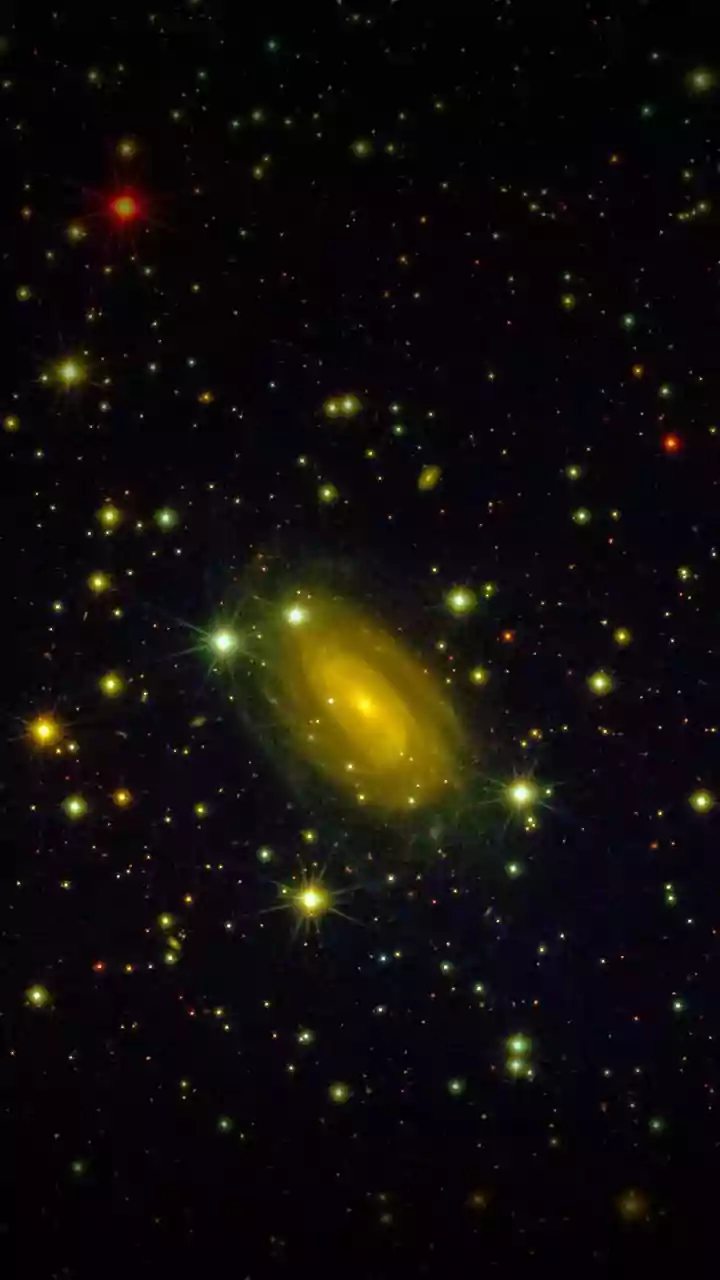
Launched in 2023, the Euclid space telescope's primary mission is to map the so-called 'dark universe' by studying dark matter and dark energy. However, its powerful, wide-eyed view of the cosmos is already yielding spectacular results in other areas.
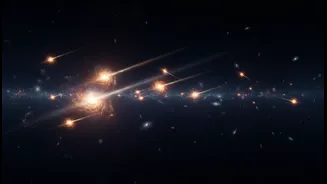
In a recent announcement that has the astronomical community buzzing, scientists revealed that Euclid has discovered 31 new quasars from the universe's infancy, more than doubling the number known from that time. Two of these are the most ancient ever seen, their light having traveled for over 13 billion years to reach us. This treasure trove of discoveries was found in just a fraction of the telescope's planned survey, signaling a new era in our ability to study the early cosmos.
The Universe's Dark Ages
The era these quasars inhabit is known as the Epoch of Reionization. Following the Big Bang, the universe was a dark, neutral fog of hydrogen gas. Over hundreds of millions of years, the very first stars and galaxies began to form, emitting intense light that started to burn away this fog, creating bubbles of ionized, transparent gas. This period, often called the 'Cosmic Dawn', marks the transition from a simple, uniform universe to the complex, structured one we see today. Studying this epoch is incredibly difficult because objects from that time are exceptionally faint and distant. It has been a sparse and challenging area for astronomers to map, until now.
Quasars as Cosmic Lighthouses
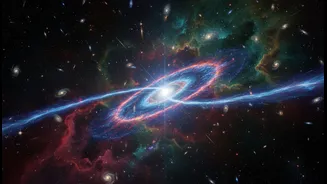
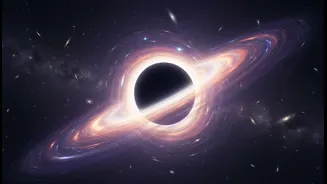
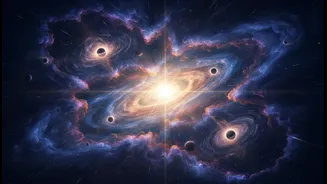
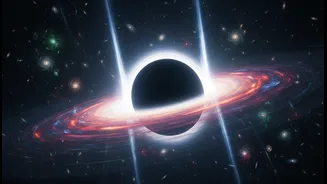
Quasars are the perfect tools for this job. They are not stars, but rather the intensely bright centers of young galaxies. At their heart is a supermassive black hole, billions of times the mass of our sun, actively feeding on surrounding gas and dust. This process releases an incredible amount of energy, making quasars shine more brightly than a trillion suns and outshine their entire host galaxy. Because they are so luminous, they can be seen from across the observable universe. They act as cosmic lighthouses, their light providing a beacon that shines from the universe's earliest moments. The recent Euclid discoveries are particularly exciting because they include fainter, more typical quasars from this era, not just the brightest and rarest outliers found by previous searches.
How to Map the Invisible
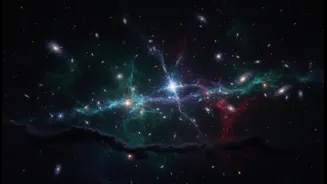
The headline-grabbing discovery of these quasars is only the first step. Their real power lies in how they can be used to map the very structure of the early universe. As the light from a distant quasar travels for billions of years toward Earth, it passes through vast clouds of intergalactic gas—the remnants of the material that formed the first galaxies. These clouds absorb specific frequencies of the quasar's light, creating a unique barcode-like pattern in its spectrum, known as an absorption line forest. By analyzing these patterns from many different quasars, astronomers can build a three-dimensional map of the matter distribution in the early universe, revealing the cosmic web of filaments and voids when it was first taking shape. It’s like using millions of distant backlights to reveal the structure of an otherwise invisible fog.