







The Grid's Storage Problem
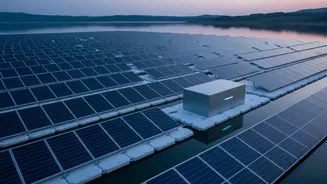
India has set an ambitious goal of reaching 500 gigawatts (GW) of non-fossil fuel energy capacity by 2030. This rapid growth in solar and wind power presents a major challenge: intermittency. Solar panels generate maximum power in the middle of the day,
while demand often peaks in the evening. Without a way to store the excess daytime energy, it either goes to waste or destabilises the grid. The Central Electricity Authority estimates India will need over 400 gigawatt-hours (GWh) of energy storage capacity by 2032 to keep the lights on reliably. For years, the default solution has been lithium-ion batteries, the same technology that powers smartphones and electric cars. However, for grid-scale storage, lithium-ion has significant drawbacks. The technology is expensive, reliant on imported materials like lithium and cobalt (much of which comes from China), and carries safety concerns like fire risk. This has created an urgent need for a cheaper, safer, and more domestically-sourced alternative.
Enter the Zinc-Air Battery
Zinc-air batteries are not a new idea. They have been used for decades in small devices like hearing aids. The basic principle is simple: they generate electricity by reacting zinc metal with oxygen from the air. Their advantages are compelling. Zinc is abundant, cheap, and far less volatile than lithium, making the batteries inherently safer and more environmentally friendly. Theoretically, they also have a very high energy density, meaning they can store a lot of energy for their size and weight. So, why aren't they everywhere? The main problem has been rechargeability. While primary (non-rechargeable) zinc-air batteries work well, making them electrically rechargeable has been a major challenge due to issues like zinc dendrite formation, which degrades the battery over time, and a sluggish reaction at the air electrode.
A Breakthrough from Indian Labs
This is where recent Indian research comes into focus. Scientists at institutions like IIT Madras and SASTRA University are tackling these long-standing issues head-on. One promising approach from SASTRA University, backed by the Department of Science and Technology, involves a novel “nanofluid electrolyte.” By adding tiny silica and zinc oxide nanoparticles to the battery’s liquid electrolyte, researchers were able to solve two problems at once. The nanofluid suppresses the corrosion and unwanted chemical reactions that degrade the zinc electrode, while also speeding up the slow oxygen reaction at the other end. In another significant development, IIT Madras researchers have been developing both electrically and mechanically rechargeable zinc-air systems. The mechanically rechargeable version imagines a system of “zinc recharge stations,” where drivers could swap spent zinc cassettes for fresh ones in minutes, similar to refuelling a car. These innovations aim to make zinc-air batteries not just a viable alternative to lithium-ion, but a superior one for certain applications.
Why This Matters for India
The implications of this research for India’s energy security are enormous. Developing a domestic battery industry based on zinc would drastically reduce the country's reliance on imported lithium-ion cells, which currently constitute a multi-billion dollar import bill that is projected to grow. Zinc is a widely available resource in India, aligning perfectly with the 'Make in India' initiative and strengthening the national economy. Beyond the grid, this technology also holds immense promise for electric mobility, particularly for two- and three-wheelers. Research teams have also made progress on other components. One team developed high-performance catalysts using a tiny amount of copper, replacing the need for expensive imported metals like platinum. Another innovation involved upcycling waste materials like used surgical masks and water filter carbon to create battery-grade electrodes, further boosting the technology's sustainability and cost-effectiveness.
The Road from Lab to Grid
While these breakthroughs are exciting, the journey from a laboratory prototype to commercial-scale manufacturing is a long one. Chennai-based startup Sthyr Energy, an incubatee of IIT Madras, is one of the companies trying to bridge this gap. It secured funding to scale up its mechanically rechargeable zinc-air technology, aiming to build pilot projects for renewable energy farms and microgrids. The goal is to prove the technology's durability, reliability, and economic viability in real-world conditions. Challenges remain, including perfecting the system's efficiency over thousands of charge-discharge cycles and establishing a manufacturing ecosystem. However, the potential reward is a secure, stable, and renewably-powered electricity grid. This research represents a critical step towards achieving that goal, powered by Indian innovation and resources.