


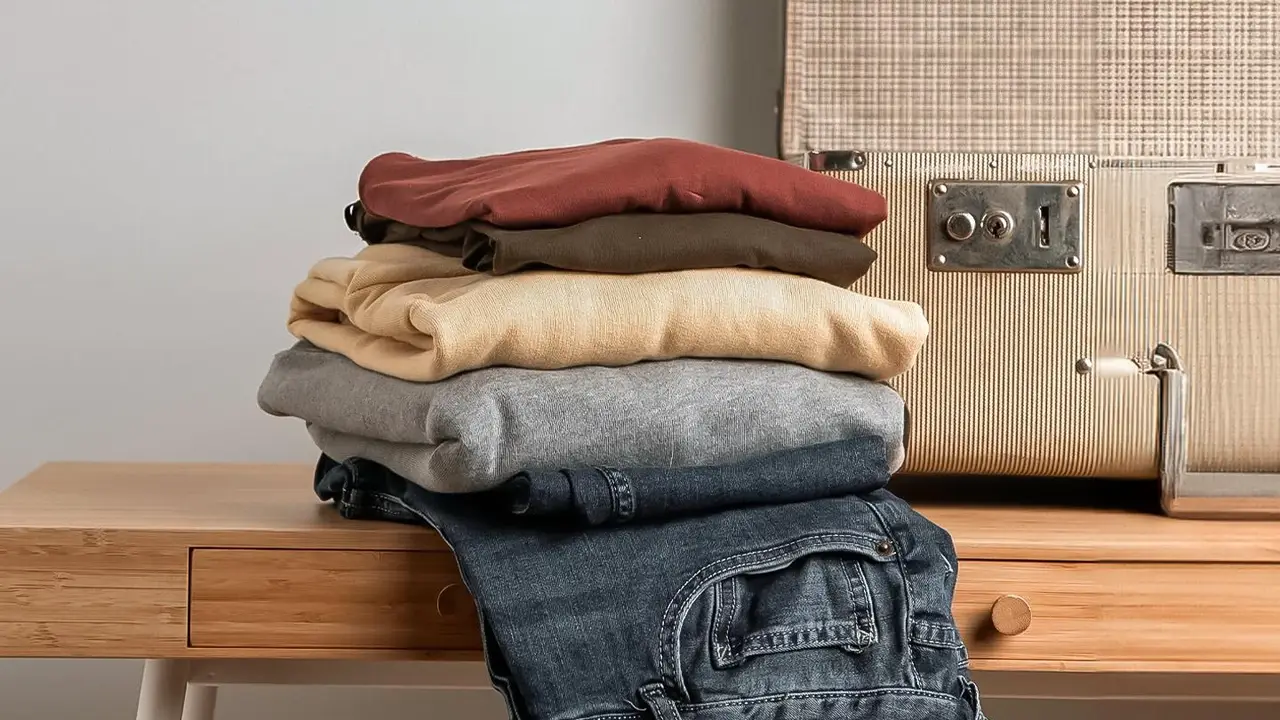

Choose Your Gear Wisely
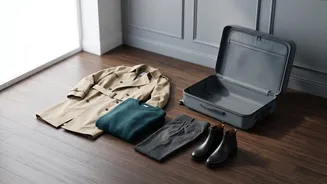
The foundation of light travel is a lightweight bag. But the real game-changer is what you put inside it. Packing cubes help organise your clothes into neat compartments, making it easy to find what you need without unpacking everything. For a rainy trip
where you might have a bulky rain jacket or an extra fleece, consider compression packing cubes. These organisers have an extra zipper that squeezes out excess air, significantly shrinking the volume of your clothes. This allows you to fit more into a smaller space without necessarily adding more weight, which is the perfect solution for accommodating those slightly bulkier wet-weather essentials. It’s a small investment that pays huge dividends in saved space and sanity.
The Art of the Rainy Day Wardrobe
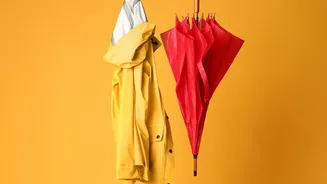
Packing for rain isn't about bringing more clothes; it's about bringing the right ones. Your most important item is a waterproof or water-resistant outer layer. Look for a packable rain jacket that can be easily stowed when the sun appears. For the rest of your wardrobe, prioritise fabrics that are quick-drying and versatile. Materials like merino wool and modern synthetics are excellent because they manage moisture and don't stay damp for hours like cotton does. Think in terms of a capsule wardrobe where every top matches every bottom. Choose neutral colours to maximize your outfit combinations. Pack items that can do double duty, such as quick-drying travel pants that look smart enough for a city dinner but are practical enough for a drizzly walk. The goal is to create multiple looks from a minimal number of items.
Master the Layering System
Instead of packing bulky sweaters, think in layers. A smart layering system gives you the flexibility to adapt to changing temperatures throughout the day, from a chilly, damp morning to a warmer afternoon. Your base layer should be a lightweight t-shirt or long-sleeve top. Your mid-layer provides insulation; this could be a thin fleece or a packable down vest. Your outer layer is your waterproof shell, which protects you from wind and rain. This three-part system allows you to add or remove layers as needed, ensuring you're always comfortable without dedicating precious luggage space to a single, heavy garment. You can wear your bulkiest items, like your jacket and a mid-layer, on the plane to save even more space.
Roll, Don't Fold
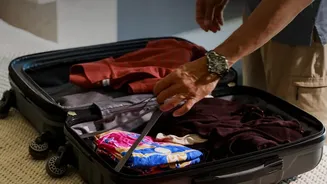
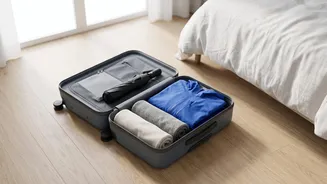
How you pack is as important as what you pack. The 'Ranger Roll' is a technique used to make clothes incredibly compact and less prone to wrinkling. This method involves folding an item tightly and tucking it into its own little 'burrito', which minimizes the space it takes up. It’s far more effective than simply folding clothes flat. By rolling each piece of clothing into a dense cylinder, you can fit them into your packing cubes like a puzzle, eliminating the dead air and wasted space that comes with traditional folding. This technique is especially effective for t-shirts, pants, and other soft garments. It might take a few extra minutes, but the space you save is well worth the effort.
Tackle Footwear and Toiletries
Shoes are often the bulkiest items in a carry-on. The golden rule is to wear your heaviest pair on the plane. For a rainy destination, this will likely be a pair of waterproof boots or sturdy sneakers. Then, pack one other versatile, lightweight pair. For toiletries, ruthless downsizing is key. Invest in a set of reusable, travel-sized bottles for your shampoo, conditioner, and lotions. Solid toiletries, like shampoo bars and toothpaste tablets, are another excellent way to save space and eliminate the risk of leaks. Keep all liquids in a clear, waterproof bag to protect the rest of your belongings and to make airport security a breeze. Don't forget a small, quick-dry towel; it's invaluable on a wet trip and takes up far less space than a standard cotton one.